
Many American early-music ensembles would love to go on tour. Some have learned to navigate a complex landscape.
This article was first published in the May 2026 issue of EMAg, the Magazine of Early Music America
‘Reach beyond the early-music market! It’s too small!’
When Anonymous 4 stood at the peak of its popularity, from the late 1980s through early 2000s, the four-woman a cappella group was nothing short of an international sensation, releasing album after album that topped the Billboard classical charts.
Feeding into that recording success was constant touring around the globe.
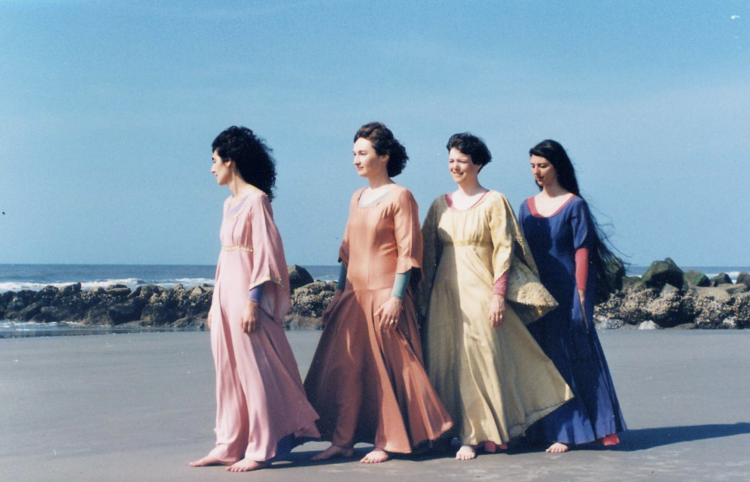
Besides abundant talent and a prodigious rehearsal schedule, Anonymous 4 was able to capitalize on the 1990s chant craze as well as marketing and logistical support from its French record label, Harmonia Mundi. “It was that boring combination of hard work, luck, and timing,” said Susan Hellauer, who sang with the group for its entire 29-year existence.
In short, the quartet, which performed its final concert in 2015, was the most successful American early-music group ever. Hellauer is quick to acknowledge that their recording and touring success would be nearly impossible to achieve today, in part because of the near collapse of the classical recording industry and local classical radio, and pullbacks in classical programming by American presenters large and small.
“We’re a completely differently world now,” acknowledges Philip Wilder, president and general director of Chanticleer. The San Francisco-based, all-male a cappella group, which returned from a 12-concert European tour in February, is one of just a handful of American groups with early-music credentials that have come anywhere close to Anonymous 4’s robust touring schedule.
For audiences and performers, the value of touring is undeniable. A city-to-city string of shows can seem glamorous, heightening artistic reputations and drawing new fans in distant communities. From many perspectives, being on the road is exactly what musicians are supposed to do, going back to wandering minstrels and Medieval troubadours. More pragmatically, donors reluctant to help with routine operational costs may get excited by a tour and may help pay for it. Touring, like all business travel, can be exhausting yet exhilarating and rewarding.
Several American ensembles have found ways to make touring work.
Paying for Itself
For short-staffed groups, often the musicians themselves must contend with the logistical details that come with touring, from booking dates to arranging transportation. (One artists manager told me he typically makes at least 50 calls to book one of his clients in the U.S. — itself a full-time job.)
“You need the staff, you need the time, you need the commitment from your funders and the people who are setting up [the tour] and the people who are performing in it. It’s a truly big operation,” said Liza Malamut, a sackbut player and the artistic director of Chicago’s Newberry Consort.
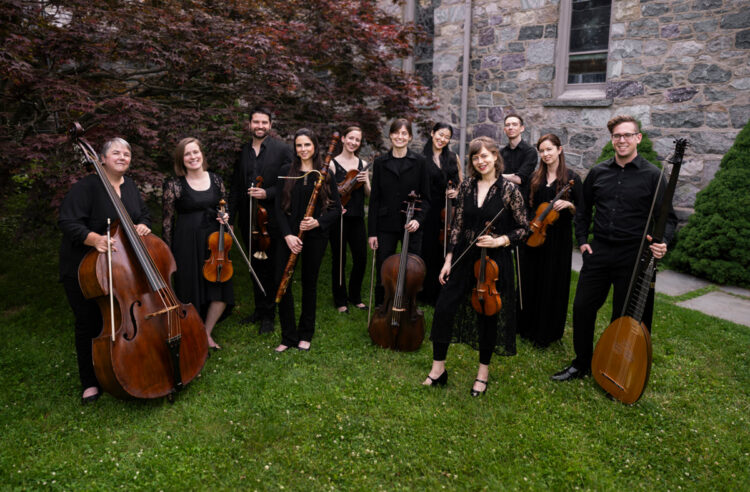
Founded in 2022 specifically to tour, Relic plays on established concert series and sometimes via self-produced shows, “with a goal to share historically informed performance with audiences in all 50 states.” In early 2026, for example, the 11-member ensemble presented The Odyssey — accompanying “Odysseus on his dangerous trek homeward” with music by Handel, Monteverdi, and Rameau and with recitative narration by Baroque violinist and creative spirit Rebecca Scout Nelson.
With savvy planning, Relic’s The Odyssey visited three parts of the country: the Midwest (Kalamazoo, Ann Arbor, Cleveland; Jan. 15-18); the Washington, D.C. area (four shows in Maryland, Virginia, and D.C; Feb. 26-March 1); and the Deep South (three shows in Louisiana and one in Houston; March 4-8).
Each of Relic’s six core members takes a pro bono administrative role. Cellist Cullen O’Neil handles bookings, typically making dozens of calls, sending hundreds of emails, and tapping her bandmates’ network of teachers and friends. For their recent Southern tour, the first fixed date was on the Banners Series at McNeese State Univ. in Lake Charles, La., which O’Neil had heard about through a friend of a host family on a previous tour in New England.
The McNeese contract, signed almost two years before the gig, prompted a search for additional dates in the region. A Relic member studied at LSU in Baton Rouge, where a violin professor helped make a connection to that university’s series. With two pieces now in place, O’Neil put in countless hours to secure New Orleans and Houston on the schedule. They rented three cars to carry the 11 musicians and their gear. In Lake Charles, the presenter gave them rooms at the local casino hotel.
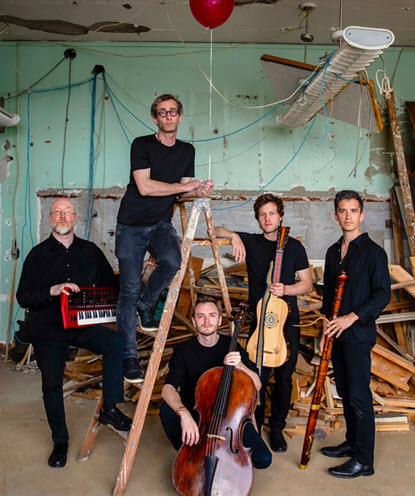
The goal, said O’Neil, is that a tour breaks even, or better. “We consider that a tour pays for itself if presenter fees plus donations from that region cover it all,” she said. For their 2026 Midwest tour, for example, gifts from fans in Kalamazoo and Cleveland put them over the top, laying the groundwork for future visits.
Other ensembles are charting a similar course. New York’s Ruckus, with genre-bending bass-baritone Davóne Tines, presented What Is Your Hand in This?, subtitled “Questioning America at 250 through 400 years of revolutionary music.” A two-week, 10-city tour earlier this year included dates up and down the east and west coasts.
Many American ensembles would love to get on the road more. With rare exceptions, performance fees in early-music are relatively low, and tours (and far-away “run-outs”) can be money-losing ventures. A larger ensemble means more flights, more hotel rooms, and more people, equipment, and instruments to transport — all resulting in low per-musician payments. With skyrocketing costs, government funding cuts, and fewer booking opportunities, sustained touring today can seem all but financially impossible. (The Sept. 2025 issue of EMAg addressed the dearth of presenters hiring early-music ensembles in its cover article, “Early Music on Tour: Who’s Buying?”)
‘It’s a real challenge for us to book tours that make sense’
Boston’s Blue Heron, a vocal group specializing in Medieval and Renaissance music, has traveled coast-to-coast across North America, from Seattle to Chicago and Montréal, although those appearances were usually single- or limited-performance run-outs. “It’s just not very practical for most American groups,” said Scott Metcalfe, Blue Heron’s artistic director. “There are a limited number of presenters that will hire us, because they don’t do sacred music, they don’t do vocal music, or they don’t do early music. Or they have one slot for that combination of things and, ‘Oh, we hired the Tallis Scholars or Stile Antico.’ It’s a real challenge for us to book tours that make sense.”
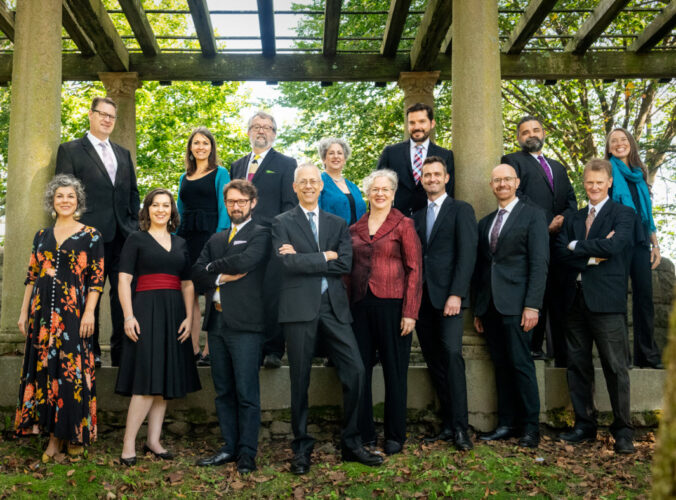
Metcalfe summarized his situation bluntly: “It’s very hard to book American groups in America.”
The Appeal of the Exotic
Indeed, marquee European ensembles are both an engine of global early-music popularity and a major competition for growth on the American scene. Many of the best European groups have counted on arts subsidies from their local, regional, and national governments to make such trips across the ocean financially feasible.
A preference for Old World groups has long been the norm among American presenters. As Rob Robbins, president of Alliance Artist Management, which represents heavy hitters like Jordi Savall and the Tallis Scholars, told me, “There was a time when you would just plainly hear it: ‘We don’t have much interest in American ensembles.’” (Similarly, American symphony orchestras forever had a bias against home-grown conducting talent, although that situation has improved in recent years.)
But now the funding model is shifting. Governmental subsidies in Europe, gigantic by U.S. standards, are starting to shrink as cultural priorities shift and arts budgets gets crunched. Political instabilities and war add to the problems. Vox Luminis, a historically informed vocal ensemble, used to get generous funding from the Belgian government for operating expenses and travel costs. But now it can only get occasional travel grants — primarily if the group is going to a major city it has never visited before.
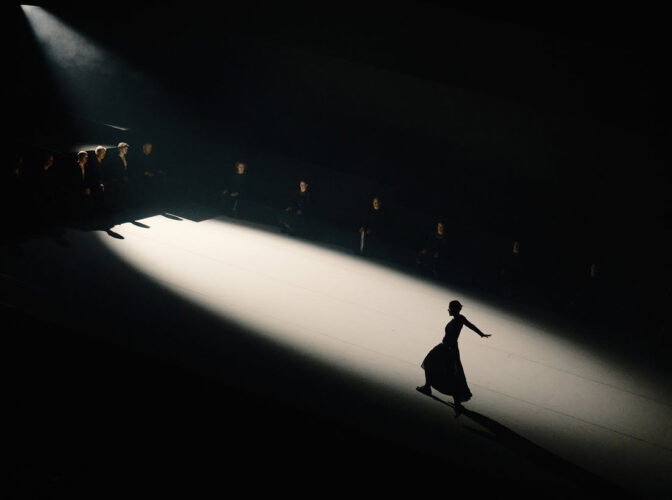
European groups must travel long distances and pay visa fees (currently costing about $6,000 for an ensemble of up to 25 members), which means that U.S. groups should be in a better position to compete with the foreign groups. “The playing field is a lot more level now than it was,” Robbins said.
There are no reliable statistics on European vs. American early-music ensembles on concert series in the United States. But a glance at a few well-known early-music and performing arts series across the country illustrates the disparity. Cal Performances at the University of California, Berkeley, for example, is presented five early-music groups in 2025-26. Four of them are from Europe. Much the same is true of the presenting arm of the Boston Early Music Festival’s 2026-27 season, with just one from the U.S.: Ruckus. Europeans include: the Tallis Scholars, Stile Antico, Trio Mediæval, Ensemble Correspondances, The Royal Winds.
Get an Agent?
American early-music can largely be grouped into four categories: longstanding ensembles that do run-outs; others that largely stick to their home base, like Boston’s Handel and Haydn Society; newer groups trying a variety of approaches to break through; and a very few venerable ensembles with sustained histories of touring, including Chanticleer, Boston Camerata, and Apollo’s Fire. Groups in this last category, with budgets stable enough to withstand the ups and downs of bookings, have a track record allowing presenters to trust their audience appeal.
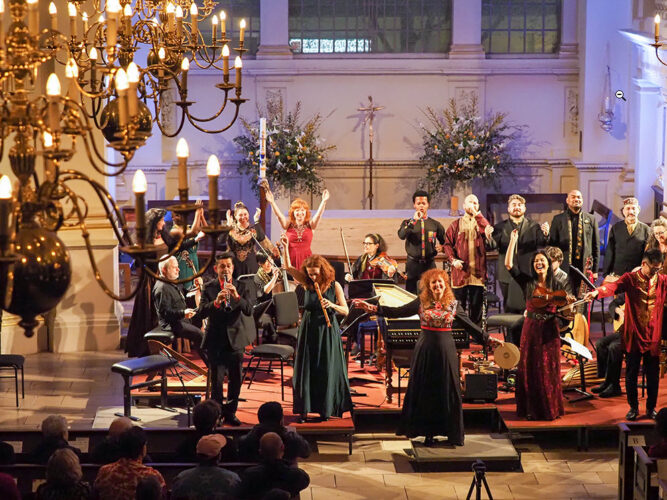
Boston Camerata, founded in 1954, has visited several continents across its 72-year history. Recent trips include a European visit in July 2025 that included two appearances at the Bregenz Festival, in Austria, and a three-concert tour to Oregon and California last year with a program titled, We’ll Be There! American Spirituals, Black and White, 1800-1900.
Apollo’s Fire bills itself as the “most active touring Baroque orchestra in the United States.” Earlier this spring, founding Artistic Director Jeannette Sorrell and her ensemble of 26 musicians returned to their O Jerusalem: Crossroads of Three Faiths program in Northeast Ohio for three dates (April 9-11), followed by a New York City show (April 12), then three in Chicagoland (April 17-19), and finally a four-program residency, including matinee performances, at London’s St. Martin’s-in-the-Fields church (April 24-25). (The group released a CD of O Jerusalem in 2022.)
When Sorrell puts together Apollo’s Fire’s master calendar, she first sets aside the prime touring dates that presenters may want. She then plans the group’s seasons in their twin bases, Cleveland and Chicago, around the remaining dates. The costs of the group’s touring are built into the budget, although donors at its annual gala have the option of directing their financial support specifically for touring.
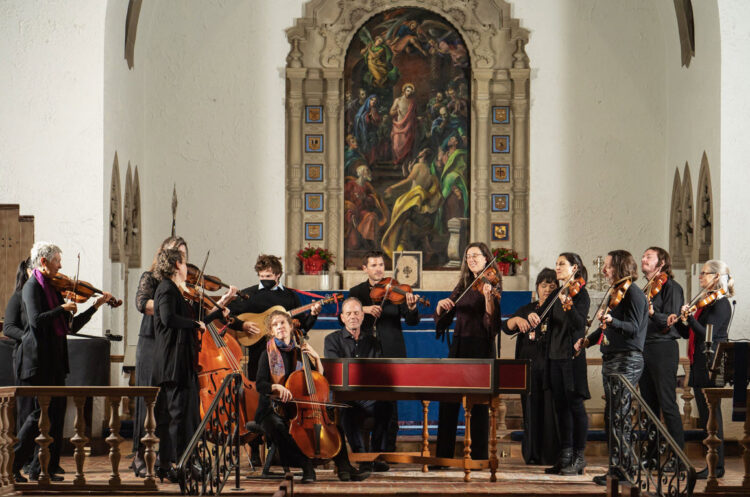
Denver’s Baroque Chamber Orchestra of Colorado, led by harpsichordist Frank Nowell, has no ambition for a national tour. But they have strong regional aspirations, reaching cities and small towns across Colorado and into New Mexico and Wyoming next door. So far, they have done a few one-off dates around Colorado but as yet nothing beyond.
“On our dream list would be a more organized tour, where we take a program on the road and do it in maybe three to five towns,” said Nowell. He sees such travel as a way to uphold the statewide mission inherent in the group’s name.
A big question for ensembles aspiring to tour: Do you need an agent? Can you get one?
For Apollo’s Fire, the answer has long been clear. “The agent plays a crucial role. Their contacts are important as is their ability to keep track of all the balls that are in the air,” Sorrell said. Apollo’s Fire was first represented by the powerful, now-defunct Columbia Artists Management, Inc. (CAMI) and is currently represented by Stefana Atlas, a former CAMI staffer who is a managing director and founding partner of Arabella Arts.
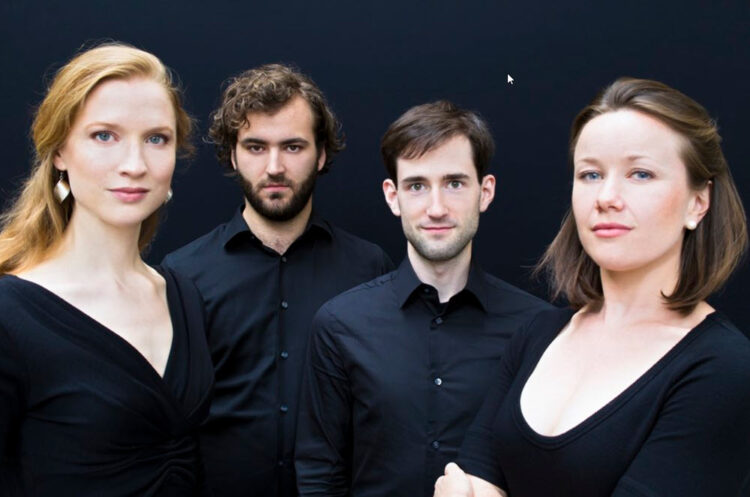
Several American early-music groups with a booking agent — among them Ruckus, Apollo’s Fire, ACROYMN, Quicksilver, Les Délices, Fire & Grace, and the Diderot and Butter string quartets — put a menu of performance-ready programs on their website, sometimes including the size of the ensemble and other technical details, so a scouting presenter can see what’s on offer.
Blue Heron has relied, at least for now, on in-house booking for its run-out concerts. “The agent is going to take 15 or 20 percent and when the margin is zero, that’s pretty tough,” Metcalfe said. “And I think the agents will not take you unless they think they’re going to be able to book a lot of concerts.”
Alliance Artists’ Robbins emphasizes how important it is to first “build something strong locally. You’ve got to be able to fill the house in your hometown” to prove your appeal. A strong social media presence can be essential toward that aim, and Chanticleer’s Wilder encourages groups to use online tools to target a locale where you plan to tour, something his choir did before going to Japan for the first time. Wilder praises The Gesualdo Six, a British vocal group that posts almost daily and draws audiences who are not necessarily early-music devotees but have become fans through TikTok.
‘What do you have to offer that someone else doesn’t have to offer?’In short, ‘Why should I listen to you?’
It’s all part of establishing a distinctive musical identity. “Know what you do that no one else does,” advises Anne Azéma, artistic director of Boston Camerata. “What do you have to offer that someone else doesn’t have to offer?” In short, “Why should I listen to you?”
Setting up a tour need not be a solitary endeavor. Collaborations — Chanticleer working with Swedish choir Zero8, Apollo’s Fire teaming up with the English Baroque Soloists, Boston Camerata performing with Finland’s Tero Saarinen Dance Company — can help groups establish new audiences. Similarly, crossing genres can widen an ensemble’s appeal, such as Chanticleer exploration of spirituals, jazz, Broadway, and new commissions.
Not least, Anonymous 4’s Hellauer urges, “Reach beyond the early-music market! It’s too small!”
Touring was never easy, and it’s undoubtedly more difficult today. But charismatic groups like Apollo’s Fire and Boston Camerata continue to do it, and others, like Relic and Ruckus, are showing it can be done (with or without an agent) with hard work, shrew planning, and a unique artistic profile. It’s a matter of being creative and seeking opportunities in unexpected places. And never giving up.
Kyle MacMillan served as the classical music critic for the Denver Post from 2000 through 2011. Now a freelance journalist in Chicago, he’s written for many publications, including the Chicago Sun-Times, the Wall Street Journal, and Chamber Music.