
People who care about the future of historical performance often don’t understand how to reach and retain young people
A call to action for the field of historical performance to support educational work
Editor’s note: At the 2025 EMA Summit, three early-music educators presented a robust, fascinating session titled “Teaching Old Music to Young People.” Afterwards, EMA asked Miyo Aoki, Shulamit Kleinerman, and Marylin Winkle to expand on their ideas for an EMAg essay.
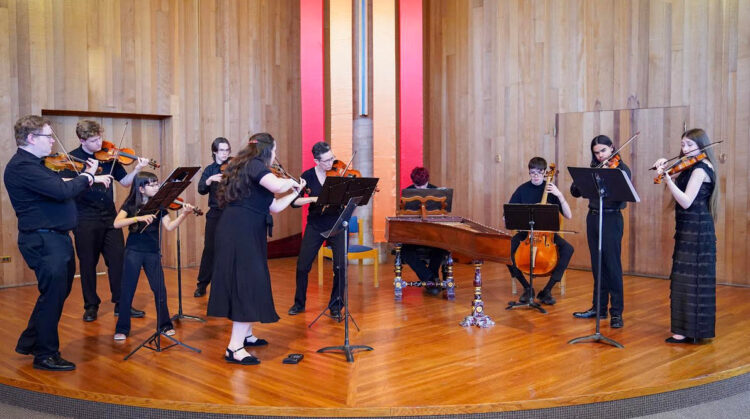
In the historical performance community, it’s common to talk about the importance of bringing young people into our field. Sharing early music with children and teens is what the three of us have been doing for many years. Collectively we’ve taught over a thousand young students, including strings, winds, and voices, from beginner to advanced, in private lessons, school music classrooms and electives, and out-of-school performing ensembles. As teachers, we think a lot about what early music does for kids, what kids do for the field, and what it takes to teach these repertoires and styles to young people.
The three of us have also been drawn together by another shared experience. We’ve noticed that people who care deeply about the future of historical performance — including presenters, donors, and grantmakers — often lack a clear sense of what it really looks like to teach children and teens effectively. Mistaken assumptions commonly undermine support for teaching in general and especially for the types of educational endeavors that work long-term. We’d like to correct those assumptions and share some actionable, real-world suggestions for how our field at large can do a better job of reaching and retaining young people.
What Education Is and Isn’t
Education is the development of skills and relationships over time. For children and teens, the motivation to stay in the work long enough to reap its rewards usually depends on whether they are experiencing meaningful connections with their teachers and peers.
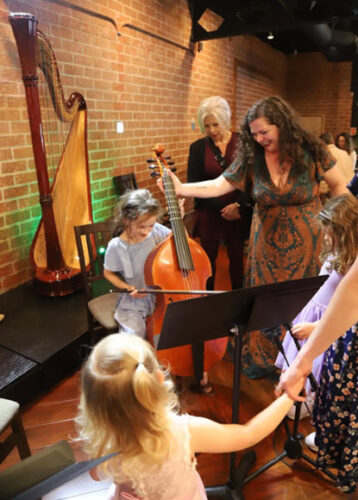
In our field, education is often confusingly lumped together with outreach activities such as school or family concerts and “instrument petting zoos,” where kids can briefly try historical instruments. While exposure to early music might occasionally serve as a gateway, lasting learning doesn’t usually come from such a brief and passive encounter.
Teaching young people isn’t mainly about the imparting of information, either. What young students come for isn’t knowledge but an experience of making music together. The “why” of what we do — treatises, history, philosophical questions — can develop after students have built up a familiarity with the repertoire. Kids and teens usually need to do things first and ask questions later, which might be the most significant distinction from teaching adults or even college students. Younger students need time, space, and freedom to develop their own questions and find answers for themselves.
Perhaps most surprisingly to many adults in historical performance, young people’s engagement doesn’t always depend primarily on access to early instruments. While it is laudable to give kids authentic period instruments, an inability to do so should not be a barrier to providing a space for young people to explore historical performance practices. There are many examples of educators successfully teaching early music on modern instruments. Marylin’s Kids’ Camerata — an initiative in partnership between L.A. Camerata and her elementary school — uses modern instruments while focusing on early repertoire and techniques.
Younger students need time, space, and freedom to develop their own questions and find answers for themselves
When Shula teaches Baroque performance practice to teen violinists, she prefers that students learn to use period bows on their own modern instruments, rather than simultaneously taking on the postural and tuning challenges of Baroque instruments and gut strings. If organizations are invested in kids in the long term, they can trust programs (or students themselves) to seek out “proper equipment” if and when they are ready. In the meantime, the focus should be on students’ holistic growth.
It’s tempting for organizations to approach education work from a mindset of recruiting for the field. But teachers are effective only if we are genuinely there to serve the students. One of us was asked recently to send a skilled teen player to the local amateur society “because we have plenty of gray heads already.” That way of thinking overlooks the student’s own experience. Kids would presumably be welcomed with open arms in the existing amateur scene, but those spaces weren’t built with them in mind and — judging by the numbers — don’t generally seem to tempt them. Young people usually want to be in youth-optimized spaces where their needs and motivations are centered.
Valuing Education
The literal survival of our profession is the most obvious benefit that young people bring. Instead of simply replicating the older generations’ work, though, children and teens will refresh and transform our community. Welcoming young students into our field is often one of the quickest ways to invite the racial and economic diversity that presenters long for, since, at least in most parts of the U.S., a roomful of young people is almost certain to be more racially diverse than most early-music groups.
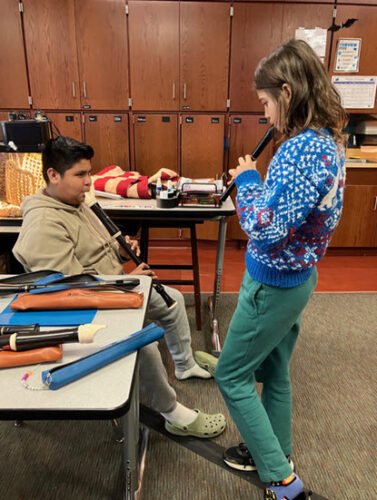
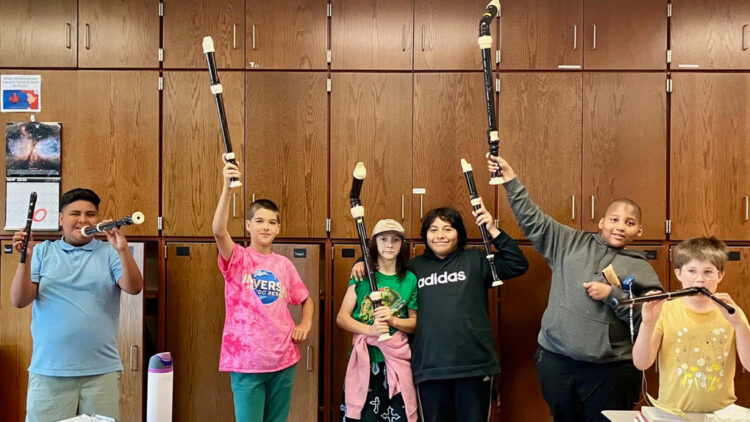
The field may also be enriched when students absorb historical performance practice at a young age, experiencing it as a living tradition. With Miyo’s own Recorder from the Ground Up curriculum, her students play Renaissance and Baroque music from the very beginning, building simple improvisatory skills with ground bass patterns and developing their ability to carry an independent polyphonic line in an ensemble. An intuitive understanding of this music’s melodic and harmonic language can bring kids a sense of ownership and creative agency, which strengthens the historical performance community through the fresh energy of new perspective.
We believe most early-music organizations would agree conceptually that education has value, and yet, the field has not done enough to sufficiently invest in the education of young people.
Organizations can show they value education by fostering an institutional culture where teaching work is actively and publicly celebrated. Any account of a region’s early-music scene should include the student and amateur community, not just professional presenters and ensembles.
Wherever good historical performance education is already happening, early-music stakeholders should be taking notes — and showing their support by attending student events! The most engaged fans at Seattle Historical Arts for Kids have had the pleasure of witnessing individual kids progress from their first forays as middle schoolers in a Renaissance consort or Baroque orchestra to adult amateurs, conservatory students, and professionals. This simple act of support costs nothing for an organization and can have wide-ranging and mutual benefits.
Valuing education also means respecting the profession of teaching. Expertise in historical performance doesn’t automatically make someone an optimal teacher. Teaching young students requires additional skills beyond those required to teach older and more advanced students. Effective teachers understand how specific skills fit together within the larger picture of instrument mastery and know how to balance forward momentum with proficiency. They must also be able to model behavior and values, understand appropriate expectations for each age, and be experienced in the art of relationship-building with students — not only in teaching individual lessons, but also in creating or facilitating group experiences that are motivating and meaningful.
Teaching is, in other words, its own specialization that deserves more respect if we want to be better about reaching youth.
There is a twofold philosophical issue at play here that requires reframing. First, discourse within the early-music community has defined specialists and generalists as mutual exclusivities, rather than existing on a spectrum. Second, specialists are prized for having more intrinsic value than generalists. The truth is that teachers of younger students must possess the broad-ranging knowledge needed to devise student-centered learning opportunities, and this requires specialized skill.
Meanwhile, pre-college teachers can also specialize in a particular style, period, or instrumental technique and bring this knowledge into the learning space. Kids care a lot about inclusivity, and if we stick to a mindset that undermines the expertise of the teachers in front of them, then we reinforce a perception of historical (“classical”) arts as elitist and unwelcoming.
The most obvious way to show respect for the work of education is to make use of teachers’ expertise, pay them accordingly, and invest in their ongoing learning. Instead of inviting teachers to sit on unpaid advisory committees, consider hiring them as paid consultants. Instead of expecting young professionals to accept low pay to do some teaching as a temporary or secondary gig, pay teachers as the specialized professionals they are, so that good teachers can stay in the game. Help build greater institutional knowledge of good teaching practices by investing in teachers’ professional development. Recorder from the Ground Up, for example, was partially inspired by Suzuki teacher-training courses that Miyo attended with grants from the American Recorder Society. When you don’t invest in teachers, what you communicate is that you don’t genuinely care about education, and this is a dangerous perception for a musical movement built on scholarly values.
Planning Long-Term
Meaningful educational work depends on long-term thinking. In all our projects with students, we’re always planning next steps. Will we be able to do another project together after the current workshop or school year or performance ends? Can our students envision themselves continuing to make this music in the future, in a context that is meaningful for them?
We can’t teach on this long arc without long-term funding. Ongoing support can help us build pathways in historical performance that stretch from childhood to adulthood, whether leading to amateur or to professional-level playing. All three of us are grateful recipients of grants and donations for our various programs (including from EMA). We’ve also seen funding practices that are less helpful.
Education grantors’ most common blind spot is a focus on the number of students served. This well-meaning metric, which aims to quantify reaching students who otherwise lack access to early music, incentivizes single-visit outreach performances that position students as passive consumers.
When Marylin has been on the adjudicating side of outreach awards, she has seen a disproportionate number of applications from organizations proposing free community concerts. The “number of students” metric actually makes it difficult to offer deeper, more transformative engagements for students, which depend on the building of relationships over time. When Marylin managed a private-lessons program for the USC Thornton Community Outreach Program, she was told to cut the number of lessons per student in order to enroll more students, making the program less effective for all participants.
Data-driven granting agencies could get a more useful picture of educational projects by taking two additional measurements: the ratio of teaching artists to students and the hours of contact time each student experiences. We also recommend that grantors introduce a language of breadth versus depth — more students receiving less time, or fewer students receiving more time — and make a commitment to include some of both types.
Grant-funded activities often have to be strung along with a series of small project awards that require a disproportionate amount of application time, pulling us away from our work with students. In the last 10 years, EMA has been exemplary in increasing the award amounts and simplifying the applications. We encourage other early music organizations to follow suit. Some are still offering outdated sums — one as low as $100, well below the time cost of completing the application. Requiring letters of recommendation is a common practice that wastes many people’s time if applicants have direct evidence of their work already available to consult online.
For established programs, it will be transformative when granting organizations are bold enough to give unrestricted, ongoing, multi-year support so that we can focus on continuing our work. For new, untried programs, we encourage grantors and donors to give starter sums freely: Be door openers, not gatekeepers. Local early-music presenters and individual donors can make a big difference, too.
Finally, grantors should be aware that you can’t fix an equity problem with education and outreach alone. Organizations often seem to have loftier inclusion goals for youth education grantees than for the rest of the early-music field.
This means that any newcomers we do bring into our community are at risk of feeling like second-class citizens when they grow up, if, for example, they can’t afford concert tickets, or if amateur musicians’ gatherings are routinely held in homes in exclusive neighborhoods where people from other backgrounds may feel unwelcome. Teachers can create a more inclusive environment for our students in the short term. In the long term, our results can be only as welcoming as the rest of the field.
Miyo Aoki is the creator of Recorder from the Ground Up. She maintains a private recorder studio and teaches at an elementary school in Bloomington, Ind., and at workshops around the country.
Shulamit Kleinerman is the founding director of Seattle Historical Arts for Kids and Seattle Fiddlesticks. She writes about teaching off-the-beaten-path music to kids and teens on Substack @ GetMeStarted.
Marylin Winkle teaches students ages four to infinity at Citizens of the World Elementary in Hollywood, CalState LA, and UCLA. She is also artistic director of L.A. Camerata and L.A. Kids’ Camerata.