To celebrate Early Music Month, EMA recognizes outstanding community engagement projects of individuals and organizations that take place in March. Early Music Month Mini-Grants support selected creative projects with supplemental funding.
2026 Mini-Grant Recipients
Early Music America is pleased to award the following ensembles and organizations Early Music Month Mini-Grants for projects to be held during March 2026. The judges where impressed by the scope of these proposals and their potential to expand the reach of early music. We look forward to sharing more about these projects as they occur throughout Early Music Month.
Esfera Armoniosa (Bogotá, Colombia)
Project: Music from the Colonial Past of Bogotá: Early Music Month Workshops, Transcription, and Educational Digital Outreach
This project centers on Early Music Month (March) activities in Bogotá, Colombia, activating colonial repertoire from the Cathedral Archive of Bogotá through public workshops, transcription work, and educational digital outreach. Led by La Esfera Armoniosa, the project introduces students and the broader community to colonial works that remain largely unknown, rarely performed, and absent from most early music curricula.
The core activity consists of open, hands-on workshops that bring together students, young professionals, and interested members of the public. Participants engage directly with selected colonial sources and modern transcriptions prepared by the ensemble. Through guided sessions, ensemble members introduce historically informed performance practices, stylistic interpretation, and the social and spiritual context of cathedral music in colonial Bogotá. The emphasis is not academic research, but access: how archival music becomes living sound.
A central pillar of the project is the transcription and preparation of repertoire from colonial sources. This work allows participants to understand the interpretive, stylistic, and practical decisions involved in transforming manuscripts into performable music. The transcription process functions both as a pedagogical tool and as the foundation for performance, mediation, and digital dissemination.
Throughout Early Music Month, the project also includes informal, commented public sessions, such as open rehearsals or micro-concerts, presented in accessible cultural or educational spaces. These events invite audiences to encounter early music as a living, urban, and socially meaningful practice, rather than as a distant historical artifact.
Complementing the in-person activities, the project places strong emphasis on educational digital outreach through the creation of short audiovisual materials. Together, the workshops, transcription work, public sessions, and digital capsules form an integrated model for activating Colombia’s colonial musical heritage and expanding access to early music during Early Music Month.
Kansas City Baroque Consortium (Kansas City, KS & MO)
Project: Get H.I.P.~ Go Baroque!
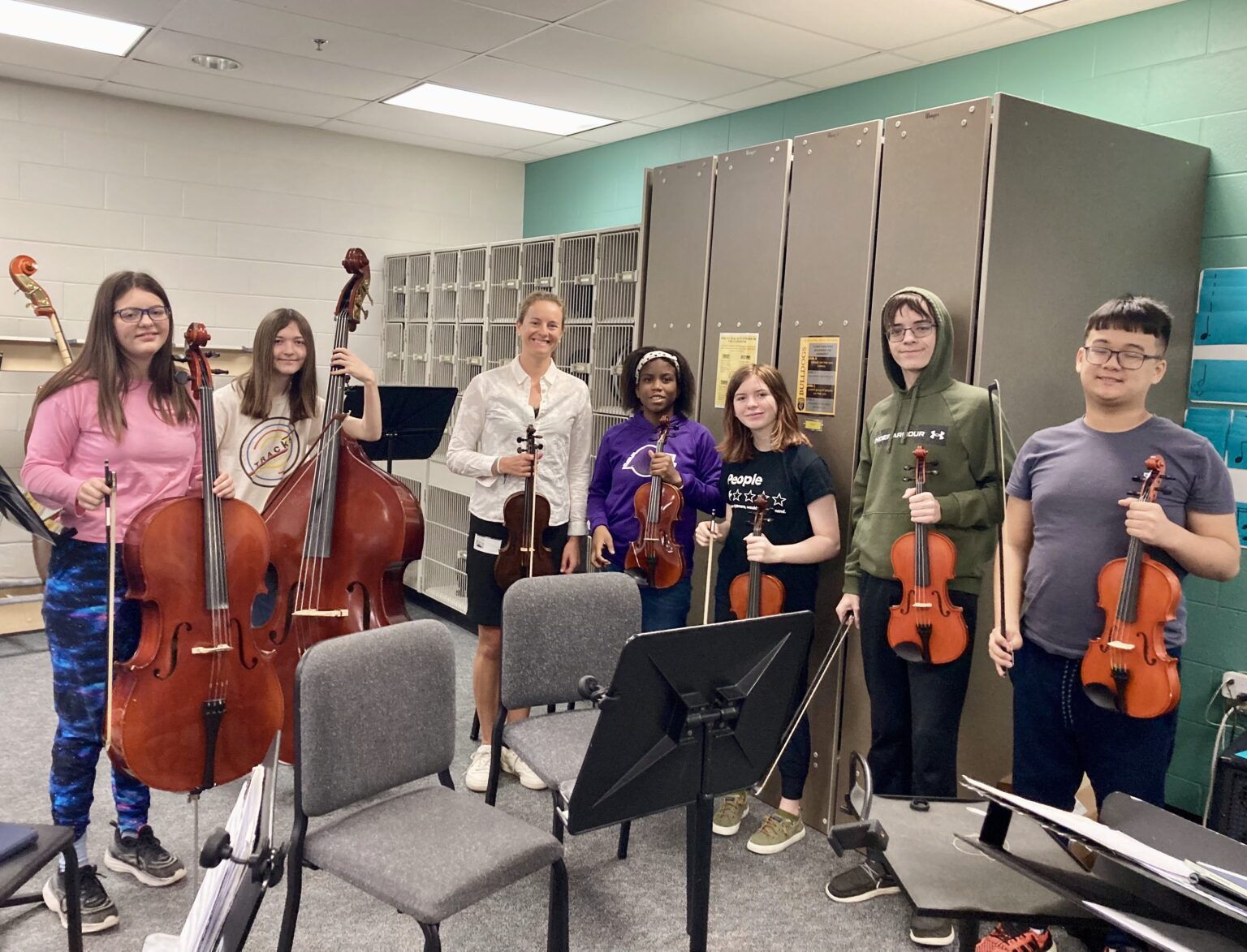
Continuing to expand on our past educational outreach projects, KC Baroque will plan visits to up to five schools in March to introduce area high school orchestras to the elements of historically informed performance. Members of our ensemble will provide a performance on period instruments, paired with an open discussion offering insights about our tools of the trade: gut strings, baroque bows, period instruments, and introducing concepts of historically informed performance. When possible, for those school ensembles preparing a baroque work, we will also offer coaching to the whole ensemble on their selection.
Our goal is not only to introduce these concepts to the students (and often to their director), but to guide them in an introductory exploration of the broader history of the string family, touching on early makers, composers, as well as cultural, political, philosophical, and economic influences of the era drawing connections from past to present and aiming to illuminate and deepen their understanding of the history of music.
Kevin Devine (Brooklyn, NY)
Project: Hilde-Fest
We will mount a community-centered production of Ordo Virtutum, the medieval morality play by visionary composer, theologian, and scientist Hildegard von Bingen. This project brings together grade-school children and parishioners from Windsor Terrace’s Church of the Holy Apostles with members of the chorus at St. Ann’s School in Brooklyn Heights, alumni of TENET’s Trailblazers program, and some of New York City’s finest early music professionals. By uniting performers across generations and levels of experience, the production creates an inclusive artistic environment that invites participants and audiences alike to reflect on what it means to hope, strive, and act for the good in the modern age.
The Ordo is one of the earliest surviving music dramas which presents a timeless struggle between the Virtues and the Devil over the fate of the human soul. Under the direction of Rocky Duval, this production emphasizes the work’s emotional immediacy and moral clarity while remaining grounded in historically informed performance practice. Participants will engage deeply with Hildegard’s music, text, and imagery, discovering how her expansive vision speaks powerfully to contemporary concerns around community, resilience, and ethical action.
The project will culminate in two full performances of Ordo Virtutum on the evenings of March 6 and 7, 2026, held in the warm, acoustically rich space of the Church of the Holy Apostles. In addition, the performance weekend will conclude with a special children’s concert on the afternoon of Sunday, March 8, designed to introduce young audiences to Hildegard of Bingen and her “garden” of spiritual and musical ideas.
This interactive children’s concert draws inspiration from Hildegard’s writings on botany, cosmology, and spirituality, as well as her songs of fierce devotion and wonder. Through participatory singing, storytelling, and guided listening, young concert-goers will encounter Hildegard not as a distant historical figure, but as a vivid and imaginative voice whose work encourages curiosity, creativity, and care for the world around us.
Together, these performances offer an epic yet intimate exploration of Hildegard’s legacy: one that bridges early music and contemporary life, professional artistry and community participation, inviting audiences of all ages into a shared experience of beauty, reflection, and hope.
Miguel Hervias (Santiago, Chile)
Project: Ramillete Sonoro
The proposal we present involves holding concerts featuring harpsichord, theorbo, Baroque guitar, and Renaissance guitar at two locations in Santiago, Chile. Through this project, our objective is to share with the audience information about the sound of the repertoire and the characteristics of the instruments we use in performing early music.
The first type of presentation consists of four educational concerts in a single day, each lasting 45 to 55 minutes, for students aged 14 to 18 at Liceo Ruiz Tagle in Estación Central. The content of these presentations includes contextualizing the repertoire performed in the concert through the display of manuscripts, providing a brief history of the composers, and explaining the construction and functioning of the instruments. As an interactive activity with the students in this educational setting, we will guide a collective singing session of the Villancico colonial “Dennos lecencia señores”, accompanied by the harpsichord and baroque guitar. At the end of the presentation, time will be allotted for students to ask questions and approach the instruments for a closer look.
Secondly, we will hold a concert open to the general public at the Museo del Sonido, located in the historic Yungay neighborhood. This presentation will include Renaissance and Baroque repertoire in solo format, works with basso continuo, and arrangements for our duo.
As with the activities held at the high school, at the end of the concert we will leave time for the audience to ask questions and engage in dialogue.
All of these activities will be recorded in high quality, to be subsequently edited and shared through our social media channels and those of the involved institutions. In this way, we will showcase the work carried out during Early Music Month, thanks to EMA funding.
Colegio de Música Antigua. Facultad de Música, Universidad Nacional Autónoma de México (Mexico City, Mexico)
Project: Ciclos J.S Bach & Mujeres en la música
During the month of March, a short cycle of concerts will be held in the Facultad de Música (Music School). This cycle includes recitals with music by J.S. Bach, to commemorate the composer’s birth, and featuring music by female composers, to commemorate International Women’s Day, on March 8th. The program will include works or excerpts by Elisabeth Jaquet de la Guerre and Camilla Rossi.
These recitals will be played by students ensemble and coached by the faculty members, coordinated by Dr Rafael Sánchez Guevara and Dr Eunice Padilla.
Seattle Historical Arts for Kids (Seattle, WA)
Project: Medieval music immersion experience for Recorder Club at Beacon Hill International School
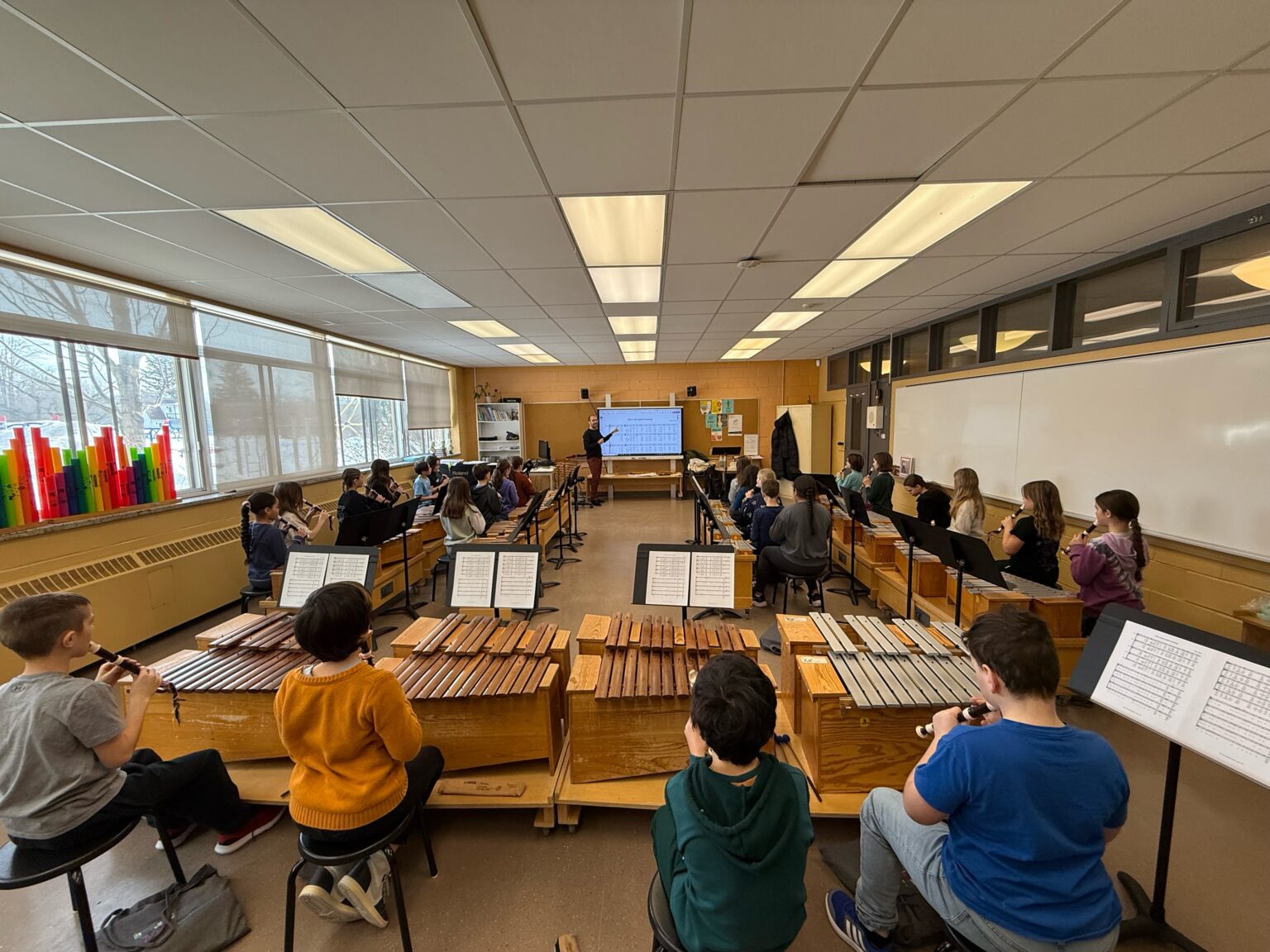
Our medieval music faculty will visit the after-school recorder club at Beacon Hill International Elementary School in early March to play music for and with the students, and all club members will then be invited to join us onstage in our public faculty/student concert of medieval music later that month.
BHIS is a majority-BIPOC Title 1 public school in Seattle’s south end. The recorder club of 16 kids in 3rd and 4th grades has been in session since early October, taught by SHAK alum Nick Chrisman ’21. Nick is using SHAK’s own early-music recorder curriculum (see above), which combines kid-optimized by-ear learning tools of the Suzuki method with time-tested musical hits from the Renaissance and Baroque eras. The club, which operates at no cost to the school or the students, is funded by Early Music Seattle and by SHAK’s individual donors. We plan to extend the BHIS club through both the winter and spring terms, and we’re exploring possibilities to continue supporting these kids beyond the school year. SHAK’s programs work because we invest in students in terms of both depth (programs like our proposal here) and continuity (long-term pathways).
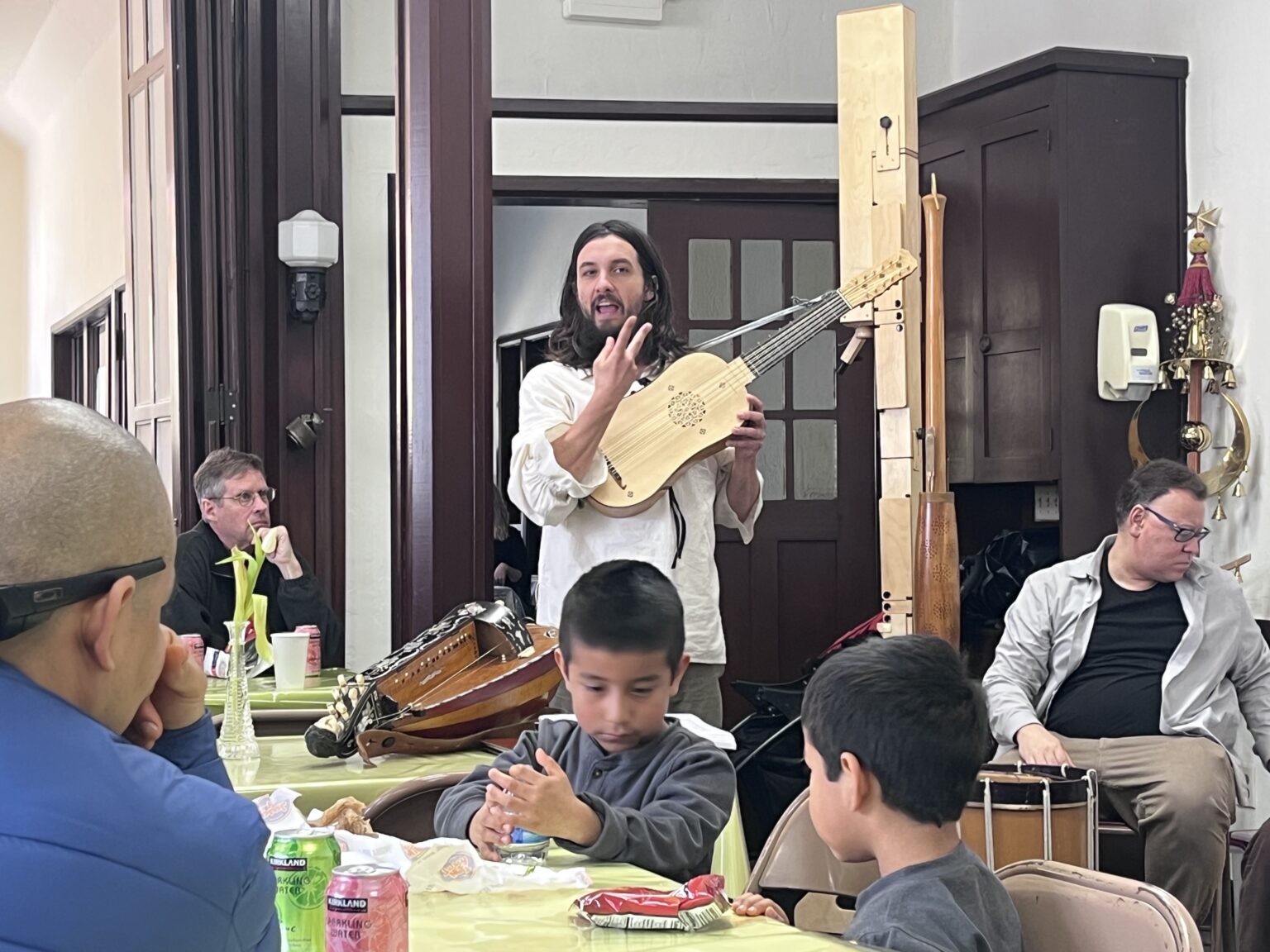
Before we visit, Nick will teach the students some short, simple medieval melodies, such as estampie endings. During the visit, the students will experience being embedded in an early-music soundscape, hearing and playing with Bill McJohn (medieval harp), Shulamit Kleinerman (treble vielle), Nick Chrisman (low vielle and percussion), and possibly an additional performer (recorder). They will then have the opportunity to join us later that month on the public stage to perform those tunes in our faculty/student recital. Our goal with this program is to build the students’ sense of competence, their enjoyment of early music, and their awareness of the wide horizon available to them if they keep playing.
The Yudah School of Music (Smyrna, Delaware)
Project: Vivaldi’s Gloria
We will be performing the entirety of Vivaldi’s Gloria with a professional and student baroque orchestra from the Yudah School. This project brings early music to a communities that are almost non-existent in early music: the historically marginalized, black, and hispanic communities. Since performing early music is typically very expensive, certain communities are almost always left out. This project makes the beauty of early music accessible to all!
The Yudah School of Music, Inc. is a non-profit organization that serves youth from historically marginalized communites by proving them a sophisticated musical training and experiences absolutely free of charge. Just recently we performed excerpts from Handel’s Messiah at A=415hz and with both period instruments and baroque bows. We also teach baroque music to our students to strengthen their sight-reading skills, such as the music of Telemann.
Mini-Grant Details
Mini-grants of $500 are awarded for projects to be held in the Americas during Early Music Month in March of each year. Successful projects will seek to expand the reach of early music in your community. EMA welcomes and encourages creative proposals for in-person, virtual, and hybrid events. The application is open to EMA members and non-members.
EMM Mini-Grant Recipients are expected to submit high-resolution photos and/or video of their project activities and a brief written reflection on the impact of the project no later than April 30. Submission of the application form constitutes acknowledgement of these requirements.
Click the Apply button in the Application section below to access the form.
Previous Recipients
2025
- Early Music Hawai’i / Honolulu, HI – An American Journey
- Montréal Baroque, Inc. / Montréal, QC – Les grands espaces
- Musicians of the Old Post Road / Brighton, MA – Storytelling through Baroque Music: A presentation for Boston Elementary School Students
- Sarah Cranor / Lawrence and Monroe Counties, IN – Go Baroque! Middle School Orchestra Historical Performance Mini-Residencies
- Southern California Early Music Society / Los Angeles, CA – SoCal Early Music Day: A Community Festival
2024
- Early Music City / Nashville, TN – Young People’s Guide to Early Music
- Indianapolis Baroque Orchestra / Indianapolis, Carmel, and Greenwood, IN – Growing Up Baroque
- Modos Collective / Mexico City, Mexico – Medieval Music in Mexico City
- Whidbey Island Music Festival / Coupeville, WA – Coupeville Schools outreach concerts with Island County Big Brothers and Big Sisters
2023
- Early Music Missouri / St. Louis, MO – Suzuki meets Early Music
- Ensemble 126 / Salt Lake City, American Fork, Ephraim, and Cedar City, Utah – Utah Tour
- Musicians of the Old Post Road / Hudson, MA – Outreach Presentation for Hudson High Music Students
- Wyoming Baroque / Sheridan, WY – Early Music Class at Sheridan College
2022
- Camerata XXXI / Tijuana, Baja California
- Concordian Dawn / New York, NY & San Francisco, CA
- Eudaimonia, A Purposeful Period Band / Somerville & Maynard, MA
- Forgotten Clefs / Bloomington & South-Central, IN
- La Grande Bande / Davenport, IA
- L.A. Camerata / Los Angeles, CA
- The Mirandola Ensemble / Minneapolis, MN
- The New York Baroque Dance Company / Ithaca, NY
- Sarasa Chamber Music Ensemble / Cambridge, MA
- Seattle Historical Arts for Kids / Virtual
- Tempesta di Mare / Philadelphia, PA
- Trobár / Cleveland, OH
2021
No grants awarded due to the Covid-19 pandemic.
2020
- Alkemie Early Music Ensemble – “Alkemie & Friends” – a series of informal, musically experimental, and multi-sensory concerts in non-traditional venues.
- Baroque Viola Society of Cambridge – a performance to promote cultural diversity, the art of Early Music, and to initiate a partnership with the Center for Arabic Culture
- Early Music City – present an interactive program for young students at Salama Urban Ministry
- JANUS Ensemble – inaugural performance at Enroot Education Organization for Immigrant Students
- La Donna Musicale – to help fund performances, lectures, and outreach efforts of the music of the Early Music woman composer, Maria Teresa Agnesi (1720-1795)
- Los Angeles Baroque – a community orchestra exchange program with Kensington Baroque Orchestra (San Diego)
- Savannah Baroque – to participate in the Rice Creek School’s “Exceptionally Musical” evening.
- Sunderland Elementary School Advanced Recorder Club – “Recorder Club Mini-tour 2020”
2019
- Los Goytx, Simi Valley, CA – to present an educational program of early wind instruments at Simi Valley Middle School .
- The Harper and The Minstrel, Miami, FL – to present early music education program with the Miami Music Project
- Sarah Huebsch Schilling, Richmond, VA – to present “Reeds of the Past” bringing 200 years of woodwind history to Richmond high school band programs.
- Great Basin Baroque, Salt Lake City, UT – to collaborate with the Salt Lake City Public Library to bring historically-informed performance to the community for free.
- Sprezzatura, El Paso, TX – to establish a series of early music events at local public libraries.
- Kansas City Baroque Consortium, Kansas City, MO – to present “Swirls, Twirls, Stomps and Curls. The ins and outs of Baroque style.” a performance and interactive workshop with students participating in the Harmony Project KC.
- Burning River Baroque, Cleveland Heights, OH – to present “The Other Side of the Story: Untold Perspectives on Familiar Tales” in a series of eight concerts during March at a variety of music venues from house concerts to an inner-city warehouse.
- Dr. Ka-Wai Yu, St. George, UT – to help fund a performance, masterclass, and outreach projects at Dixie State University