by Marilyn R. Farwell
Published April 13, 2026
From the Archive: Filling Roles Once Performed by Castrated Male Singers Remains Challenging
This article was first published in the January 2021 issue of EMAg, the Magazine of Early Music America. Please note that some of the information may seem dated or stem from cultural and artistic attitudes that have changed in recent years.
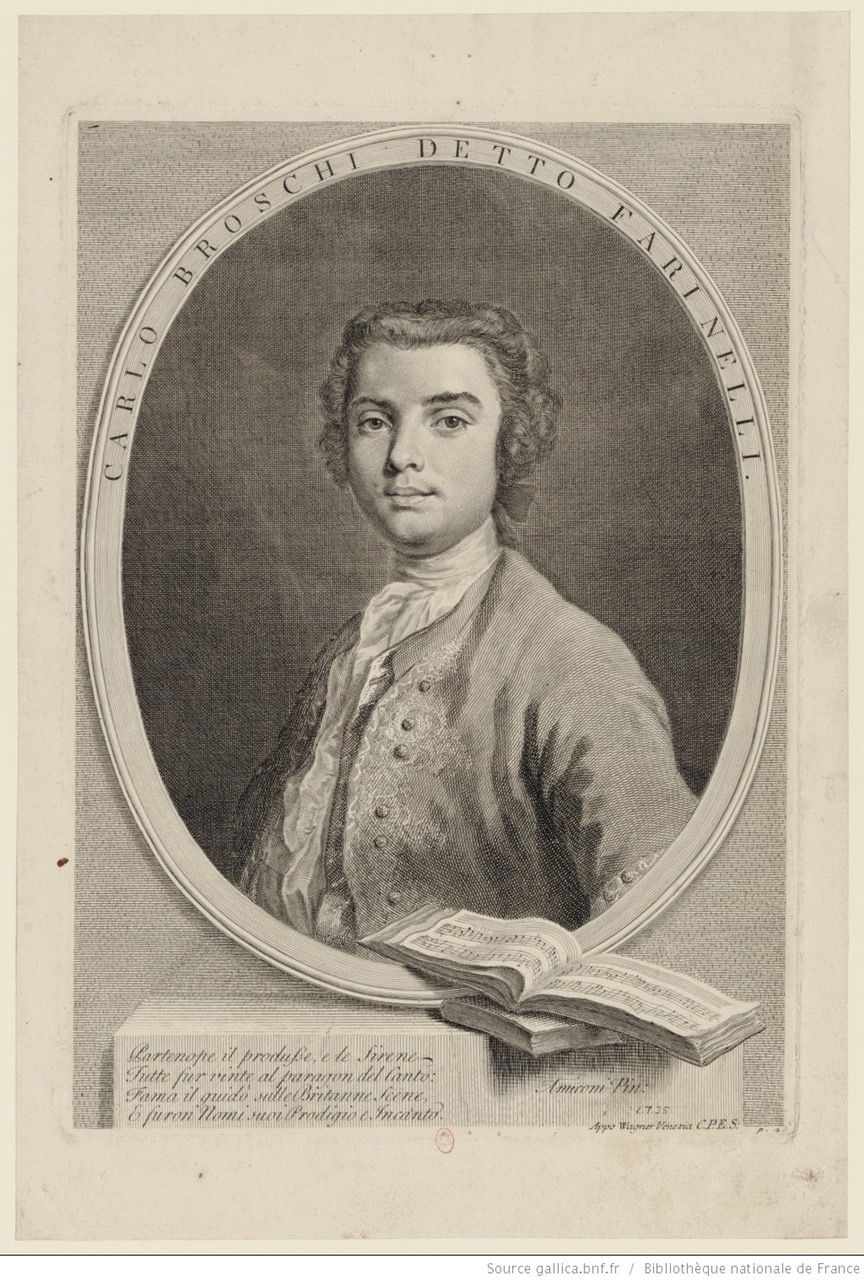
Since the current early-music movement began in the mid-20th century, countertenors and mezzo-sopranos or contraltos have waged an undeclared war over which vocal type best replicates the great castrati voices of the 18th century, when Farinelli and Handel’s favorite, Senesino, sang the heroic roles in opera seria.
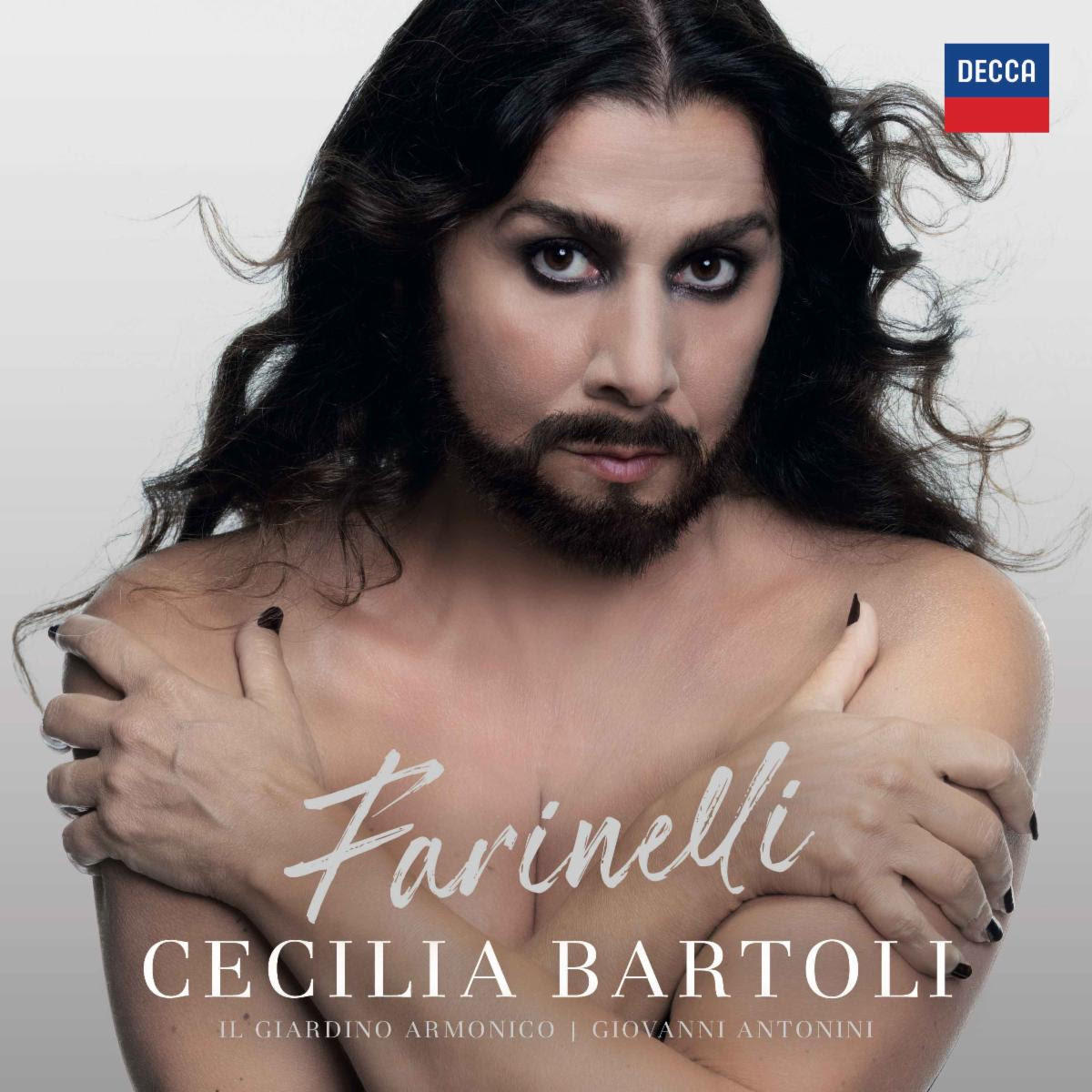
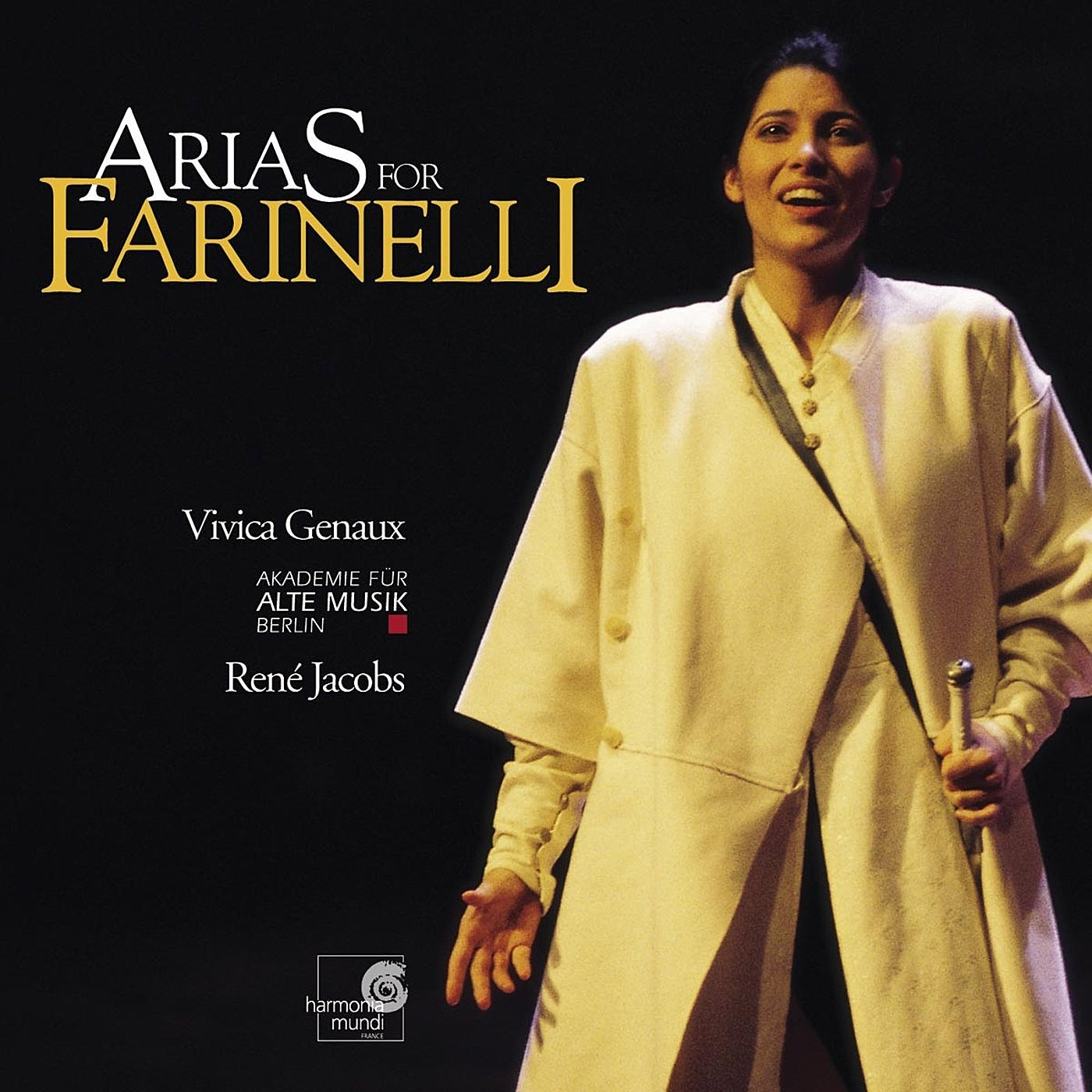
Several key recordings spotlight this putative dispute. Cecilia Bartoli is featured on a CD titled Farinelli sporting a beard on the cover. Vivica Genaux, minus facial hair in her cover photo, can be heard on a similarly titled CD from nearly 20 years ago with the renowned musicologist and practitioner of early music René Jacobs. Countertenor superstar Philippe Jaroussky can be heard on a Farinelli album solely comprising arias written by the castrato’s famous teacher, Nicola Porpora. However, these recordings reveal radically different vocal types: Bartoli exhibits a flexible, warm mezzo; Genaux claims a luxuriantly rich yet flexible voice, bordering on a contralto; Jaroussky displays an agile, honey-toned, light soprano. If we are to have historically informed performances of opera seria, which type of voice do we choose?
Baroque music specialists diverge on this issue. Countertenor and conductor René Jacobs, violinist and conductor Monica Huggett, and musicologist John Rosselli argue that contraltos or mezzos best represent the castrati sound. In a discussion of this topic prior to a brilliant concert of Handel arias sung by contralto Vicki St. Pierre, Huggett, formerly artistic director of Portland Baroque Orchestra, described most countertenors as a normal-voiced baritone who uses only a portion of his vocal cords to sing in his head voice, basically a falsetto. Women do not have to restrict their sound to a fraction of their vocal cords to sing in this range. Whereas Rosselli claims in his essay on the castrato in The New Grove Dictionary of Opera that the closest approximation to this vocal type is Marilyn Horne in her early recording of Vivaldi’s Orlando furioso, we have the opposite of a countertenor sound. Horne possessed a powerful, unique chest voice, dazzling agility, and a sumptuous legato. Legato, sustained by phenomenal breath control, was a distinguishing feature of the castrati’s vocalism.
Jacobs, a countertenor himself, contends that the castrati had powerful chest voices, “something not possessed by a single falsettist today, however freely such voices are used as substitutes for castratos.” As if acknowledging the difficulty of imitating this voice, the 1994 movie Farinelli electronically combined the voices of a soprano (Ewa Małas-Godlewska) and a countertenor (Derek Lee Ragin) to replicate the great castrato’s sound. Yet in his book Angels & Monsters, Richard Somerset-Ward argues the opposite: Only male countertenors, he states, provide “a distant echo” of the castrati.
Is it ever possible, then, to know the answer to this conundrum when we do not have any first-hand information except for early 20th-century recordings of a mediocre Vatican castrato, Alessandro Moreschi, at the end of his career? (These recordings can be heard on YouTube.) Is it that we don’t know how the castrati sounded that we substitute for the male heroes in Baroque opera these wildly different vocal types, or is it that gender correspondence is more important in our culture than vocal similarity? The answers to these questions reside in questions of gender, which have dogged the issue since the first boy went under the knife or, most commonly, had his family jewels crushed between stones.
Current opera casting for the male heroic roles that Farinelli and Senesino sang leans toward countertenors, especially as the voice type has developed in the last 50 years. Although Alfred Deller is often called the trailblazer for today’s countertenor-rich opera world, his slight sound provides no comparison to current singers like Iestyn Davies and Franco Fagioli. But by all accounts, even these voices do not come close to the enhanced treble voices that Handel and his contemporaries once employed to sing such adult male heroes as Julius Caesar or the knight Orlando in Ludovico Ariosto’s fantastical epic, Orlando Furioso.
 While women have always sung trouser roles in opera, contemporary audiences are most familiar with women portraying teenage boys such as Octavian in Der Rosenkavalier and Cherubino in The Marriage of Figaro. At the Metropolitan Opera in 1999, Jennifer Larmore sang brilliantly in the castrato role of Julius Caesar. Years later, the splendid Alice Coote sang Sesto, a role that is fair game for women en travesti because he is a young male. But a woman playing Caesar seems to create problems for a modern audience—or at least for some casting directors.
If we are to have historically informed opera productions, what can history tell us that might resolve this quandary? The castrati appeared on the scene in 16th-century Italy, shortly before opera was born. Because the Roman Church had banned women from church choirs, it seemed to consider mutilating young boys to gain a treble voice the best alternative. These treble voices gradually replaced the church choir “falsettists,” whom Patrick Barbier, in his book on the castrati, asserts were comparable to our contemporary countertenors. The castrati’s extensive training gave them powerful and rich treble voices.
Both Somerset-Ward and Barbier describe their education in detail. It started as early as the age of eight, a likely time for castration, and allowed some of these boys to become master musicians and vocal powerhouses with breath control that enabled them to sing long passages with either agile coloratura or lengthy legato, such as the fabled messa di voce that thrilled their 18th-century audiences. The emphasis on breath control also allowed the smaller vocal muscles of a child to become what Barbier calls a “remarkable muscular system of the vocal cords,” producing a unique female-sounding voice with the male lung capacity. A contemporary described Senesino’s voice as a “powerful, clear, equal and sweet contralto voice.” They became the superstars of opera seria, a form that dominated the opera stages from Alessandro Scarlatti to George Frideric Handel, although castrati had been used as early as the first operas at the beginning of the 1600s and as late as 1830. 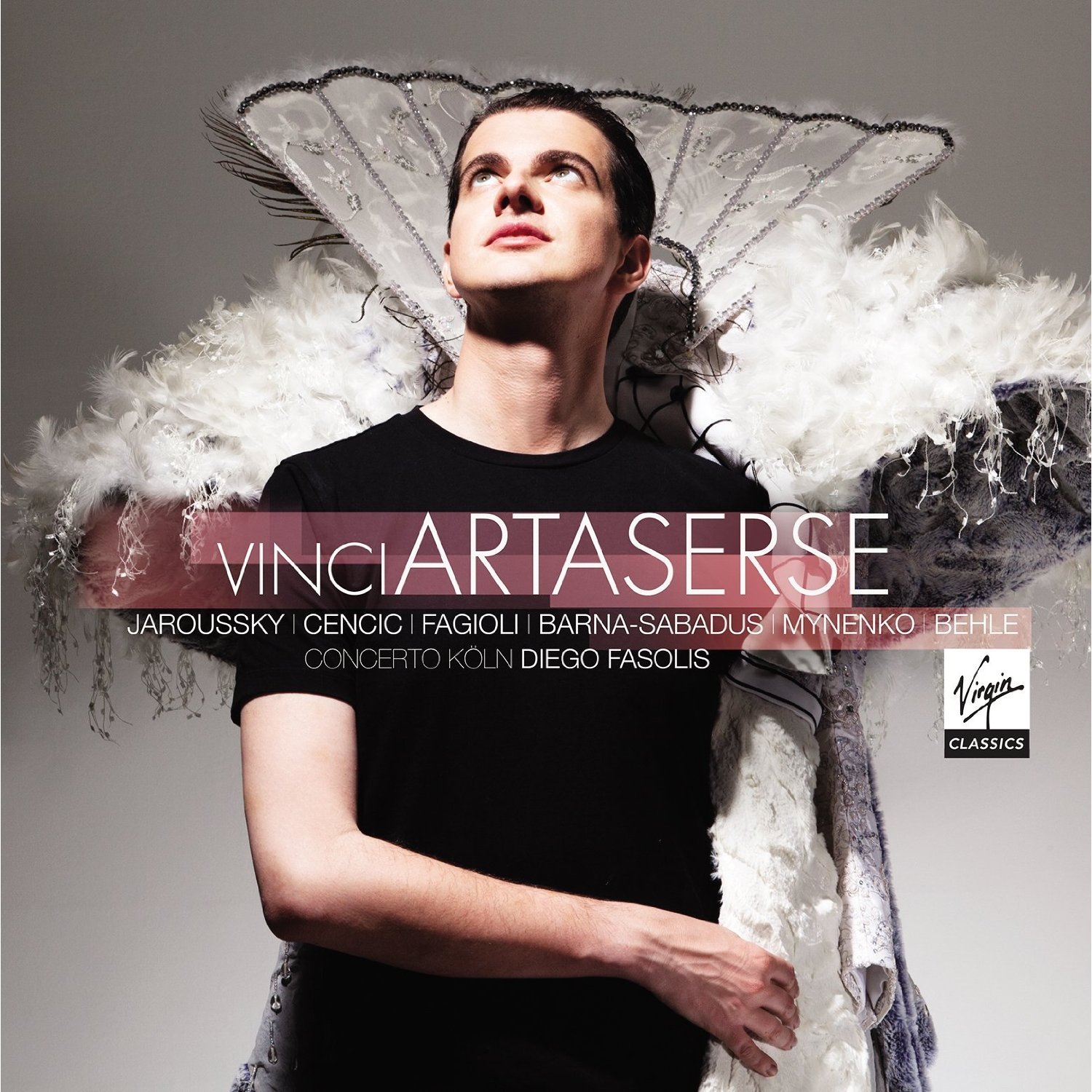
The castrati were also exotic, erotically ambiguous, and vocally athletic. Women fell in love with them, Napoleon was brought to tears by one, and the Spanish court hired Farinelli away from the opera world in order to ease King Philip V’s melancholy. On the stage, countertenors and women en travesti arouse similar erotic appeal. Like the boy actors who impersonated women in Shakespeare’s England, gender-ambiguous singers create an erotic frisson. The 18th century, like the Renaissance in both Italy and England, seemed to revel in and play with this erotic ambiguity, whether homosexual or heterosexual. Despite the current fervor for gender fluidity, contemporary opera culture appears less willing to offend the code of gender dualism.
The opera world of Handel and Vivaldi seemed indifferent to gender authenticity. For example, when Senesino was unavailable for the lead role in Radamisto, Handel substituted Margherita Durastanti. He never substituted a falsettist for a castrato. The ever-independent Vivaldi chose female contraltos for some of his heroic roles to avoid paying the astronomical fees commanded by the castrati. A contralto, Lucia Lancetti, debuted Vivaldi’s Orlando, and Maria-Maddalena Pieri opened as Tamerlano in his Bajazet. In the notes for a recent Virgin Classics recording of Bajazet, the introduction recounts Vivaldi’s preference for contraltos but offers no explanation for countertenor David Daniels’ appearance as Tamerlano. One of the most famous examples of the 18th century’s disregard of gender realism is the performance of Johann Adolph Hasse’s serenata Marc’Antonio e Cleopatra, in which Farinelli, a soprano, sang Cleopatra and Vittoria Tesi, a contralto who specialized in trouser roles, sang Marc’Antonio. Rome was a hotbed of castrati singing female roles because Rome—i.e., the Vatican—did not allow women on the stage.
This historical evidence suggests that mezzos or contraltos are the best substitutes for the castrati. Countertenors lack the vocal heft and rich timbre attributed to the castrati by contemporaneous accounts of their singing and vocal education. Daniels and Jaroussky display beautiful soprano voices with impressive agility, and Jacobs and Fagioli have developed attractive stronger voices by combining their tenor and head registers. None of these qualities, however, makes them heirs of the castrati. Their claim to the Baroque heroic roles in today’s revivals of opera seria is less vocal similarity than gender congruence. The countertenor voice can be deployed with grace and beauty in opera roles, mostly modern, that require a light, otherworldly sound, such as Oberon in Benjamin Britten’s A Midsummer Night’s Dream and the title role in Philip Glass’s Akhnaten.
Historically, the heirs to the castrati roles were women, and Maria Malibran provides the best evidence. Malibran (1808-1836) was the short-lived superstar just as the prima donna began to ascend beyond the castrati’s preeminence. In a superb introduction to Bartoli’s CD Maria, in which she performs arias Malibran first sang, the writer claims that the mezzo voice replaced the castrato voice as the castrati gradually disappeared from the opera scene. Malibran was a child of the musical Garcia family, which produced exceptional vocal teachers—her father and brother—and another outstanding mezzo, her sister Pauline Viardot.
Gioacchino Rossini and Vincenzo Bellini wrote male roles for mezzos, and Malibran admirably assumed both the lead in Rossini’s Trancredi and Romeo in Bellini’s I Capuleti e I Montecchi. Rossini scholar Philip Gossett contends that these roles “would have been sung by castratos in the eighteenth century.” Somerset-Ward describes this shift with not a little vitriol: “The great female sopranos [Giuditta Pasta and Malibran] moved swiftly and ruthlessly to colonize the territory that was being vacated [by the castrati].” Although Christoph Willibald von Gluck’s Orfeo ed Euridice was presented as a reform of opera seria, the Italian version retained a castrato as its lead. (Gluck’s French version featured a tenor because the French never tolerated the castrati.) Almost 100 years later, Hector Berlioz rewrote Gluck’s lead role for Malibran’s equally talented sister, a trouser role that is standard fare for today’s mezzos. 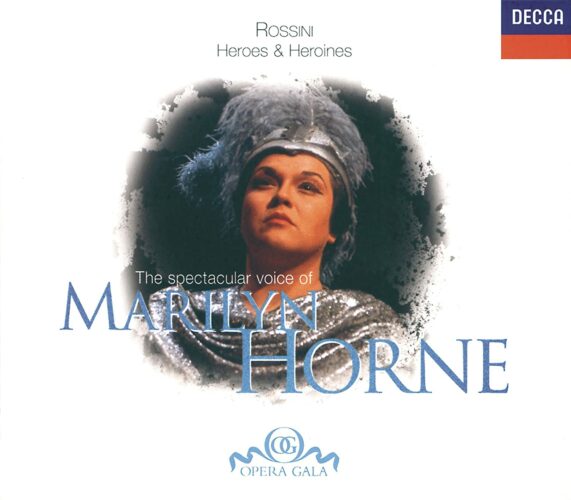
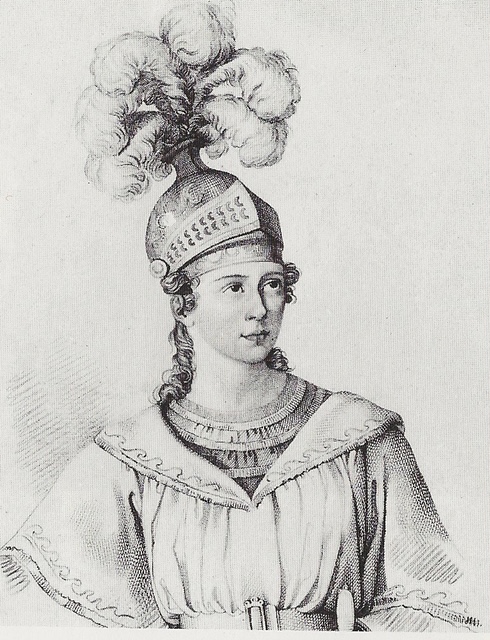
Following in Malibran’s footsteps, Horne broke barriers in the last half of the 20th century when singing male heroic roles in by-then long-forgotten operas by Rossini and Handel. Before countertenors became a fashion, she specialized in Rossini’s en travesti parts, including Tancredi, Arsace in Semiramide, and Neocle in The Siege of Corinth. Often with a plumed helmet, long cape, and gold or silver breast plate, she wowed audiences with her coloratura and legato brilliance. In 1969, she, alongside Beverly Sills, performed The Siege of Corinth at La Scala, and Horne sang its most demanding aria, “Non temer d’un basso affetto” (originally from the composer’s Maometto II), with flourishes that astounded even the finicky La Scala crowd. Beyond Rossini, Horne ventured into 18th-century music with a recording of the title role in Vivaldi’s Orlando furioso, and she entered castrato territory when she sang Handel’s Orlando at San Francisco Opera. Today, Bartoli, Genaux, and Marie-Nicole Lemieux comprise part of a new generation of superb mezzos who specialize in early music and have sung male roles with extraordinary bravura.
 The ideal voice for Baroque heroic roles, then, by every descriptor, is not a countertenor. A historically informed production of Handel’s Julius Caesar would not cast a countertenor in the central male role, but only in part because Senesino, the first Julius Caesar, was a contralto. Other evidence is more persuasive. The facts that the castrati had powerful chest voices, that male heroic roles like Vivaldi’s Orlando or Rossini’s Tancredi were written specifically for contraltos, and that the 18th century felt no compunction about interchanging castrati and contralto voices lead to the conclusion that mezzo or contralto voices are the most authentic matches for opera seria’s heroes. Or as George Loomis recently wrote more succinctly in Opera magazine: There are “three realities of Baroque casting: first, countertenors are not castratos; second, countertenors are not castratos; and third, countertenors are not castratos.”
Marilyn R. Farwell is a Professor Emerita of English at the University of Oregon. After her retirement, she reviewed music performances for 20 years, including Oregon Bach Festival concerts. She studied opera history at Rose Bruford College and is completing a book on women and the operatic lament.