
by Cecilia Duarte
Published August 10, 2026
We have to move away from a hierarchical mindset and sing from a more humble perspective — decolonize our musical mind and approach all music with curiosity.
This Canto column was first published in the May 2026 issue of EMAg, the Magazine of Early Music America
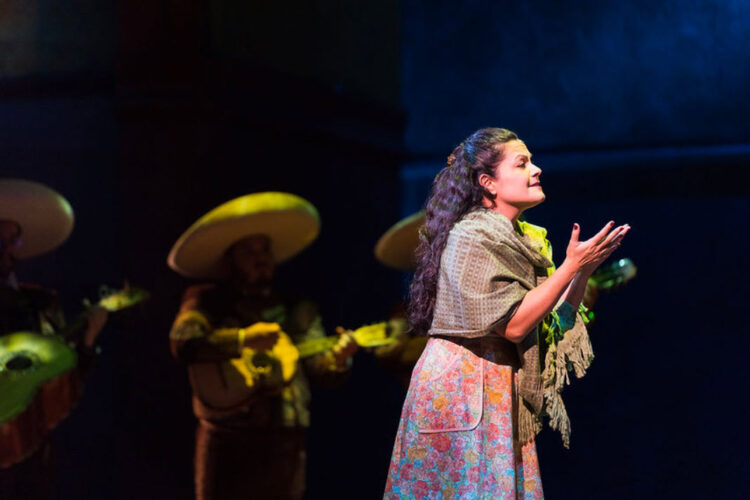
You may find me doing a Handel oratorio one month and singing an art-song recital, jazz gig, or mariachi opera the next. I find it exciting that my voice does not belong to one thing only, but to many.
Early in my career, and perhaps even earlier in my life, I realized that if we singers want to be comfortable and persuasive in different styles, we have to move away from a hierarchical mindset and sing from a more humble perspective — decolonize our musical mind and approach all music with curiosity.
Friends and colleagues have shared with me, and I know from experience, that vocalists with exclusively “classical” training can sometimes be blind to the richness of other music. We tend to minimize our efforts when approaching different or less “formal” genres, or even avoid them completely. My own experience demonstrates the value — both for our development as a musician and for our career potential — of treating all musical styles with respect. I’ve never had conventional training in Baroque music or in historical performance practice. But I had a love for that repertoire and a listening ear that allowed me to be inspired by historical styles and to find its common connections with a wider world of music.
At home in Mexico, music was our binding element. Our family included professional and amateur musicians, playing and listening to different styles. As a kid, singing pop and musical theater allowed me to go back-and-forth stylistically. A natural, down-to-earth approach became second nature.
When I started my training as a classical music vocalist, in my 20s, I sang in the state choir, where we served as the opera and symphony chorus; on weekends I sang in a rock band and performed at weddings. Even after I dropped out of college, I continued classical voice lessons.
When I moved to the U.S., I sang in an Episcopal church choir and with the Houston Grand Opera chorus and in its outreach programs. Making a living as a singer without a degree was both a humbling experience and one that made me feel grateful. I liked singing new music, and especially loved the early music we did at church, where extreme attention to detail was paramount. Despite the pressure to sing exclusively in classical styles, I knew I had to stay open-minded if I wanted to discover my true singing identity.
We premiered several new works with HGO, including a mariachi opera, Cruzar la Cara de la Luna. This was one of my first experiences where my worlds truly collided. I didn’t grow up listening to mariachi, but for my role as Renata I had to sing very lyrical music that leaned toward bolero. (The singing of the iconic Lola Beltrán, a star in 1950s Mexico, was a great inspiration.) For operatic singers, I sounded like a folk singer, and for mariachi people, I sounded like a classical singer. I guess that told me I was doing it right. There is a risk in doing this because people can put you in boxes, limiting your ability to the specific sound you create in front of them.
‘For operatic singers, I sounded like a folk singer, and for mariachi people, I sounded like a classical singer’
Both curious and restless, I decided to leave what I was doing to see what else was out there. I went back to college, and solidified my voice training while singing early music with Ars Lyrica Houston and other organizations in town — plus, of course, the occasional jazz gig. I created my own path in local music circles.
And I am always curious about the music I sing. If it’s Manuel de Falla’s El Amor Brujo, I want to make sure that the composer’s intent to bring flamenco music into the concert hall is done as authentically as possible. I have the technique of a classical singer, but for El Amor Brujo what I really need is to listen to the great cantaores de flamenco, like Rocio Jurado (a coplas Spanish singer), to hear beyond the voice production and listen to articulation, phrasing, and dialect.
In my experience, I have found wonderful singers and musical styles that I wouldn’t know if I hadn’t dug deeper. That’s how I found the wonderful world of Argentinian Zamba, when researching the work of Alberto Ginastera and his Cinco Canciones Populares Argentinas. I have a similar mindset if I am singing Bach or Chabuca Granda.
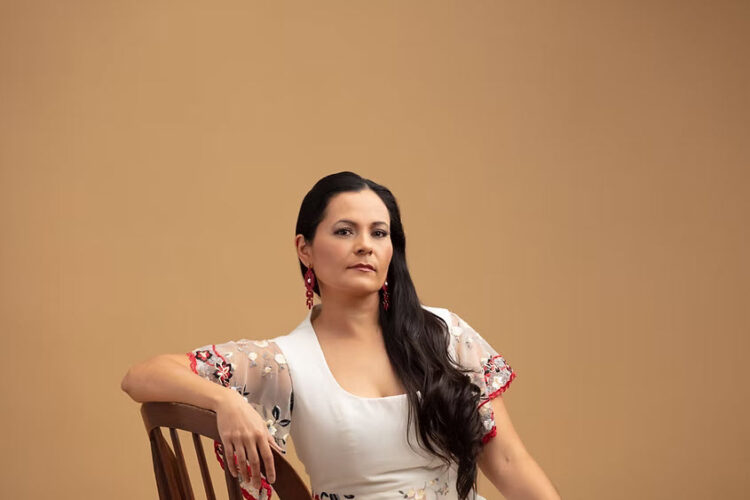
Learning about the culture where music comes from helps my competency in understanding the piece, because the music is the culture.
I am fortunate to be doing what I wanted a long time ago: singing. I am grateful that the music that formed me as a kid stays alive through my voice. As an immigrant, I have more than one home, and I can say the same for my voice.
Mezzo-soprano Cecilia Duarte has performed widely in early and contemporary music and is an active promoter of Spanish-language repertoire. Her first solo album, Reencuentros, is a compilation of Latin American songs. She lives in Houston and works as a performing-arts mental health counselor.