From the Publications Director: 10 Commandments for early-music artists and ensembles
This column was first published in the May 2026 issue of EMAg, the Magazine of Early Music America
We often hear versions of a basic question: How do I get my ensemble and concerts previewed, reviewed, mentioned in the press? Artists can run their own social media, but that DIY approach sometimes gets stuck cheerleading to pre-existing fans. In truth, you want someone else talking up your interesting projects and compelling performances, be it from news websites to arts bloggers and more. That attention, in turn, helps ticket sales and fundraising. It puts the organization on an upward spiral.
So at the past two EMA Summits we’ve presented sessions on the basics of early-music public relations. With help from savvy marketing and p.r. professionals, we put together a top 10 list that starts with self-awareness, focuses on visual materials and “backstory,” and expands from there.
1. Who Are You? Define your vision and voice. Discussing her own ensemble’s mindset, Boston Camerata Artistic Director Anne Azéma put it bluntly: “What do you have to offer that someone else doesn’t? Why should I listen to you?” How, and for what, do you want to be known? Play to your strengths. Your answers will help create a narrative and a mindset. (But please don’t confuse a slogan or mission statement with an artistic vision.)
2. The Strategy: Your 3- to 5-year ambition. Think about the big picture first, and then break it down into components. What do you want to be? What assets do you have now, and what will you need? Having a mostly unified strategy (plus that essential self-awareness) will help with decisions on everything.
3. The Tactics: Make a (flexible) plan. Knowing where you want to go, start planning how to get there. How will you grow your audience? What press are you hoping to attract, and why? Reviews are helpful: You can cite objective praise. Design your social media posts in ways that can be repackaged by outside media. Is your debut recording an end in itself or a key step toward broader recognition; if the latter, how do you plan to leverage the recording before the release date?
4. Be different. Be creative. What’s your visual aesthetic, your style? This is a key tactic because image and presentation, in our 21st-century culture, helps support and reinforce the music-making.
‘What do you have to offer that someone else doesn’t? Why should I listen to you?’
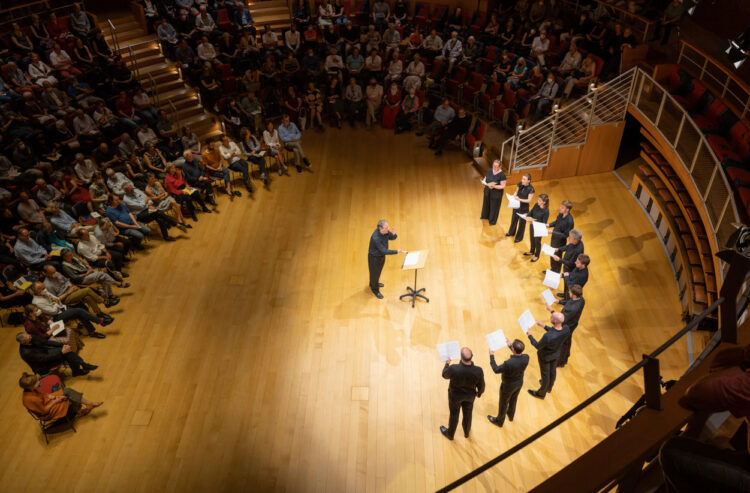
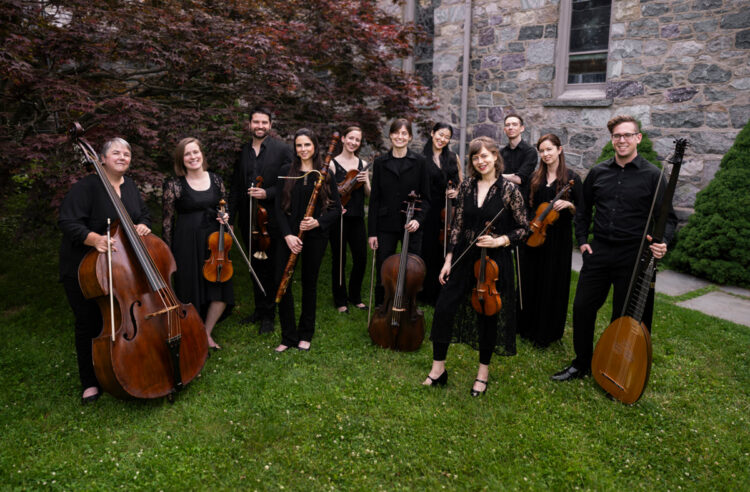
5. Photos Matter. In early music, this is a chronic shortcoming. Many great ensembles have poorly composed or generic photos that make them indistinguishable from countless other groups. Instead, think like a photo editor: “interesting photos get eyeballs.” Think about faces with expressions, beautiful and unusual instruments, unexpected angles, light and shadow, close-ups. Take a variety of horizontal and vertical images. If hiring a photographer, have them shoot at a dress rehearsal so they can wander the room for fresh perspectives.
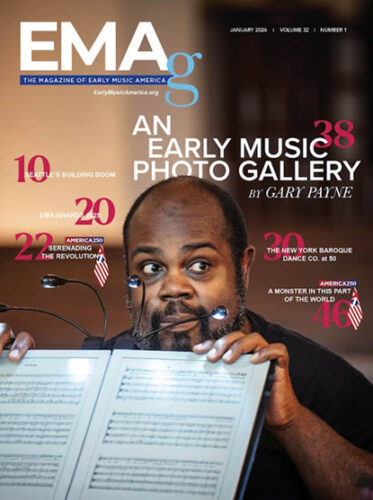
At EMA, we profile musicians for worthy artistic activities, but our photographic frustration is often very real. One example will suffice: We planned to write about a prominent ensemble embarking on a cool project, but their group picture was one we’ve all seen a hundred times: a half-dozen people, dressed in all black, standing in a semi-circle on a church altar, shot from a distance. This isn’t visually compelling and does not help attract readers to our publications. Fortunately, the musicians had posted eye-catching iPhone snapshots on their personal social media pages. We asked for permission and published those photos to accompany the article.
6. Concerts tell a story. This is the core of media relations. Performers can get wrapped up in details and forget to share the narrative behind their programs. What’s the concert’s hook? Write press releases that target multiple audiences, focusing not only on the music’s history, but on the program’s topical relevance or specific human-interest angle. And keep everyone’s attention with an online presence throughout the year, not just performance weeks. Practice taking video: a phone camera on the music stand, and so on. A clip can show rosening the bow, a final cadence, musicians laughing: we’re authentic, we’re comfortable, this is fun. You don’t need a professional videographer to be effective.
7. Build relationships. Move beyond the transactional. Talk to members of the media and know their own interests, schedules, connections. Invite individual press/bloggers to preview or review concerts, and extend an invitation to the concert even if they’re not covering the show. Build interest and enthusiasm everywhere you can.
8. Make it easy for them. If a writer or editor expresses interest in your event, don’t make them beg for photos or program notes. Ask about their timelines and share your own. Reply immediately to emails if they’re on deadline. Don’t send PDFs, which retain formatting. Plot out a publicity schedule well in advance of the event, and don’t forget to follow up afterwards.
9. Our A.I. future? Proceed with caution. Undoubtedly, artificial intelligence models will get better, faster, and more slick. For now, the results in design, imagery, and text are formulaic — the opposite of creative. Early music is a field of history and substance; A.I. is currently suited for people without those inherited benefits.
10. Play the long game. Ensembles and publications have staff turnover. An artistic leader can prepare by setting clear, long-term publicity goals and documenting the progress. As the League of American Orchestras’ Marketing and Communications Director Nichole Fehrman (formerly of Apollo’s Fire) summarizes, “The least amount of effort that we have to put in toward selling out a concert, the more time we can put toward other things so that we actually improve our long term future.”
Pierre Ruhe is publications director of EMA.