Burning questions about ‘authenticity’ reflect the preoccupation of previous generations. ‘Early music today is concerned with something a bit different — adapting what we know of historical performance practices to serve the narratives we want to tell modern audiences.‘
This essay was first published in the September 2025 issue of EMAg, the Magazine of Early Music America
By the year 2006, half the performances of the piano music of Haydn, Mozart, and the early Beethoven will be played on replicas of 18th-century instruments. Then I’d give it another twenty or thirty years for the invasion of period instruments to have taken over late Beethoven, Schubert, Chopin, and Schumann as well. If that prediction seems far out to you, consider how improbable it seemed in 1965 that by the mid-’70s Bach on the harpsichord would have developed from exoticism to norm.
So prophesied the late music writer Michael Steinberg, then in his last year as chief critic at the Boston Globe, in a 1976 article titled “The Fortepiano Revolution.”
Like most futuristic predictions, Steinberg’s missed the mark — but maybe not by much. Nearly half a century on from writing, although performances on period instruments (let alone fortepianos) are hardly the norm, historically informed performance has increasingly moved toward mainstream acceptance, picking up new repertoires, time periods, and styles along the way.
The movement’s relative success may seem surprising. The hegemonic grip of the larger classical music world — still mostly enthralled by Romantic-era repertoire — is formidable, and though significant strides have been made to champion the cause of historical performance, skeptics remain. Critics have also emerged from within the field itself, challenging many of the fundamental assumptions that helped propel the current revival of what insiders call “early music.”
The simplest conclusion is that the appeal of its repertoire and the passion of its practitioners has allowed the movement to overcome adversity from outside and within. But there was a time when talk of “Baroque performance practice” provoked wild debate — from whom, and why?
‘Some idiot with an authentic instrument’
Working in Boston, then as now a period-instrument hub, Michael Steinberg’s interest in the early-music movement exceeded that of most newspaper critics of his era. More representative of critical opinion writ large might be the response expressed in 1961 by the New York Times’ Harold C. Schonberg, a position he maintained throughout the next four decades of commentary: “These days we are too prone to let the findings of scholarship dominate the actual meaning and essence of music.”
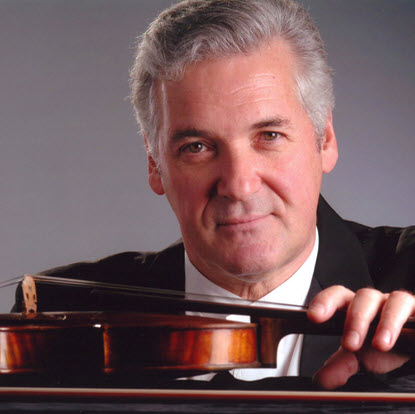
Whereas some met historical performance with mere skepticism, others reacted with outward hostility. In a 1991 interview with Fanfare Magazine, violinist Pinchas Zukerman sounded off about “all this Norrington/Hogwood nonsense. That is absolute and complete asinine STUFF. I mean it has nothing to do with music, it has nothing to do with historical performance. Zero. It’s nothing, it means nothing…I dare say that in seventy-five years people will listen to [Jascha Heifetz’s] rendition of a Mozart concerto rather than some idiot that played it with an authentic instrument…”
At about the same time, conductor Colin Davis, whose elegant, unforced interpretations of Haydn, Mozart, and Berlioz were perhaps rivaled by insights of period style, alleged “the way [historical performers] play Baroque music is unspeakable. It’s entirely theoretical. Most don’t play the music because it’s moving, they play it to grind out theories about bows, gut strings, old instruments and phrasing.” Still, Zukerman and Davis were not alone in their evaluations. When he began teaching Baroque violin at Indiana University’s Historical Performance Institute in 1982, Stanley Ritchie recalls, “I started out here as some kind of weirdo. People thought, ‘He can’t play the violin very well, so he plays Baroque violin.’” Ritchie soon proved them wrong, but the perception had staying power.
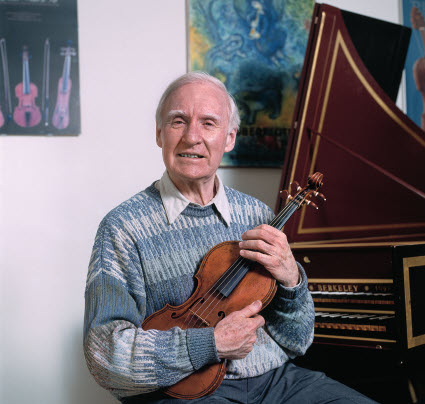
What provoked such a backlash? From an ideological perspective, modern performers bristled against the hard rhetoric from ambitious early-music conductors such as Christopher Hogwood and Roger Norrington, whose record-label marketing claims — “authentic” and “the way Mozart would have played it” — implied everyone else was wrong. Similar “earlier-than-thou” attitudes also made their way into collegiate studios to both good and bad effect, pushing the boundaries of artistic exploration while alienating those not fully subscribed to the mission.
Numerous technical flashpoints arose, too, especially surrounding vibrato (an ornament, not to be applied to every note) and intonation (owing partly to pitch-unstable instruments, but also non-adherence to equal temperament). Quality control could be an issue; Many early reconstructions of instruments, bows, and especially strings left much to be desired. And as Boston Camerata Artistic Director Anne Azéma recently pointed out, today’s performers benefit, “to put it bluntly,” from “a technical fluidity and efficiency that wasn’t available to players in the ’70s who did not have the benefit of highly practiced mentors.”
Echoes of battles past continue today. Some critiques remain reasonable; often, though, skeptics caricaturize stylistic decisions far beyond what historical performers actually practice, as evidenced by the YouTube tirades of critic Dave Hurwitz — recently profiled by The New Yorker — whose attacks on the field are largely based on positions no longer espoused by historical performers themselves.
Accumulated Cultural Capital
But in the late 20th century, voices of dissent were brewing from within the movement’s own ranks — among them the late eminent musicologist Richard Taruskin — who also challenged the Quixotic quest for so-called authenticity.
In his early days an accomplished choral conductor and viola da gamba virtuoso, Taruskin provoked some bewilderment when he began to question the movement’s basic philosophical assumptions. In a 1992 New York Times article titled “The Spin Doctors of Early Music,” he asked: “What does early music have to do with history? In theory, everything. In fact, very little.” It was one thing to revive the music of Josquin or Monteverdi. But to claim a “truer” interpretation of Mozart or Beethoven betrayed a fundamentally modernist outlook that spoke “more about the values of the late 20th century than about those of any earlier era.” Taruskin continued:
It is because in the absence of a vital creative impulse classical music has become a chill museum… Early Music, were it more truly “historical,” might have formed a saving exception to this pattern; up to Mozart’s time, at least, musical values were generally closer to those of what we now call pop than to those of our classical culture. But to ask that of Early Music may be asking the impossible. It is a product of the classical value system, after all, and its beneficiary. It cannot be expected to rebel. On the contrary, it has measurably advanced the perfectionist standards of its parent culture, pleasantly augmented its inventory of timbres, and become perhaps the least moribund aspect of our classical musical life. That is accomplishment enough.
Accomplishment enough? Maybe, maybe not. Yet today, Taruskin’s thoughtful critiques, like Zukerman’s un-thoughtful rants, seem like their own period pieces, telling us more about their cultural insecurities and their era than our own. And, in fact, recent decades have seen the field of historical performance gradually shed any controversy and accumulate cultural capital.
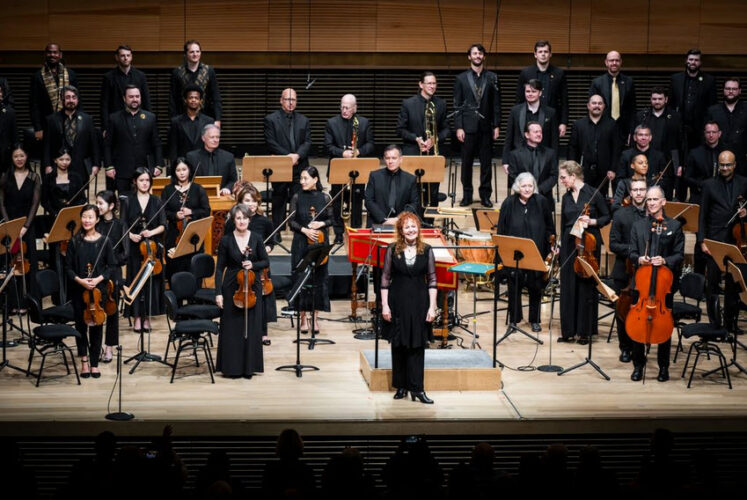
Historical performers are even wending their way into classical music’s most staid institutions — big-budget symphony orchestras and opera companies. These days, when the Metropolitan Opera performs Handel, it’s with countertenors in the castrati roles and an HP conductor in the pit. For decades, modern orchestras invited onto their podiums the likes of Norrington, Hogwood, and Nikolaus Harnoncourt. Since 2002, William Christie has been a regular guest conductor of the Berlin Philharmonic; last year, Jordi Savall partnered with the Chicago Symphony. Today, conductors like Nicolas McGegan, Jeanette Sorell, and Stephen Stubbs regularly appear with symphony orchestras throughout the U.S. and abroad.
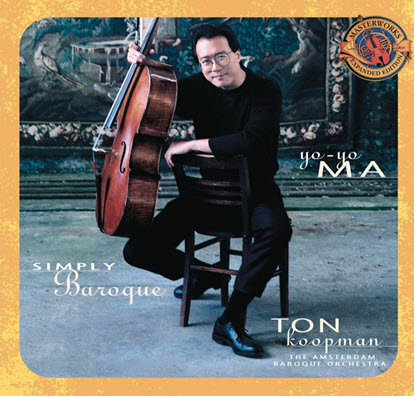
Moreover, thoughtful conductors with no allegiance to historical performance have taken inspiration from the field, from David Zinman’s crisp Beethoven recordings with the Tonhalle Orchestra Zurich in the ’90s to Simon Rattle’s recently announced HIP initiative with the Bavarian Radio Symphony Orchestra. The same can be said for performers: Those dabbling in the use of Baroque bows or instruments now include countless violinists including Vilde Frang, Augustin Hadelich, and Viktoria Mullova as well as cellists Yo-Yo Ma and Stephen Isserlis — all of whose backgrounds are far closer to a Zukerman than a Ritchie, and who few modern string players would accuse of being “idiots.” (Side note: after Zukerman’s tenure as music director of the St. Paul Chamber Orchestra ended in 1987, he was replaced by none other than Chris Hogwood.)
The field attracts followers for different reasons — some intrigued by the idea of fidelity to historical sources, others feeling liberated from an often rote modern-instrument scene.
“Things have changed enormously in the modern performance world,” says pioneering cellist and gambist Catherina Meints. Her career in early music, which included a decades-long professorship at Oberlin Conservatory, coincided with a nearly 30-year stint in the Cleveland Orchestra beginning in 1971. Of those early years, she recalls, “there was interest among a few people in the orchestra, but not much. Someone like Hogwood was pretty well accepted, though there would be a few diehards who, when asked not to vibrate quite so much, would treat it like the end of the world.
“It seemed to start smoothing out by the 1990s,” Meints continues. “People were more accepting of specialists, and modern orchestras were at least playing somewhat stylishly. You turned on the radio and you started hearing more early music. A lot of it just had to do with the quality.”
Thinking Fast and Slow
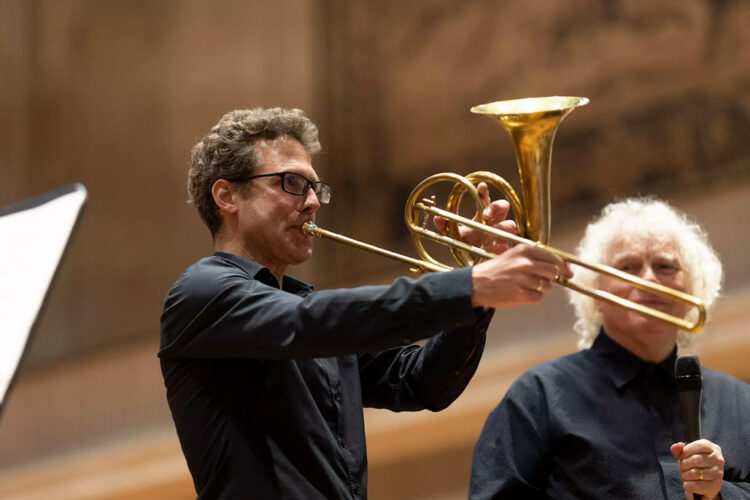
Béla Bartók once observed “in art there are only fast and slow developments. Essentially it is a matter of evolution, not revolution.” Though styled in its adolescence as a revolution, today’s historical performance movement more resembles evolution, an ecosystem in which divergent philosophies and practices compete and coexist in equal measure. The field attracts followers for different reasons — some intrigued by the idea of fidelity to historical sources, others feeling liberated from an often rote modern scene. Often it’s a bit of both.
Rachel Barton Pine, a celebrated modern-instrument violinist and a crack period performer, can attest to this process of gradual evolution and its many inherent contradictions. Pine’s interest in historical performance began as a teenager in the late ’80s, when she discovered Corelli’s violin sonatas in her favorite Chicago sheet music shop. “It was a while before I used gut strings at low pitch and threw off the chinrest,” she recalls. “I kind of gradually Baroque’d. But I knew this was a world I needed to explore.”
Not everyone was so enthused. Her management reluctantly allowed her to take gigs on Baroque violin but barred her from publicizing them. On at least one occasion, she was asked to turn down a period gig because she had not yet given a modern violin recital at the venue. “They didn’t want me to be known as a Baroque violinist because then I might not be seen as a legitimate modern violinist.”
‘I kind of gradually Baroque’d. But I knew this was a world I needed to explore.’
In 1992, at age 17, Rachel Barton became the youngest and first American gold-prize winner at the Johann Sebastian Bach Violin Competition in Leipzig, Germany. She would have been happiest competing with a Baroque bow, which simply felt more comfortable for early repertoire, “but I had to use a modern bow because, in the early ’90s, I would have been instantly eliminated if I had done something so radical. As soon as I won, though, I used a Baroque bow for all of my winner performances. I figured, ‘well, what are they going to do — take my gold medal back?’”
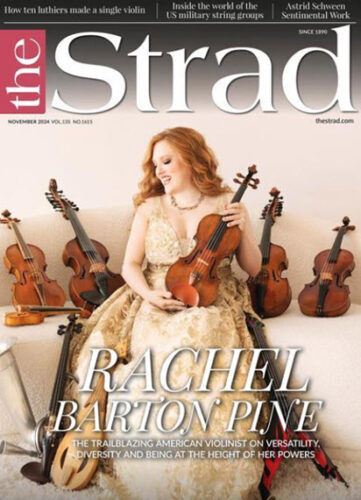
When, in 2015, she released an album of Vivaldi’s works for viola d’amore, her publicity team decided against putting her on the album cover, instead choosing an 18th-century painting of a woman holding the instrument. “I love that painting, and I don’t necessarily disagree with my publicity team. I had been on the scene for a long time, but they still felt it was a little too soon. They didn’t want an image of me holding a viola d’amore to dominate people’s consciousnesses.”
These days, Pine is relieved to be out in the open about her period playing. “My career is more established, and the world is more accepting now,” she says. “If you look at the latest cover of The Strad magazine, there I am surrounded by my whole menagerie of instruments: my pochette, Renaissance fiddle, rebec, viola d’amore — even my electric violin is in there. All my friends.”
Pine has observed a larger shift toward mainstream acceptance of historical performance. She sees more teachers encouraging their students to try period bows. Sometimes, when performing early music with modern orchestras, she brings a quiver of Baroque bows to hand out. “It used to be that everyone needed one. Now about half the players will already have one in their case.” She judges several international competitions and will “see a kid or two use a Baroque bow. I don’t see my fellow jury members scoring them any lower.”
Indeed, super-virtuoso Rachell Ellen Wong won the 2019 Barbash Bach Competition with a shrewd, competition-savvy setup: a modern violin for projection and power, with a Baroque bow and hybrid gut strings for phrasing and tone. “I don’t just play Baroque — I play lots of different time periods, and I always try to do it in the most historically educated way,” Wong says.
Roots and Branches
If the outside world’s perception of early music is changing, it may well be because early music itself is changing. Advocating for itself in the larger sphere of classical music is one important task for the field, but it is no longer the only task. Perhaps even more pressing are the ways in which early music chooses to meet the future.
Contrary to Taruskin’s earlier point, I would like to think that the state of early music today has adopted plenty from the “pop” value system. For this publication, I have reviewed albums straying from the old boundaries of early music: violinist/singer-songwriter Rebecca Scout Nelson’s folk-meets-Baroque album; Constantinople’s embrace of 15th-century frottole alongside music from Persia and the Ottoman Empire; and Bjarte Eike’s delightfully irreverent imagining of a 17th-century English tavern, marrying Purcell with elements of jazz, klezmer, plus a few sea shanties for good measure. I’ve also spoken with young musicians composing compelling music in Baroque idioms: Jessica Korotkin’s Bach-inspired cello suites or the composer-performer members of Musica Pratica, re-opening the book on Baroque compositional styles with a retro mindset. Even well-loved fare can get the “pop” treatment if approached with genuine, open-minded curiosity rather than strict dogma.
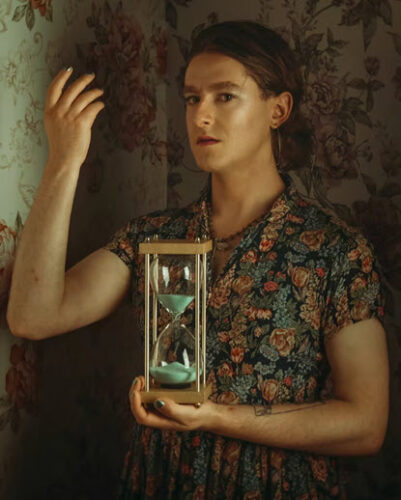
Viol and vielle player Niccolo Seligmann, who performs with leading ensembles (Alkemie, Washington Bach Consort) and in studio work for video games (Civilization VI, Pentiment) and television (The Witcher), feels this tension acutely: “On one hand, there is a preservationist outlook on early music. And there are other people, people more like me, who have more of an experimental approach — what else can early music include? How far can we take this? That said, I think most early-music groups try to strike some balance between the two.
“While every generation contains experimentalists and preservationists,” Seligmann observes, the question of authenticity “more reflects the preoccupation of previous generations to me. My experience in early music today is concerned with something a bit different — adapting what we know of historical performance practices to serve the narratives we want to tell modern audiences.”
‘Adapting what we know of historical performance to serve the narratives we want to tell modern audiences’
As for my own 30-year predictions, I imagine the future of historical performance will be weirder and more interesting than anyone can foresee. The marriage of early music with folk and pop will be, if not the norm, then at least commonplace, as will period interpretations of music well into the 20th century. It is my hope that every conservatory student will graduate having performed on a period instrument.
I hope that historical performance will remain a refuge from stock interpretations and creatively oppressive regimes; I also worry that new generations of early musicians will lose their scholarly chops and rely too much on rote instruction, resulting in homogenized performances that impart no compelling sense of time and place, reducing historical performance into something merely aesthetic.
As performers continue to drift away from the plush, Zukerman-style sawing of decades past, these two worlds may resemble each other more and more. (It may behoove us to create a little controversy of our own — our turn to give as good as we got and prove that we still have something special to offer.) Carving out audiences from the larger classical music crowd may become less important than attracting listeners with no (or negative) affinity for classical music. Online media will prove vital in reaching that end, and may even supplant live performance.
The tension between preservationists and experimentalists will always remain, as will the myriad resulting contradictions. Squaring those contradictions may ultimately prove impossible, but perhaps early music’s greatest asset is its ability to accommodate an enormous range of perspectives, influences, and styles. Seligmann puts it best: “Some time ago, I heard a concert by the Tuvan throat singing ensemble Alash, and one of the musicians said something I’ll never forget: ‘Traditional music is like a tree. The roots grow deep into history, and the branches grow out into the future.’ I love that image, because I think it taps into something that’s also true for early music. The tree needs healthy roots to survive — and also healthy branches.”
Jacob Jahiel is a writer and violist da gamba pursuing a PhD in historical musicology at the University of Pennsylvania.