
Risk-adverse programming reinforces a narrow employment pipeline
This RIPIENO column was first published in the September 2026 issue of EMAg, the Magazine of Early Music America
Every season, classical music organizations that program repertoire from the Baroque and earlier tend to gravitate toward the same handful of monuments: a Bach Passion, a Handel oratorio, a Vivaldi concerto grosso or two. These are safe bets: Audiences know them, boards approve them, and they photograph well in a season brochure. That is important, but there’s another story hiding inside this programming pattern, one about who gets to build a career playing early music.
This isn’t an observation about repertoire choice in the abstract. It’s about what that repertoire choice does to the labor market underneath it.
Consider what a season of Baroque “greatest hits” requires, instrument by instrument. Strings are in nearly everything, of course — Bach, Handel, Vivaldi, Corelli, you name it — which means a violinist or cellist who specializes in historically informed performance can, with some hustle, cobble together something resembling steady work. Contract to contract, ensemble to ensemble, the calendar fills in. It’s not easy money, but it’s predictable in a way almost nothing else in this field is.
Many other specialized instrumentalists experience a very different livelihood.
Trumpets and timpani do fine, relatively speaking — there’s a real and recurring need for them, largely thanks to Bach and Handel’s fondness for…trumpets and timpani. The annual Messiah industrial complex keeps a select group of wind players gainfully employed every December (and sometimes again at Easter). Horns get a smaller version of the same deal: hired often enough to be a known entity, not often enough to build a season around.
For trombones and cornetti the picture is entirely different. These players work predominantly inside a narrow repertoire window: Monteverdi’s Orfeo and 1610 Vespers, the occasional 17th-century miscellany dressed up as “Polychoral Splendor of Venice” or “Praetorius Does Christmas,” or some equally evocative festive subtitle. Outside of that, the work simply isn’t there.
Ask around and you’ll find that most working sackbut and cornetto players in North America have performed with essentially every organization that programs this repertoire — once, maybe twice — and then the phone doesn’t ring again for years. Perhaps the only exception is the small number of organizations artistically led by wind players, such the Chicago’s Newberry Consort or Philadelphia’s Piffaro, the Renaissance Band.
To shift this narrative, what if we considered repertoire planning as a labor issue and employment policy? When artistic committees (or solo artistic directors) keep returning to the same canonical warhorses, they aren’t just making an aesthetic choice — they’re deciding, season after season, which specialists get to have a career, and which get to make a hobby of occasional gigs.
The fix for this problem isn’t complicated, artistically speaking. There is no shortage of extraordinary music that would give brass, winds, and other underutilized specialties a steadier flow of opportunities. There is no hidden archive — it’s just that programming committees, understandably risk-averse and often working with thin margins, keep reaching for the same handful of proven sellers, and in doing so keep reinforcing the same narrow employment pipeline.
There’s no shortage of extraordinary music that would give underutilized specialists more opportunities
An early-music field with a desire to sustain specialists — and, notably, keep its academic programs in existence — must treat repertoire planning as a labor question, not just an artistic one. Every season built entirely around the same canonical monuments is also, quietly, a season that tells an entire generation of brass and wind specialists that this field has room for their talent maybe once every three years.
It’s not a repertoire problem. It’s a workforce problem wearing a programming committee’s clothes.
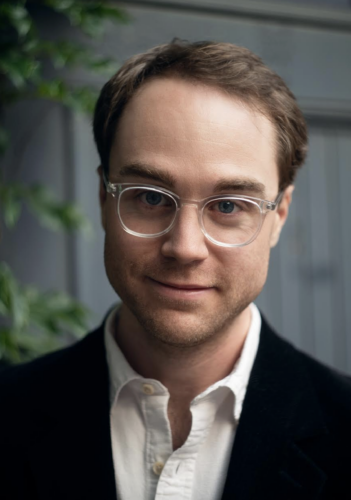
Adam Dillon is a performer, administrator, and researcher who studied at McGill Univ., Indiana Univ., the Schola Cantorum Basiliensis, and the Univ. of North Texas, and plays historical trombones of all shapes and sizes. He works at the Curtis Institute of Music and is the artistic director of the Sackville Festival of Early Music in New Brunswick, Canada.