by Karen Cook
Published November 15, 2021
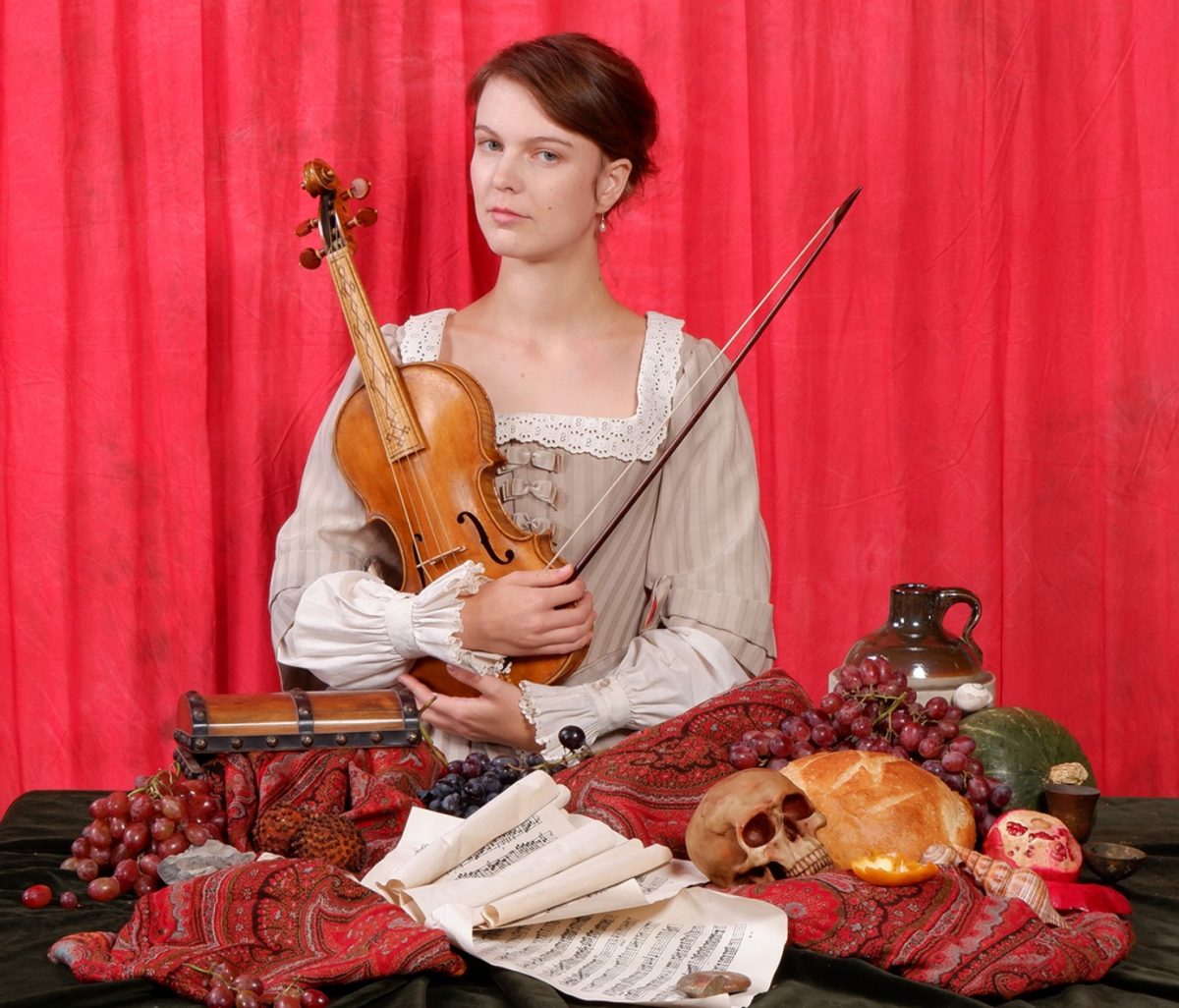
Préludes et Solitudes. Marie Nadeau-Tremblay, violin. ATMA Classique ACD2 2823.
It probably goes without saying that music can be an intensely personal, emotional experience, and often a solitary one: Think of the long hours of practice many performers put in to be their best, or the time spent immersed in favorite recordings. The last 18 months or so, though, have taken isolation to new levels, in mentally, physically, and emotionally challenging ways, and all of us have been forced to find ways to cope.
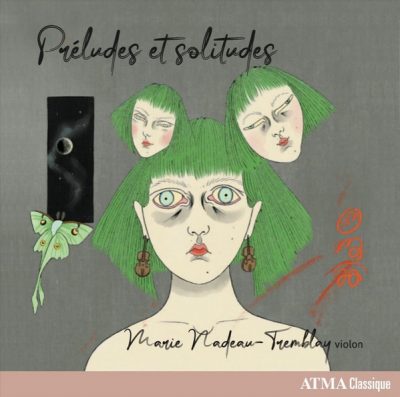 As violinist Marie Nadeau-Tremblay eloquently describes in the liner notes, her new recording was birthed from the pandemic’s long hours of solitude, both in countless hours of practice and other solitary activities such as writing and art. Motivated by a desire to share the emotions of this surreal and isolated experience, she focused on music for solo violin, music written to be performed by oneself, without accompaniment, perhaps for one’s own enjoyment. But more than that, these works are all improvisatory in nature, perhaps symbolizing the myriad ways in which we have all had to pivot, how we have been forced into a kind of constant flexibility.
The repertoire choices are as bold as her playing — a lot of less familiar names and works to greet the listener. The opening Prelude by Pedro Lopes Nogueira sounds positively spontaneous, as though the listener had accidentally stumbled upon someone sight-reading (perfectly) a brand-new work, the final pizzicato like a snap of the fingers in the pandemic’s face. The album continues through a host of delightful works — some of Johan Helmich Roman’s “experiments” follow, showcasing both Nadeau-Tremblay’s terrific technique and her rich, warm lower register. Fantasies by Nicola Matteis Jr and Georg Philipp Telemann come next; the Dolce of Telemann’s Fantasy VII in Eb Major is a particularly sweet standout, and Nadeau-Tremblay superbly brings out the wandering, indecisive elements in the concluding Allegro of the Fantasy IX in B minor.
In between, Nadeau-Tremblay includes a dazzling improvised prelude of her own device. More preludes follow: the contemplative, wistful Prelude in E minor by John Walsh/Giuseppe Torelli, Thomas Baltzar’s playful, charming Prelude in G, and the somber, almost mournful Prelude by Henry Purcell. She concludes the album poignantly with the Passacaglia in G minor from Heinrich Biber’s Mystery Rosary Sonatas, 65 variations on a descending tetrachord that run the gamut of emotions — an encapsulation in miniature of the album itself.
Nadeau-Tremblay takes the listener on a journey through the long seasons of the pandemic. We hear everything from gusts of spring wind and summer’s bird calls to long, cold, tranquil winters, still alone, still wondering, still improvising. It’s a wonderfully, terribly intimate album that feels like one seamless whole, something to sit with in private contemplation. Some of these works feel like they call the listener to awaken to new possibilities; others cry with the weight of the world’s grief; still others laugh in spite of it all. Every note, every rasp of the bow hair upon string, every human breath, every pizzicato feels defiant, challenging the interminable solitude to a duel. Nadeau-Tremblay wins.
Karen Cook specializes in the music, theory, and notation of the late medieval and early Renaissance periods. She is assistant professor of music at the University of Hartford in Connecticut.