by Gillian Anne Renault
Published January 26, 2026
As the New York Baroque Dance Co. launches ongoing technique classes, four new dancers join the company — but without experience in Baroque style
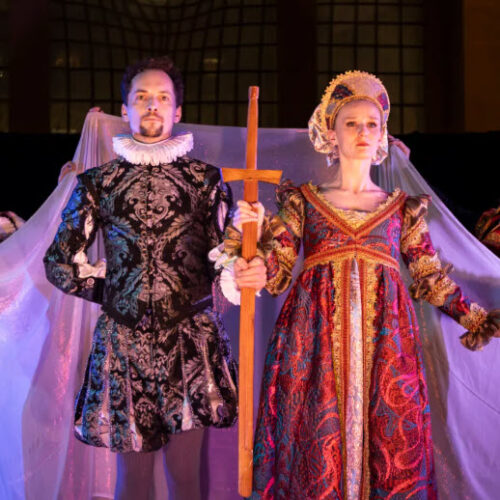
Julia Bengtsson, a dancer and choreographer with the New York Baroque Dance Company, was truly surprised. When she held auditions last fall to find new dancers for the company, more than 90 people sent their videos, far more than she anticipated. After assessing many of the applicants in person, she chose just two men and two women. These four are all young, eager, and well-trained — but with little experience in Baroque style.
“We wanted to bring new, potentially younger, dancers into the company because we were getting more jobs and needed to have roles double cast in case of date conflicts or injuries,” says NYBDC’s artistic director Catherine Turocy. But their lack of experience was a challenge.
At about the same time, Turocy, Bengtsson, and long-time ensemble member Caroline Copeland had decided to start a regular technique class, something the company hadn’t offered in more than three decades. The planets aligned. The new class would get the four new dancers up to speed, as Turocy puts it, “while also making sure our more seasoned dancers keep their Baroque technique the best it can be.” (Most professional dance companies provide regular, sometimes daily, technique classes for their dancers, often mandatory, known as “company class.” This likely sets the dance world apart from the music world.)
But senior NYBDC members couldn’t teach the class on a regular basis because of travel and performing schedules, so for the first time Turocy looked outside the company for help. Thomas Baird was the answer.
“He’s an inspired teacher whom I trust,” Turocy says. “He was in the company years ago and we worked well together. He seemed like an obvious choice.”
Baird danced with NYBDC from 1986 to 1992, often as Turocy’s partner. He later partnered with Paige Whitley-Bauguess, another well-respected historical dancer, and together they performed with early music groups throughout the world. From 1998 to 2008, Baird co-directed the East Coast Baroque Dance Workshop at Rutgers University. These days Baird is best known as a teacher: he has one of the most active online teaching platforms in the historical dance community.
In all, 16 dancers are currently enrolled in the “company class” which takes place weekly at a dance studio in Manhattan.
Baird is very particular about the recorded music he uses for these 90-minute sessions. “I use Lully, Campra, Desmarets, and Marais,” he explains. With an ear for vitality and physicality, he chooses recordings from the Boston Early Music Festival and by groups such as Chatham Baroque and William Christie’s Les Arts Florissants. He has only one reservation about Christie’s interpretations: “His tempi are like horses out of the gate. You can only move so fast in heeled shoes!”
These recordings, he says, will attune dancers’ bodies to the intricate rhythms of French Baroque music which are often challenging for people new to the field. “There is very little wiggle room in the phrasing” he says, as he counts out a favorite phrase from a chaconne in Marc-Antoine Charpentier’s La Malade Imaginaire: “Seven, seven, eight, seven, seven, seven, nine, nine, five.” Musical phrases such as this can be a stretch for ballet-trained dancers who are accustomed to learning new choreography by counting the steps in sets of eight beats.
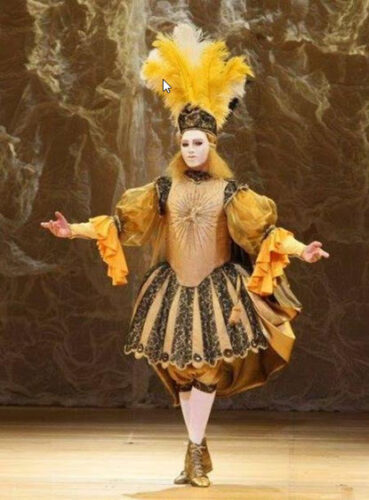
Indeed, 18th-century dance and music are bound up in ways that can be overwhelming even to a professional dancer in the 21st-century, says Baird, “but that’s where I find the expression of Baroque dance exists. It’s not in the masks, capes, and feathers. It’s in the music and in the insteps of the dancers, the knees, the ports de bras [arm movements].”
Eager to take on this new assignment, Baird suggested applying for special funding, something Turocy hadn’t even considered. The donations he secured from the Fetherstonhaugh Family Foundation, sponsor James Laurino, and a few other sources cover his salary and allow the company to offer the classes for free. This is significant because most professional dancers take a class five or six days a week and the cost of dance instruction in New York City averages $25 a class.
Expanding the Dance Repertoire
Like the early-music world, the Baroque dance scene is closely connected. Julie Andrijeski, head of the Historical Performance Program at Case Western Reserve University in Cleveland, teaches Baroque violin and Baroque dance to musicians and has worked with Baird since the 1980s. Andrijeski says his history with the NYBDC means he’s still “part of the family” but that his enhanced understanding of Baroque technique, gained across the decades, will be immensely valuable to the company today.
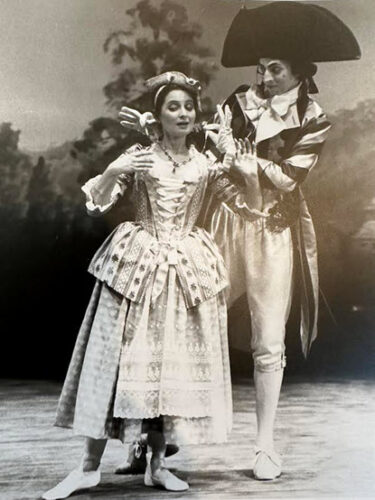
by Turocy. (Photo courtesy of C. Turocy)
Turocy’s vision for the future includes expanding the company’s core repertoire. Her expertise lies primarily in dance created between 1700 and 1750. Bengtsson, working with mentor Alan Jones, has begun expanding the ensemble’s focus by studying notation and treatises written as late as 1825, when the technique is more balletic and potentially more familiar to ballet-trained dancers who are just discovering historical dance. Baird teaches both mid-18th century and early-ballet technique — another reason Turocy is excited to have him on board.
“Tom will be our consistent dancing master throughout the season,” Turocy says. She hopes together they’ll discover “some blossoming artists” among the newer participants. “Some might want to learn the [Feuillet] notation system, some might want to get involved in historical reconstructions.” Others might choose to choreograph new dances with an historical perspective, as Bengtsson did when she intertwined Baroque and contemporary dance vocabulary in a solo for Bach’s Cello Suite No. 5. (Bengtsson was profiled in the May 2025 issue of EMAg.)
Baird’s class started on January 16 and already two of the new dancers, a man and a woman, are scheduled to perform. They will travel to Dallas to dance with the company in a staged version of Nicolas Bernier’s 1715 cantata Apollon, La Nuit, et Comus with the Dallas Bach Society on March 14.
Baird’s contributions will help Turocy develop a deep bench of consistently well-trained dancers ranging from 20 to 45 years old. Older dancers excel in the company’s dramatic works but may have difficulty performing the more athletic repertoire, Turocy says, while younger dancers ace the athletic choreography but lack sufficient life experience for the expressive nuances of theatrical works.
Going forward, she hopes the company can create a bridge between historical and 21st century dance, the way that the early music world is now interacting with the general music scene.
She cites an example: When modern symphony orchestras hire conductors like early-music expert Nicholas McGegan to conduct Bach and Mozart, the musicians don’t change their instruments but are exposed to a more historically attuned reading of the composer’s work. Likewise, Turocy hopes that NYBDC’s expansion into later periods will connect the beauty and technical virtuosity of historical dance with today’s dance world.
Gillian Anne Renault’s dance writing has been published by numerous outlets including Ballet News, the Los Angeles Daily News, and ArtsATL.org. She was a recipient of an NEA fellowship to attend American Dance Festival’s Dance Criticism program. For EMA, she recently wrote about English country dance as an American pastime.