
Reviews by the editorial staff of Early Music America. Have a new recording or book? Submit it for consideration.
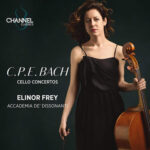
Elinor Frey’s Personal Approach to CPE Bach
Cellist Elinor Frey's playing is known for her vibrant personality, precision technique, and an uncommon dedication to historical practices. Her latest recording, three cello concerti by CPE Bach, conveys both the elegance and the intensity of this always surprising composer.
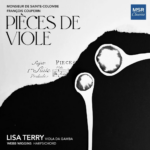
A Hummable Viol: Suites by Couperin and Sainte-Colombe
Two period-instrument masters, viola da gamba player Lisa Terry and harpsichordist Webb Wiggins, delve into suites by two composers, Sainte-Colombe and François Couperin on a rewarding new album. Their readings are fully alive, marked by rhythmic and melodic nuances.

Music from the Tang Dynasty
Eurasia Consort's new album, Music of Paradise, explores folk songs and dances from Tang Dynasty courts. It feels like an unbroken link to a past too often overlooked in the West. For this journey, the musicians immersed themselves in Chinese artwork and old manuscripts from the 7th through the 9th centuries.
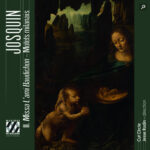
Visceral Josquin from Cut Circle
Volume 2 of Cut Circle's complete Josquin cycle, gloriously sung, includes motets from the 1480s and the 'smutty' Missa L'ami baudichon. Director Jesse Rodin's startling approach to Josquin moves away from that smooth Anglican-style choral sound. The five-voice ensemble makes a satisfying new argument for how this polyphony might have sounded.
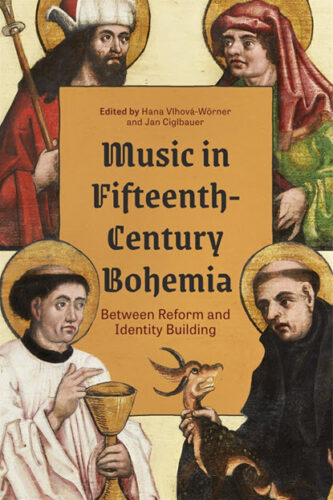
Bohemian Myths, Bohemian Facts
This reassessment of musical culture — particularly religious music — in 15th-c. Bohemia tries to look beyond the nationalist agendas that have previously colored scholarly work on this topic. As a rare holdout for monophonic chant and an area undergoing theological reform in the late Middle Ages, the region provides rich topics for this collection of essays written through an updated lens.
Music Fit for a Teenage Bach
The debut recording from South Carolina-born harpsichordist Gabriel Smallwood asks who made the young J.S. Bach. Smallwood is imaginative and technically assured in pieces mostly in the North German style with its free, episodic forms, its dense counterpoint, and its long, improvisatory flourishes.

Drama, Humor, Technicolor from the Butter Quartet
Based in the Netherlands, the remarkable Butter Quartet research and perform music from the late 18th and early 19th c., with rewarding adventures into modern works -- all on period instruments. Their latest album includes string quartets by Haydn and Caroline Shaw.
A Lautenwerk Revival Takes Shape
With two new recordings this year, the lautenwerk — an obscure, gut-stringed, mellow keyboard instrument sometimes called a "lute-harpsichord" — is having its moment. J.S. Bach owned two of them. Wolfgang Rübsam's latest recording, of Bach's didactic Inventions and Sinfonias, is a natural fit.
Changing Attitudes About Musical Counterfeits
A fascinating new book aims to understand the “inventive” musical forgery: not a counterfeit, per se, but a newly created composition that is falsely attributed to someone else. The author investigates not only why forgers may be attracted to such deceptions but, as authentication has shifted from stylistic concerns to source documentation, why we are repulsed when the truth is revealed.
A Six-Pack of Bach from Lillian Gordis
Berkeley-born harpsichordist Lillian Gordis' powerful new Bach recording dwells on sixes: the Partita No. 6 and English Suite No. 6, separated by six preludes and fugues from the Well-Tempered Clavier. With a unique voice and confrontational attitude, Gordis is a master of this repertoire.