Brace yourself for tri-corner hats and fife-and-drum renditions of ‘Yankee Doodle.’ Nostalgia aside, this is an opportunity to reflect on the broader trajectories of our musical heritage.
This Guest Editorial was first published in the May 2026 issue of EMAg, the Magazine of Early Music America
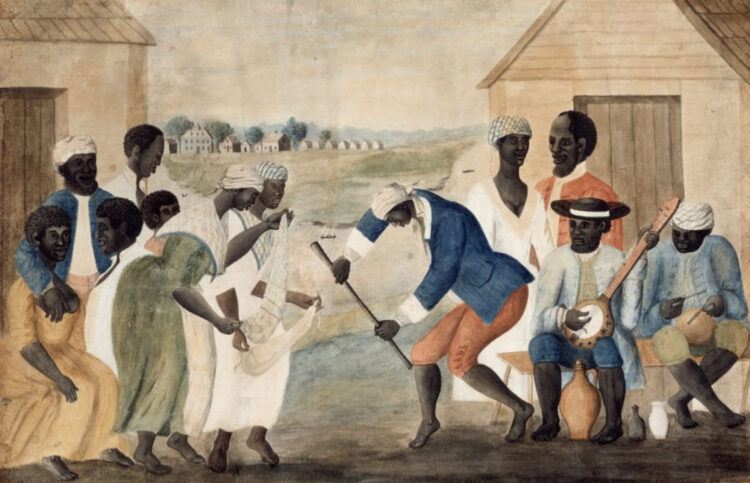
In the shelter of night, Africans enslaved in the American colonies mustered energy after their unrelenting labor to walk miles into swamps and woods, bridging Angolan, Yoruba, Bantu, Senegambian, and Igbo differences to find shared resilience in song and dance.
New England sailors traded songs in taverns, with hearth and harmony shielding them from bitter cold.
Wealthy mid-Atlantic society gathered in parlors to the sound of a harpsichord.
First peoples, from the Oneida to the Powhatan and Seminole, bolstered themselves in a time of displacement with sacred songs.
Since the dawn of the United States, there has never been a single national musical idiom. Our earliest musical stories remind us that we cannot be reduced to a simple extension of Europe in the Western Hemisphere. Rather, our story represents a global inflection point — a patchwork quilt cut from many cloths.
As early-music practitioners, we are accustomed to thinking back 250 years. But this summer, everyone in the U.S. will look back to honor a special anniversary of this peculiar experiment.
Brace yourself for lots of tri-corner hats and fife-and-drum renditions of “Yankee Doodle.” Nostalgia aside, this is an opportunity to reflect on the broader trajectories of our musical heritage. When we explore music of the past, a conventional response is to consult the written record or search for physical evidence, mining the archives for musical transcripts and artifacts — broadsides, New England psalmody, dance tunes and parlor music, as well as historical instruments.
While this is a useful approach, it is incomplete. Material artifacts reflect the preferences of those who had the power and wealth to choose what to save and how to save it. We must go further and ask ourselves not only what was saved, but who saved it and why? Then ask ourselves what and who were left out, and why?
For example, we have ample record of Anglo-American secular music and hymnody of the late 1700s compared to scant archives of the burgeoning wave of African American instrumental innovation, such as the banjo, or spiritual music and work songs of the same time. We are left with a lot of questions.
What was the music that accompanied the Lenape, Muscogee, and Haudenosaunee as broken treaties and violence pushed them west from their traditional lands? For every harpsichord or violin preserved from wealthy estates, what folk instruments and techniques have returned to the soil and the echoes of memory? What histories are not written in a book but grafted in vocal ornamentations or preserved by the patterns of hands-on strings or skin?
In exploring our 250th, we have the opportunity to embrace the complex, tragic, and beautiful plurality that defines the paradoxical American experiment, framed in contrasts — with virtues of liberty and democracy on one hand, and the purchase of prosperity through racialized bondage and geographic dominance on the other.
Searching social media for “America 250 music,” the first hits are rousing anthems proclaiming the strength and glory of the nascent United States. Imagine if U.S. musical history were reduced to such a small fraction of our output. The aesthetic and topical sameness of it all!
In reality, the music of our national narrative is a braided tale of intersection and encounter, conflict and confluence. The central narrative is not a center at all, rather it is a sparkling constellation of peripheries and margins where cultural (and musical) practices and identities meet, converse, and reinvent themselves: Sea shanties and spirituals, corridos and contra dances, gospel and grunge, marches and Motown, polkas and punk, rap and rockabilly, bebop and bluegrass, folk and funk, hip hop and Hopi eagle songs, jungle and jazz, swing and salsa, country and classical, Delta blues and death metal, soul and Shaker hymns, boogaloo and Blackfoot medicine songs, second line and Sousa, Appalachian fiddle tunes and Afro-Acadian zydeco.
Our national narrative is a braided tale of intersection and encounter, conflict and confluence
What were some of the nascent musical forms that would take shape because of the story of the United States? How would African-derived instruments such as the banjo and devices like call-and-response or blues scales interact with Celtic balladry and string traditions to shape the music of Appalachia? How would the Iberian tradition of epic ballads sound different in the voices of mestizo, Indigenous, and Black cow handlers as they sang by campfires in cattle drives from Nuevo Santander (South Texas and Tamaulipas) northward? The musicians who gathered on Sundays at Congo Square couldn’t have imagined that Delta, Creole, Caribbean, and West African musicality, mixing with European parlor and marching instruments, would give birth to the new art of jazz.
We lose something profound if this moment of remembrance is nothing more than a self-congratulatory celebration. If we let it, music can reflect the true visage of a nation whose character is revealed in both beauty and pain. Our 250th invites us to explore not only the music of the Revolutionary era, but to examine how those multifaceted foundations would shape global musical trends.
It can challenge us to enter circles of dialogue with each other and our audiences, in a shared quest of connecting past and present and building community across cultural experiences.
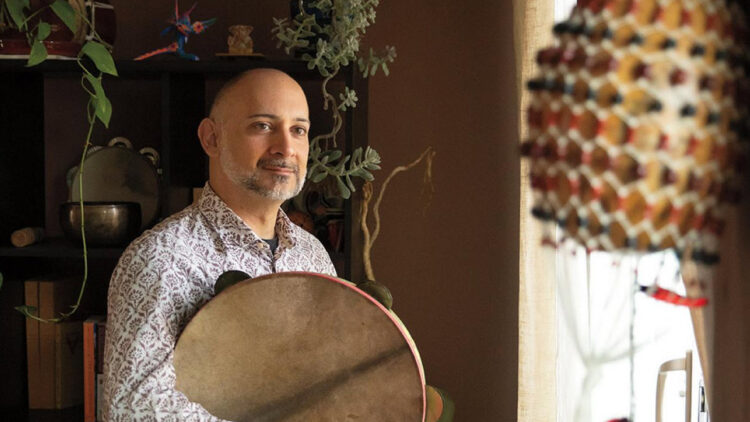
Antonio M. Gómez is a musician, arts administrator, producer, and educator. Co-founder of Trio Guadalevín, he is past president of the Western Arts Alliance and has worked with Early Music Seattle, along with various PBS productions, non-profit arts/humanities organizations, museums, universities, and school districts.