Reviving the early-music scene with a home-grown, artist-led business model
‘I think people have had enough of consuming art online. They want the in-person experience again.’
This article was first published in the January 2026 issue of EMAg, the Magazine of Early Music America

It’s the opening concert of the Seattle Bach Festival’s second season. In a 1908 English Gothic church, on a chilly October afternoon, William Skeen holds the audience in stillness as he picks up a five-string Baroque cello. The instrument had been waiting to play Bach’s D Major Cello Suite, where that fifth extra string helps span the suite’s uncommonly wide range. It’s the final work on a program built on structural Bach and neo-baroque Benjamin Britten, combined as Sonic Architecture— an apt title for this music but also for the city’s early-music scene, one that’s still in the rebuilding phase after pandemic upheavals, contractions, and closures.
The Seattle Bach Festival, launched in early 2025 by Baroque violinist and arts-in-community thinker Tekla Cunningham, is striving to recharge the early-music landscape as a concert presenter with a home-grown, artist-led business model. Searching for new audiences, SBF shows are held in venues that reflect Seattle’s character and also visit the commuter hub of Lynnwood, north of the city, and Tacoma to the south.
Indeed, for nearly half a century, early-music Seattleites have sustained a balancing act between continuity and reinvention. In the 1970s, historical performance in the Pacific Northwest meant a few devoted players and scholars organizing concerts in borrowed spaces for a handful of enthusiasts seeking alternatives to the status quo of classical music life. The informality suited historical performance’s independent streak and the nurturing of artistic experiences outside the mainstream.
This scrappy, do-it-yourself scene soon laid a foundation for a more formal infrastructure. Early Music Seattle — founded in 1977 as the Early Music Guild — became the area’s primary presenter of historically informed performance by hosting international ensembles, fostering educational programs, and supporting a vibrant community of area artists. Out of that expanding landscape came the Seattle Baroque Orchestra, co-founded in 1994 by violinist Ingrid Matthews and keyboardist Byron Schenkman, which in turn helped solidify the city’s reputation as a West Coast center for Baroque and Renaissance music.
The region’s Microsoft and dot-com boom fueled Emerald City’s growth spurt. Early music was swept up in that anything’s-possible mindset, and what had begun as a fringe pursuit started to imagine itself on a grander stage. As an influx of transplants acclimatized to the city’s gray skies and coffee culture, a surge of imagination emboldened musicians to take creative risks. In the early 2000s, lutenist and conductor (and local son) Stephen Stubbs returned from Europe to establish Pacific MusicWorks, an ambitious venture that blended period instruments with innovative stage direction and imaginative collaborations, expanding the repertoire to include opera and large-scale vocal works. Nearly a decade later, Byron Schenkman & Friends — a chamber music series now called Sound Salon — was founded on a belief that, as keyboardist Schenkman puts it, “the best music happens not when you have the best possible player of each instrument, but the best possible combination of players of the instruments.”
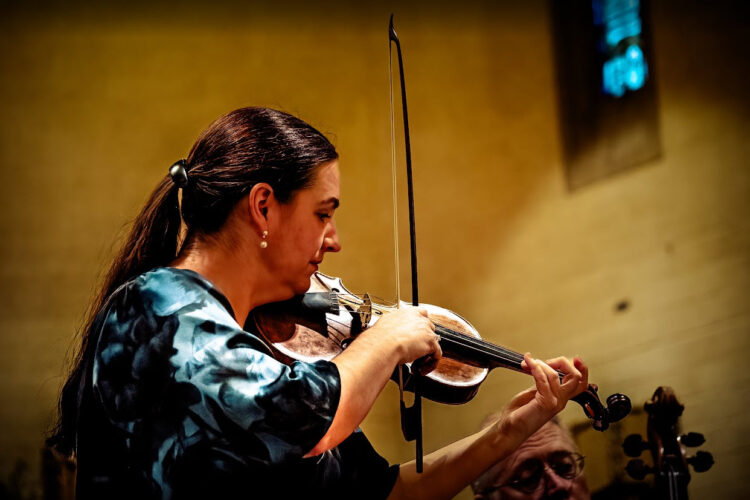
Yet even before the arrival of COVID-19, the base that had supported Seattle’s early-music building boom was beginning to crumble. Some veteran musicians from those 1970s beginnings were aging out, and the city’s soaring cost of living made it nearly impossible for younger artists to give Seattle a try, let alone stay. Like audiences everywhere, people were drawn to an array of new experiences in a city whose cultural map was changing dramatically. Stubbs and his wife, historical harpist Maxine Eilander, relocated to the Los Angeles area just before the pandemic, and Pacific MusicWorks eventually wound down operations. Meanwhile, although not officially disbanded, the Seattle Baroque Orchestra hasn’t given a concert in several seasons.
If the disappearance of two of the scene’s largest players sounds an alarm, it also gives an impetus to Seattle’s progressive mindset — looking for new ways of connecting music with community. What’s emerging isn’t a single “scene” so much as a patchwork of overlapping efforts. Variety is added by long-standing fixtures such as Gallery Concerts, George Bozarth and Tamara Friedman’s Musique du Jour, the Medieval Women’s Choir, Pacific Northwest Viols, Seattle Recorder Society, Anacortes Early Music, and Baroque festivals presented by historic churches such as Epiphany. The Salish Sea Early Music Festival brings historical performance to enthusiasts across the region, even performing on the ferries that are part of daily life in Puget Sound. Baroque dance expert Anna Mansbridge continues to collaborate with various early-music groups to add a choreographic dimension to performances. (EMA profiled Mansbridge earlier this year.)
Seattle’s progressive mindset looks for new ways of connecting music and community
As a Seattle-based critic, music journalist, and regular concertgoer, I’ve witnessed the evolution of these ensembles as they mirror the region’s broader cultural recovery, across all the arts, where some pockets remain sluggish while others have regained considerable momentum. With a fast-growing population that’s topped 4 million for the metro area, abundant wealth and sophistication, and suitable concert spaces, Seattle seems to have all the components needed for an early-music renaissance. For now, however, the historical performance scene reflects that fast-slow tension in microcosm.
Early Music as Intercultural Dialogue
As the city’s longest standing presenter, Early Music Seattle offers a particularly striking example of how the local field has been evolving. Approaching its 50th anniversary in 2027, it emerged from the pandemic with a broader sense of purpose and a transition in leadership. With Ludovica Punzi now at the helm and Gus Denhard, who led from 2001 to 2024, remaining involved in programming as artistic director, Early Music Seattle is redefining its role in the city’s broader cultural sector.
EMS built its reputation on presenting leading soloists and ensembles on tour from Europe and North America — including marquee names from Jordi Savall and the Tallis Scholars to the Boston Early Music Festival and the Bay Area’s Philharmonia Baroque. Many of these performances take place at the 830-seat Town Hall Seattle, a restored 1916 Christian Science church on First Hill, within view of downtown’s office towers. The venue’s domed ceiling and warm acoustics make it particularly well-suited for chamber concerts and early music. Its survival is a quintessential Seattle story: Once slated for demolition to make way for a parking lot, the building was rescued in the late 1990s through the advocacy of journalist David Brewster and a coalition of civic leaders who transformed it into a home for the arts and public life. Town Hall helped position EMS as a cultural anchor and a vital link between local audiences and the international early-music circuit.
Yet even as that presenting model flourished, Denhard began to question what stories were being left out. During a teaching residency in Mexico around 2014, he noticed how Iberian Baroque traditions had survived in folk practices rarely acknowledged as part of the same lineage. The experience led him to reconsider the boundaries placed around what is defined as early music. “We now consider early music to be any deep-rooted, valued music tradition that may have roots in Africa, the Middle East, the Far East, Latin America, or Europe,” Denhard says. “The goal is to tell the big history that’s been either unknown or unnamed.”
Though its scope has widened, the mission is unchanged. EMS also remains a kind of “big sister” to smaller local ensembles, sharing its calendar and program space, supporting school-based projects, and developing grants for local artists. Other programs include a collaboration with the classical radio station KING-FM and a free outdoor summer concert series. New audiences can encounter early music in places beyond the concert hall. One recent highlight was a Capoeira Angola immersion at the Union Cultural Center, connecting Baroque Iberian rhythms to their Afro-Brazilian descendants through movement and percussion.
Longtime subscribers still hear canonical repertoire, but the sense of what’s possible keeps widening. Denhard’s outlook acknowledges that Seattle itself sits on the ancestral lands of the Coast Salish peoples, whose musical traditions remain vital today. That awareness has deepened EMS’s commitment to exploring the layered histories of early music: “This pivot to a broader view involves seeing early music as intercultural dialogue: noticing where a particular music originated and the circumstances surrounding its transmission.”
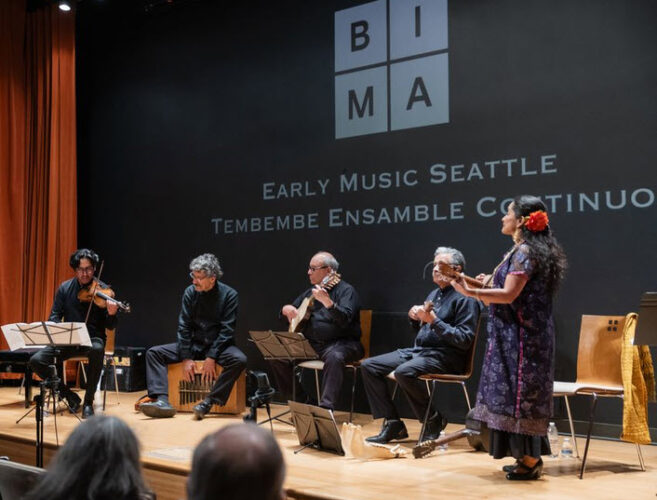
That idea has taken concrete form by presenting groups such as Mexico City’s Tembembe Ensamble Continuo, whose concerts last season paired Spanish Baroque repertoire with its living folk descendants in collaborations with local communities sustaining traditions like the fandango. EMS’s festival events have also appeared in art spaces such as the Frye and Bainbridge Island museums and at the Northwest Folklife Festival, where thousands encounter the music in unexpected contexts.
“When you pivot, your feet stay in one place.” Denhard adds. “You just broaden your glance.” Pointing to an appearance planned for February by ensemble Constantinople, he describes its unique program juxtaposing Bach and Omar Khayyam, which interweaves Persian classical music with European Baroque cantatas to reveal a shared language of spirituality. “We can invite people who practice a version of this art form from a different ancient tradition and connect the dots between one ancient tradition and what we’ve been calling ‘early music.’”
Under Punzi’s leadership, EMS has shifted from a traditional subscription model to a format called Beyond Baroque — a series of four-day festivals across the season that combine headline concerts with talks, workshops, and pop-up events in different venues. Each mini-festival mingles familiar repertoire with new and sometimes experimental collaborations.
Concentrating these events into this format, Punzi says, allows audiences to “dive in a little bit deeper” and build momentum and context in a way that a single monthly concert cannot. It has also been drawing newcomers who might never have identified with classical music at all — people who, as Punzi puts it, “love art, culture, travel.” She says they have expanded EMS’s reach from a few hundred participants under the old model to nearly 4,000 today.
Significantly, perhaps brilliantly, Punzi has also spearheaded a coalition of West Coast presenters — including Vancouver Early Music, Victoria Early Music, the San Francisco Early Music Society, the San Diego Early Music Society, and Arizona Early Music — so that artists can travel a single circuit rather than make separate trips. This year’s tour by Toronto’s Tafelmusik offers an early proof of concept, making international engagements more efficient and affordable for everyone involved. The idea, Punzi explains, is to make the West Coast feel less like a string of isolated outposts and more like a connected circuit: “Seattle can become a true destination for early music only through partnership with other major West Coast cities.”
A coalition of West Coast presenters, from Vancouver to San Diego, create a single circuit for touring ensembles
That creative growth ambition is being matched by increased financial stability. Punzi reports that EMS’s annual budget has expanded from about $500,000 before the pandemic to nearly $700,000 today. Roughly 8.5 percent of that total now comes from King County’s Doors Open program, a recently approved public funding initiative supported by a small countywide sales-tax allocation to provide long-term operating aid for arts, heritage, and science organizations. Combined with support from individual donors and foundations, the result has given EMS enough breathing room to experiment while keeping ticket prices accessible. “We’re either fully back or even stronger than we were before the pandemic,” says Punzi.
Renewing the Core Through Community
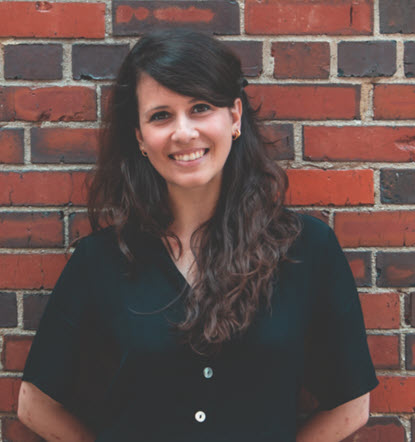
While Early Music Seattle is expanding the rubric of early music to embrace global traditions, another force is reshaping the story from within: Tekla Cunningham’s Seattle Bach Festival. Because of her deep involvement in both the Seattle Baroque Orchestra and Pacific MusicWorks, Cunningham felt acutely the loss of these two anchor institutions. Seattle Bach Festival represents an effort to fill part of that void. Despite the “festival” moniker, the organization presents concerts and curates events across the year under a shared banner rather than concentrating activity into a single week. SBF enlists local musicians as members of its orchestra and partners with the Evergreen Ensemble chorus from nearby Edmonds, Wash. (north of Seattle) for large-scale works. By design, up to 90 percent of its artist budget goes to performers from Seattle or the Pacific Northwest.
Drawing on the experience she gleaned from her role as co-artistic director of the erstwhile Pacific MusicWorks and from her ongoing work helming the Whidbey Island Music Festival — the intimate summer chamber series she founded in 2005 amid pastoral surroundings and the slow island rhythms of Puget Sound — Cunningham launched the Seattle Bach Festival with a leap of faith: “I don’t think scaling works by beginning small,” she told me before its inaugural concert last January. “Begin as you want to proceed.”
That approach underlies a larger ambition: Cunningham’s long game is to rebuild the capacity of Seattle’s early-music network for local-musician performances of Bach’s great works. “Bach is our center of gravity, but the point isn’t to recreate the past,” she says. “It’s to make this music feel alive, like it’s a part of the city’s heartbeat.”
The inaugural half-season, in the spring of 2025, began with a mix of chamber, orchestral, and choral music and featured 11 performances, three lectures, a film screening, and a constellation of house concerts and outreach events. But her sights were set even higher: In December of that year, the Seattle Bach Festival presented the first three cantatas of Bach’s Christmas Oratorio, with plans to complete the cycle in 2026 and establish an annual holiday alternative to Messiah.
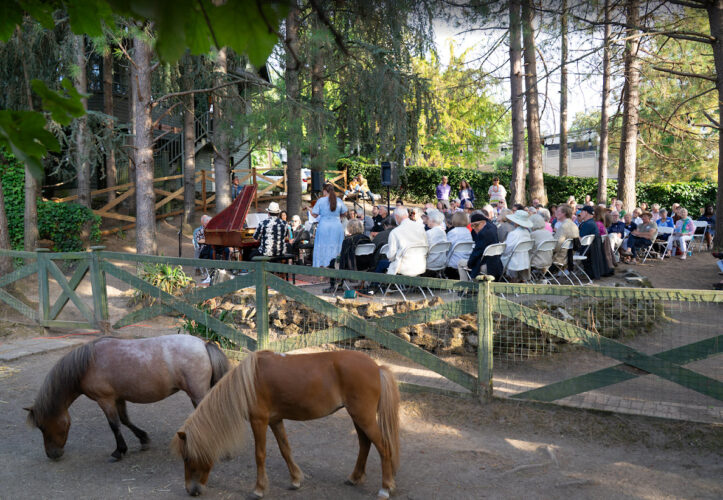
In future seasons, she hopes to tackle the Mass in B Minor and, eventually, the St. Matthew Passion. Large-scale projects like these, she believes, strengthen the bonds among musicians and audiences alike. “These big pieces don’t just need a community to make them happen — they create one,” she says. “Every time you bring that many people together to make music, you’re literally weaving relationships.” It’s a conviction that carried into the season’s informal opening event, “Music in the Horse’s Yard,” a come-as-you-are, open-air concert juxtaposing Bach and Telemann in a shaded green space on the edge of Capitol Hill. Guests shared food and folding chairs — even haystacks — while miniature horses swayed contentedly to the music.
From the start, SBF signaled serious ambition. The 2025–26 budget has grown to about $400,000, up from $275,000 in season one. Funding comes primarily from private donors and foundations, with ticket sales supplying the rest. Eligibility for King County’s Doors Open program will come in year three. By September 2025, total attendance had already hit 3,200, including outreach events — an impressive showing for a nascent ensemble built up from local talent.
Yet from my aisle seat, it seems fair to wonder whether a Bach-centric brand risks narrowing its own horizons. The city already hears a B-minor Mass or Matthew Passion now and then from the Seattle Symphony or the choral group Seattle Pro Musica, and even the most devoted listener can tire of hearing the same half-dozen masterpieces. Yet Cunningham knows that her Bach Festival has the potential to fill a gap rather than crowd the field: Seattle lacked a resident ensemble capable of performing this repertoire on period instruments, which makes all the difference.
Cunningham also wants to break down the formality of concert-going itself. She likes to say that “hospitality is part of musicianship,” and means it literally. Ushers greet audience members by name; volunteers staff welcome tables with handwritten tags that invite concertgoers to introduce themselves. “People sit next to each other for years at concerts and recognize the same faces but never actually say hello,” she says. “It just takes a little ice-breaking. After that, they might discover they’re great friends.”
Outreach and collaboration are equally central to her idea of community building. The Cantata Trail, a series led by flutist Miguel Rodé, brings small groups together to listen, talk, and ask questions about Bach cantatas before hearing them in concert — turning preparation into a shared social ritual. The same approach guides SBF’s partnerships with other ensembles. This spring, the festival’s orchestra will join Choral Arts Northwest for a program pairing Bach’s Magnificat with Indian-American composer Reena Esmail’s This Love Between Us, a major choral piece originally written for Juilliard415 that juxtaposes texts from seven of the world’s religious traditions. The two works share instrumentation but express very different spiritual worlds. “It builds a common musical language — and keeps the band together for an added week,” Cunningham wryly notes.
‘If I’m going to the trouble of bringing people together, I want to do that really well.’
Even small gestures reinforce her belief that music functions as social glue. At one concert, the audience was invited to sing along in the chorales; at another, music students lined up to play Bach on a fortepiano during the Day of Historical Keyboards, while local artists such as Schenkman and Henry Lebedinsky demonstrated their instruments. “If I’m going to the trouble of bringing people together,” Cunningham told me, “I want to do that really well.”
The Return of Intimacy
A veteran of Seattle’s early music scene since the 1990s, harpsichordist Schenkman’s chamber series Sound Salon, founded in 2013 under the name Byron Schenkman & Friends, has evolved from another traditional presenter model into a more collaborative collective, reflecting Schenkman’s conviction that understanding the past requires a living conversation with the present.
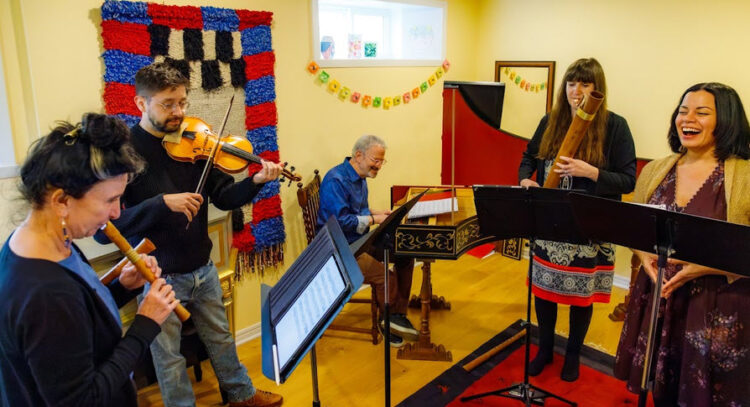
While about half of Sound Salon’s programming draws from 18th-century and earlier repertoire, the musicians often juxtapose centuries while using period instruments. For me, a personal favorite was a 2023 program pairing Bach concertos with newly commissioned responses by Damien Geter and Caroline Shaw. The dreamlike harmonic twists of Shaw’s Concerto for Harpsichord and Strings featured Schenkman as soloist, and Geter’s witty, funk-inflected Buh-roke offered parallel-universe takes on Baroque tropes, sharpening rather than diluting the historical frame — and revealing how flexible and fresh old instruments can sound in the right hands.
Another memorable program framed Vivaldi with traditional songs of the Karuk Nation, one of the Indigenous peoples of northwestern California, creating what Schenkman calls “a living land acknowledgement.” It was a special way of giving substance to Sound Salon’s reminder, at the start of each concert, that those present “are on the traditional land of the first people of Seattle, the Duwamish People past and present, and honor with gratitude the land itself and the Duwamish Tribe which has stewarded the land throughout the generations.”
Over the last two seasons, Sound Salon has consciously shifted toward smaller venues and more flexible formats, a change executive director Melinda Abendroth calls “meeting our community where they are.” A pay-as-you-wish ticket model, introduced in 2023, is central to that approach. She says that overall ticket revenue now matches that of pre-pandemic fixed-price seasons, showing that audiences contribute generously when invited to do so. “Our financial model,” Abendroth notes, “prioritizes accessibility and engagement to achieve long-term sustainability.”
The financial picture reflects that balance, with ticket sales — projected at about 10 percent of income — serving more as an invitation than a barrier. Sound Salon’s annual budget now ranges between $215,000 and $304,000, roughly 52 percent higher than before the pandemic, with nearly 90 percent of revenue coming from donations and grants, including crucial support from King County’s Doors Open initiative. In 2024, total season attendance reached 1,216 — up from 932 the previous year but still below the pre-COVID annual average of 1,651.
‘The scholarship is the underwear — nobody needs to see it. What they need to see is the costume and the performance.’
“Since the pandemic, I feel more than ever aware of how much we need personal human connection,” Schenkman says. “Being an artist up on stage, getting clapped at from people in the dark, doesn’t appeal to me the way it did when I was younger and when my world felt different.” That realization has gone hand in hand with a conviction that accessibility and sustainability can coexist. “We want to make our concerts satisfying for the people who are really in the know,” Schenkman remarks, “but it’s become increasingly important for somebody to be able to walk in off the street and enjoy them. The scholarship is the underwear — nobody needs to see it. What they need to see is the costume and the performance.”
Polyphony and Presence
Though based in Portland, Cappella Romana has long been part of Seattle’s early-music fabric through its regular concert series here. Founded in 1991 by conductor and musicologist Alexander Lingas, the ensemble occupies a singular niche: bridging the sacred choral traditions of Byzantium and the Orthodox world with the modern voices they continue to inspire. Its liturgical programs move between the ancient and the contemporary — chant and polyphony from medieval Constantinople set alongside mystical works by John Tavener, Arvo Pärt, Ivan Moody — revealing a living continuum rather than a lost world.
Cappella Romana’s personnel, drawn largely from the Pacific Northwest, expands or contracts as needed, from smaller, all-male ensembles to larger mixed choirs for Rachmaninoff and the like. Beyond its Portland and Seattle seasons, the group tours internationally and records prolifically on its own label, whose catalogue approaches three dozen titles. Lingas has described the ensemble’s mission as exploring “the liminal spaces between Greek East and Latin West, between ancient and modern.” That border-crossing impulse links the choir with its Northwest peers, such as Early Music Seattle’s intercultural ventures or the Seattle Bach Festival’s community-building ethos. (Byzantine chant and Cappella Romana were the subject of a May 2024 EMAg feature article.)
Where Cappella Romana’s public concerts are an outgrowth of its devout liturgical activities, Markdavin Obenza’s Byrd Ensemble performs choral music that focuses on its contemplative aspects. Founded in 2004 by alumni of Seattle’s Northwest Boychoir and Seattle Girls Choir, the Byrd Ensemble remains the city’s only professional vocal group dedicated solely to early polychoral music. Its performances, typically in resonant churches or small halls, offer the stillness that modern life forgets. “We operate in a unique space,” says Obenza, “where maybe half our audience come to hear us seeking a more spiritual experience, a kind of secular hack for what people might go to church for.”
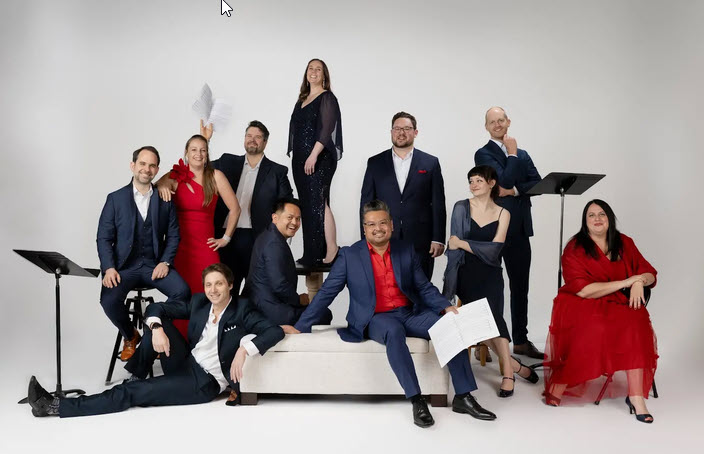
The ensemble began almost by accident, from a circle of friends who wanted to keep singing together after their student years and had been invited to perform on a local concert series. From those beginnings, it has grown into one of Seattle’s most distinctive musical voices, with a core of 10 singers. Though the texts are usually sacred, Obenza believes listeners connect less with theology than with the sensation of sound itself — the “sense of awe and wonder” that polyphony creates.
Beyond its Seattle series, the Byrd Ensemble runs summer Renaissance-singing courses that draw participants from across the country and abroad, cultivating a younger generation of enthusiasts. Its singers, now mostly in their 30s and 40s, reflect the continuity of a community that has grown up with the music.
The group’s budget, about $100,000 for its Seattle season and up to $150,000 for its national tour (in the fall of 2025) with a program celebrating the 500th anniversary of Palestrina, has risen some 40 percent since before the pandemic. New donors and the governmental Doors Open program have strengthened its base, while audiences are up some 20 percent over pre-COVID levels, averaging 250–300 listeners per concert. “I think people have had enough of consuming art online,” Obenza remarks, perhaps speaking for Seattle’s cultural life as a whole. “They want the in-person experience again.”
Thomas May is a writer, critic, educator, and translator whose work appears in the New York Times, Gramophone, Strings, Chorus America’s The Voice, and other publications. He is the Lucerne Festival’s English-language editor, the U.S. correspondent for The Strad magazine, and program annotator for the Los Angeles Master Chorale and the Ojai Festival. His books include Decoding Wagner and The John Adams Reader: Essential Writings on an American Composer.