by Andrew J. Sammut
Published April 17, 2026
Johann Sebastian Bach: Goldberg Variations (arr. Alexander Vittal). Baroque Chamber Orchestra of Colorado; Frank Nowell, artistic director; Cynthia Miller Freivogel, leader. NV6812 (digital only).
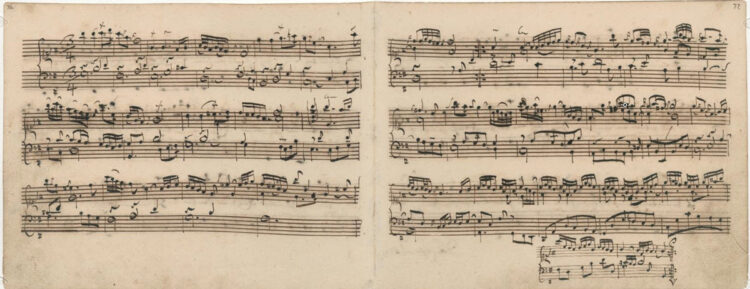
Did you know the Goldberg Variations were originally written for a harpsichord?
That’s a joke, of course.
Still, it’s amusing yet unsurprising that J.S. Bach’s aria and 30 variations for a double-manual keyboard — possibly composed as a nighttime diversion for a sleepless count — have been arranged for everything from solo accordion to bassoon consort. If transcriptions seem to grow on trees, it’s because the music tastes so good. (And the best of them can be as delicious as the harpsichord original.)
Denver’s Baroque Chamber Orchestra of Colorado began performing selected variations in 2016. After BCoC artistic director Frank Nowell commissioned the first batch of arrangements from violist-arranger Alexander Vittal, they gradually added more to the orchestra’s book over the years. In the (admittedly scant) online liner notes, Vittal explains that some variations are especially “challenging to arrange, perform, and record.” Undaunted, BCoC committed to producing the whole set. This isn’t the first strings-only, HP arrangement of Bach’s Goldbergs, but it leans into the sound of massed strings in its own distinct style.
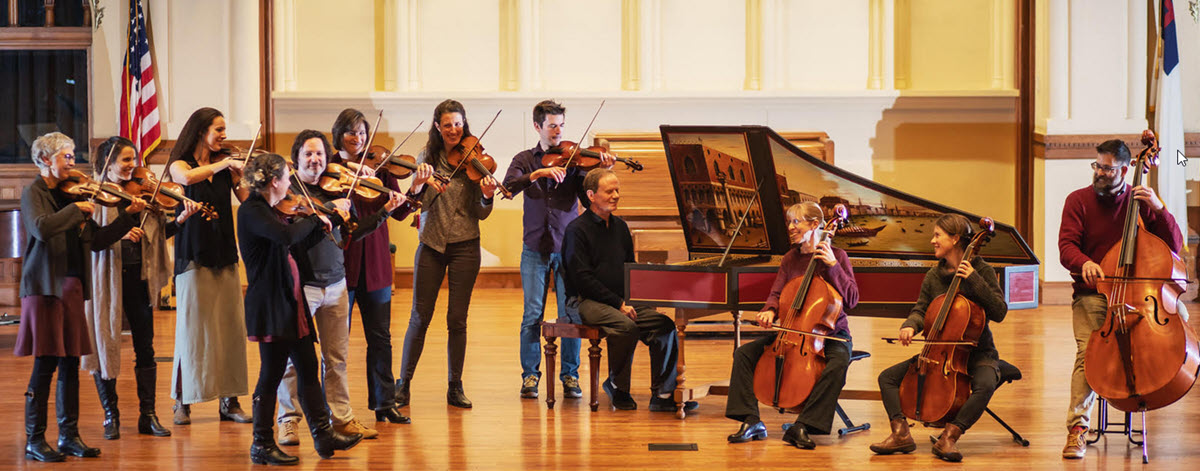
The orchestral forces are large enough to have some weight without dragging down Bach’s rhythms: seven violins, three violas, two cellos, one bass, and Nowell at the harpsichord. Variation 4’s passepied shows off the group’s rich, oaky sound and sweeping lines. Variation 9 keeps all the imitations in Bach’s canon clear. Yet there are also booming effects, like the densely packed entrance and the strings swirling around one another, with bass lines really moving while maintaining that sense of grandeur.
Tempos are usually modestly paced, at times leisurely. A relatively relaxed (though hardly slack) feel is the norm throughout. Variation 29, one of the trickier ones for arrangement, has lots of thick chords. BCoC’s gentler touch turns this virtuosic keyboard work into a refreshing orchestral piece a due cori, especially in the quick passing of arpeggios. Unfortunately, this track is also an example of how the recording sometimes washes away the separation between parts. More definition in the basses here would have gone a long way, but this isn’t a dealbreaker or even a consistent problem. Variation 12, another canon, features a revealing contrast between the voices, with just enough shading to bring out some juicy dissonances in the second section. High notes also gain urgency through the strings’ more incisive tone and sustaining power.
At other times, BCoC shows off a strikingly uniform sound and tight, seamless blend between voices. Vittal notes that he used divided parts like crisscrossing hands on a two-manual harpsichord. In a hand-crossing display piece like variation 8, with BCoC’s sections folding into each other, the sound is like a keyboard made of string sections.
It all adds up to some interesting and convincing directions for the music. Take variation 19, with its broadly stepping yet clearly articulated triple-meter. Each section takes its brief turn with Bach’s motifs, switching up the texture while keeping contrapuntal clarity. BCoC might moonlight as a dance band, and I mean that as a sincere compliment: they keep things lyrical and easy to move to. Variation 6 brings an uncanny energy with smooth violins over rippling lower strings and subtle dynamics; it’s less a calm before the storm and more like trouble beneath the placid surface. In slow movements, like variation 13’s sarabande, with its barrage of 32nd notes, BCoC’s soloists unveil a rhythmic as well as lyrical potential. Variation 25, “the Black Pearl” adagio, feels tender, almost to the point of vulnerability.
It’s also an example of the novel touches of orchestration throughout the disc. Starting as a string trio, the simple effect of a plucked cello against the viola’s bowing of the middle line immediately creates a sinister atmosphere. Variation 20, often described as tough to pull off, turns Bach’s wild, chromatic keyboard showpiece into a quirky, charming chase between pairs of violins, violas, and cellos. Several movements are arranged as a concerto grosso — pitting a group of soloists against the full ensemble. Variation 15 uses the format to craft a forlorn scene, particularly plaintive with viola and cello in the concertino. Others are stripped down to trio sonatas for two violins and continuo. These range from the spacious opening of the introductory aria to the rapid-fire variation 5, delivered like a friendly exchange of fiddling.
Listeners who are used to fast and lean Goldbergs may need a moment to enjoy this approach. But there’s nothing plush, turgid, or self-indulgent here. These are idiosyncratic performances by musicians who understand Bach’s music but also appreciate the potential for their sound and ideas.
Andrew J. Sammut covers music for Early Music America, the Syncopated Times, Vintage Jazz Mart, and his blog, the Pop of Yestercentury. He has also written for All About Jazz, Boston Classical Review, and Boston Musical Intelligencer. For EMA, he recently reviewed Amanda Forsythe and the Boston Early Music Festival’s Grammy-winning album of Telemann’s Ino and arias for soprano.