by Anne E. Johnson
Published March 29, 2026
Leonardo Vinci: Artaserse. Haymarket Opera Company, Kangmin Justin Kim and Key’mon Murrah, countertenors, conducted by Craig Trompeter. A three-disc set. Cedille Records CDR 90000 242
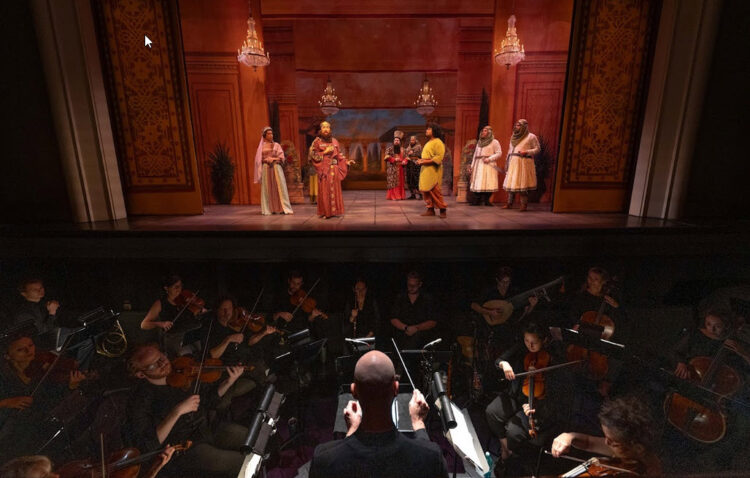
Composer Leonardo Vinci started a trend when he set Pietro Metastasio’s libretto Artaserse as an opera seria in 1730 in Rome. Many other composers soon created their own versions, including C.W. Gluck (1741) and J.C. Bach (1760). But Vinci was the first, and Chicago’s ever-reliable Haymarket Opera has now turned its critically acclaimed 2025 stage production into a top-notch recording on the Cedille label.
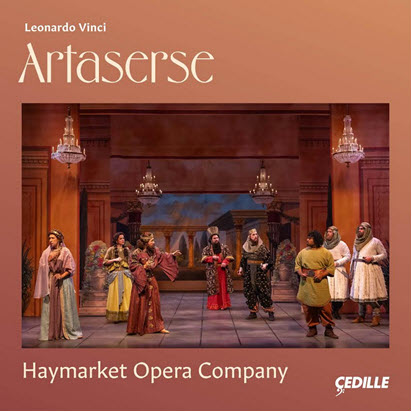
Here’s a thumbnail of the very complicated plot: Artabano, wishing his son Arbace to be king, murders Serse, king of Persia. Serse’s son Artaserse executes his older brother, Dario, when convinced he’s the culprit. When Dario’s name is belatedly cleared, wily adviser Megabise points the blame at Arbace (who is, of course, the real murderer’s son, and Artaserse’s best friend, and the secret lover of Princess Mandane). Arbace is arrested, and Mandane feels betrayed by him.
Artabano and Megabise then plot to assassinate Artaserse. Megabise also forces Artaserse’s fiancée, Semele, to agree to marry his horrid self. But before any of this evil can happen, Arbace escapes from prison and kills Megabise. The truth comes out: His own father murdered King Serse. The two couples reunite at Artaserse’s coronation, and the new king pardons Artabano for the sake of his friendship with Arbace.
As the synopsis suggests, this story is as much Arbace as the title character. Happily, Haymarket Opera has cast outstanding countertenors in both parts: Kangmin Justin Kim as the bereft Artaserse and Key’mon Murrah as his unjustly accused friend.
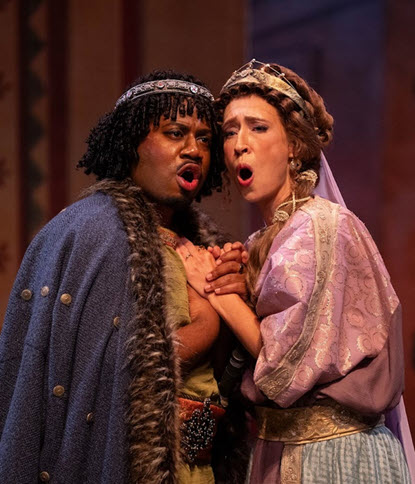
From his first Act 1 aria, the frantic “Fra cento affanni e cento,” Murrah’s rounded, steady voice expresses the defiance characterizing Arbace. His “Per quel paterno amplesso,” sung when the guards take him to prison, has a moving stateliness. As Artaserse, Kim’s lighter, brighter voice is right for a sheltered young man who must now cope with dark reality. Kim’s cadential melismas in arias such as “Nuvoletta opposta al sole” are downright dizzying.
The two female characters, Semele and Mandane, while being Artaserse’s and Arbace’s girlfriends, respectively, are giving important agency in the plot, insisting on truth and making the men come to terms with their actions. Mezzo-soprano Emily Fons displays compelling emotional depth as Mandane; after withstanding the stress of a secret affair with Arbace, her heart is shattered when she’s finally convinced that her beloved is a murderer.
Semira is played by male soprano Elijah McCormack. (Intriguingly, the women’s roles of Mandane and Semira were sung by castrati in 1730). McCormack’s Semira is long-suffering and weary, yet still strong. With a dark-tinged yet flowing voice, he sings the Act 2 aria “Per quell’affetto che l’incatena” with barely contained wrath, shaming Artaserse for ordering Arbace’s execution.
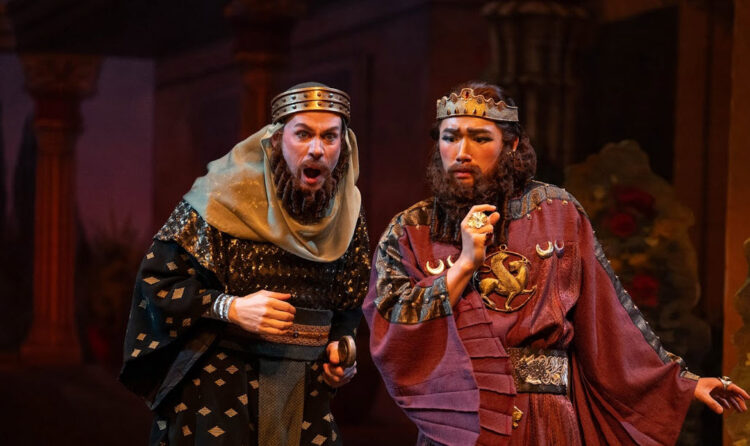
The bad guys are played by tenor Eric Ferring (Artabano) and yet another countertenor, Ryan Belongie (Megabise). Ferring gives Artabano a sympathetic side — the father who only wants what’s best for his son, and will kill for it. There’s no redeeming Megabise, whom Belongie bestows with mesmerizing charm.
With its usual skill, the period-instrument Haymarket Opera Orchestra captures the listener from the first bars of the multi-sectioned Introduction. Conductor Craig Trompeter, always aware of an aria’s dramatic purpose, ensures that each ritornello has a tempo and tone appropriate to the text it supports. Recording producer James Ginsburg and engineer Bill Maylone transmit the instrumental and vocal sounds with clarity and balance.
For those streaming Artaserse, there are two versions available. One contains just the arias, duets, and choruses. The other is includes all the recitatives as well. The physical three-CD set is the complete opera.
Anne E. Johnson is EMA Books Editor and frequent contributor to Classical Voice North America. She teaches music theory, ear training, and composition geared toward Irish trad musicians at the Irish Arts Center in New York and on her website, IrishMusicTeacher.com. For EMA, she recently wrote about the barrier-breaking Yudah School of Music and its founder, Rasháwn King.