by Aaron Keebaugh
Published May 20, 2026
Music for the Canterbury Tales. Ensemble Benedictus. Self-produced and distributed. Available on CD and all major streaming services.
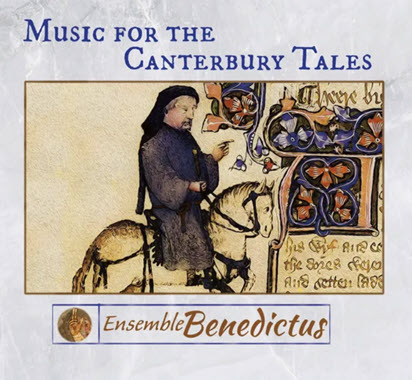
As Geoffrey Chaucer told it, the journey to Canterbury Cathedral in April 1386 involved as much laughter and good cheer as a sense of reverence. It began at the Tabard Inn in Southwark, where 29 pilgrims gathered to refresh themselves between lively chatter and swigs of ale.
The 55-mile trek would test their resolve and stamina. And so the Innkeeper proposed a storytelling contest to pass the time. What has passed down are stories of bawdy humor, madcap adventure, and tales that can still draw a few tears. For multi-instrumentalist Elisabeth Ellison, the only thing missing was the music.
As Ellison was putting together a soundtrack for a podcast reading of Chaucer’s Canterbury Tales, she combed through volumes of public readings and past performances of this seminal work of medieval English literature. But she but found little in the way of musical authenticity. So along with colleagues Tina Chancey, Al Cofrin and others, Ellison dug into the archives and uncovered dance tunes and sacred works that Chaucer and his well-traveled pilgrims may have heard in their own day. Arranging this repertoire resulted in Music for The Canterbury Tales, an album so fresh and vital that Ellison’s Houston-based Ensemble Benedictus might as well have accompanied Chaucer’s characters on foot.
The 23 tracks on this album were each chosen as background for selected tales. But the music offers more than sonic wallpapering. It works with the text to establish mood, tease out the levity, and even reflect some of the more risqué details. (On her website, Ellison offers a tale-by-tale pairing with music, including manuscript sources.)
“Gwerz Penmarc’h,” though a 15th-century Breton ballad, underscores The Franklin’s Tale with lyrical hints of the doomed shipwreck. The “Estampie Retrové,” taken from the Robertson Codex, channels the bold styles of The Canon’s Yeoman’s Tale. The naughtier sides of The Nun’s Priest’s Tale are suggested through an instrumental rendition of “I Have a Gentil Cock,” fitting in its hilarious double meaning.
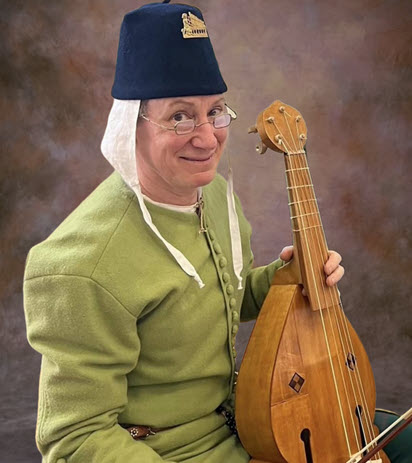
The music can also stand alone, and Ensemble Benedictus performs these and other selections with terpsichorean zest. Rhythms drive hard in the foot stomping “English Dance.” The percussion storms the ranks in Ellison’s own rollicking “Battle March.” Winds and strings seem to dance with each other in “Non é Gran Cousa” from the Cantigas de Santa Maria. And three movements of “Nota/Ductia” showcase the colorful effects of this merry band: the dry wheeze of the strings, haunted calls of its flutes, and robust authority of the double reeds.
But like Chaucer, other works convey just as much reverence. “Angelus ad Virginem,” from the Dublin Troper, matched the bell-toned graces of The Miller’s Tale. Voices venture into the chromatic thickets in “Fumeaux fume par fumée.” And “Alma Redemptoris” Materresonates sweetly in this setting for solo singer.
Even when played by the instrumental ensemble, the sacred selections suggest meditative serenity. “Stella Celi,” with its earthy darkness, recalls Machaut’s “Puis qu’on oubli.”The Syriac hymn “Qolo d-Dawso” glows with pensive resonance in its sturdy pulse. So do the stately rhythms of the conductus “Procurans Odium” which signifies Chaucer’s theme of corruption.
John Dunstable’s “O Rosa Bella”concludes this disc in homage to Chaucer himself. The poet’s contributions to literature are unmistakable. But the hymnic phrases, artfully arranged, humanize him with as much vigor as peace for the journey ahead. The road may be long, the music suggests, but the memories promise to last a lifetime.
Aaron Keebaugh’s work has been featured in The Musical Times, The Classical Review, The Boston Musical Intelligencer, BBC Radio 3, Total Baroque Magazine, and The Arts Fuse, for which he serves as regular Boston critic. For EMA, he recently reviewed a recording on musical dialogues in time of war.