by Meghan Hynson
Published July 6, 2026
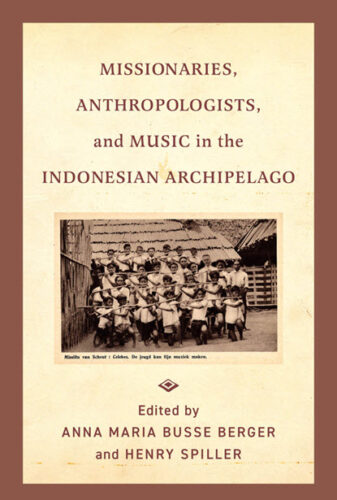
Missionaries, Anthropologists, and Music in the Indonesian Archipelago. Edited by Anna Maria Busse Berger and Henry Spiller. 2025. California University Press, 335 pages. (Available free from UC Press Luminous open access.)
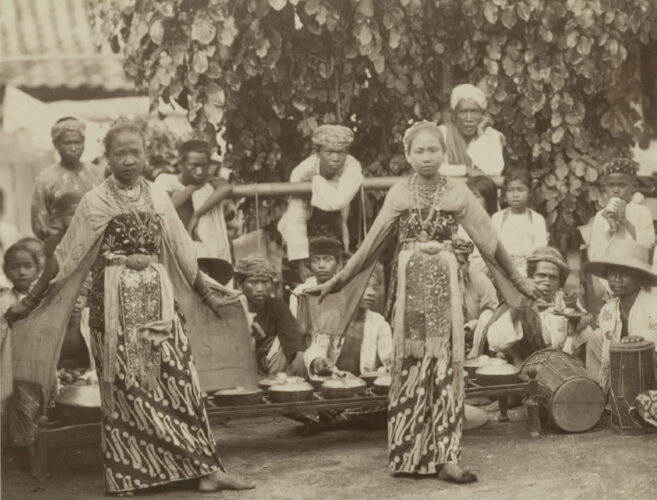
The sounds of Indonesian music today cannot be separated from the colonial, anthropological, and missionary encounters that documented, suppressed, and occasionally preserved them. This important and under-researched history is explored through 14 essays in Missionaries, Anthropologists, and Music in the Indonesian Archipelago. Edited by Anna Maria Busse Berger and Henry Spiller, the volume brings together historians, musicologists, literary scholars, and ethnomusicologists to present a multitude of narratives addressing how outsiders transformed the fabric of Indonesian musical history.
The book’s six sections reflect its methodological complexity. The first three follow a historical arc. Part One (early modern period) opens with David Irving’s examination of three Iberian sources from the 16th-century Moluccas, describing encounters between chant, polyphony, local practices, and musical hybridity such as cantigas sung with indigenous drums, gongs, and bells. Estelle Joubert and David Irving then reassess a Dutch treatise published in Batavia in 1792; despite it being the most extensive text on European music published in Southeast Asia before the 19th century, it may have been copied from an earlier work.
Their reading shows how performance of Western music signaled social prestige among the colonial elite and suggests that studying the circulation of the treatise opens new ways of thinking about long-distance intellectual and musical connections across Dutch colonial outposts in Asia and southern Africa.
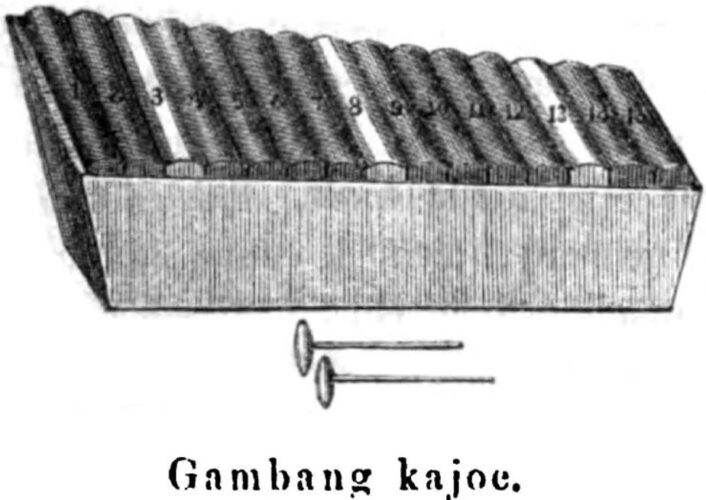
Part Two addresses missionaries’ ambivalent attitudes toward indigenous music in the 19th century. Henry Spiller’s chapter on Dutch missionary Henrik Smeding (active in East Java, 1858–1861) describes how Smeding meticulously documented gamelan music, instrument construction, and tuning, yet refused to endorse Javanese tembang (melodic metrical verse singing) in worship, revealing a tension between his anthropological curiosity and his missionary calling. Ben Arps follows this by examining why Protestant missionaries and Javanese Christians themselves found Javanese church singing so problematic.
While most Dutch missionaries wanted traditional European-style hymns, a few congregations, such as that of Coenraad Laurens Coolen, sang hymns with Javanese texts and melodies. This presentation of the debate for and against tembang singing demonstrates that congregations accommodating Javanese identity often achieved greater success in conversion.
Adaptation and resistance within Christian musical practice during the 20th century are the focus of Part Three. David Hollinger contrasts American and Dutch missionaries, noting that while some Europeans adhered to racism and colonialism, others, such as American missionary Frank Laubach with his Christ-driven campaign toward worldwide literacy, supported nationalism and anticolonialism. Julia Byl’s chapter on the Toba Batak of Sumatra documents how the gondang sabangunan ritual ensemble was forbidden by German missionaries, but ende (unaccompanied sung poetry) was transformed into a new hymnody. Her analysis shows that the production of these new hymns facilitated proselytization and paralleled a drastic increase in converts. The section closes with two essays on Catholic lagu inkulturasi, or “songs of inculturation,” which sought to adapt the Liturgy to the culture and traditions of the Indonesian people.
In Chapter 7, Emilie Rook argues for an Indonesian-centered understanding of inculturation, drawing on testimonies by informants from Flores, Yogyakarta, and Jakarta. She also discusses the Percetakan Arnoldus Press, the oldest printing press in Indonesia, and its significant impact in disseminating ideas for the church and the state. Building upon Rook, Philip Yampolsky’s essay turns to more skeptical ethnomusicological analysis, arguing that lagu inkulturasi deviate sharply from the traditions they claim to represent. He describes how these songs introduce harmony where none exists, reject indigenous harmonic practice where it does exist, and alter traditional instruments. He ultimately concludes that these songs “weaken the authority of traditional music by ‘improving’ it.” These two essays offer a compelling example of the rich topical material found in this book, as even a single aspect of missionizing practices demands multiple perspectives to reveal the full complexity of its implications.
The second half of the volume is organized by topic. Part Four reexamines the interactions between missionaries and anthropologists, particularly Dutch ethnomusicologist Jaap Kunst. Through essays by Dustin Weibe and Anne Maria Busse Berger, we read about the complicated relationships Kunst had with missionaries in Flores and Nias. These essays highlight how anthropologists often relied upon the help and support of local missionaries (even if they didn’t agree with what they were doing) and point to how often missionary influence is left out of academic work. In fact, Weibe asserts that “ethnomusicological discourse tends to dismiss, even erase, the disciplinary contributions of the missionaries,” further underscoring the importance of the work contained in this volume.
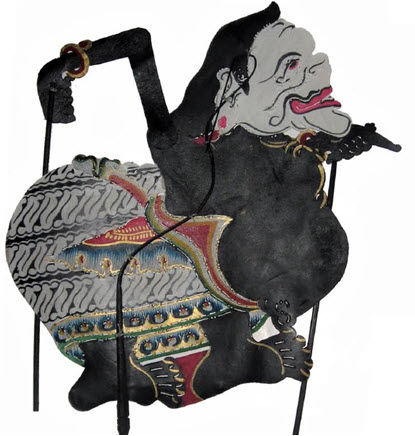
Part Five widens the chronology to longer-standing “technologies of indoctrination.” Sumarsam turns to premodern literary texts and court performances of the canthang balung character to show how myth, theater, and music function to generate public spiritual experience. Kathy Foley traces the adaptability of wayang shadow theater from Hindu-Buddhist contexts into Muslim, Catholic, Protestant, and Buddhist forms. She argues that wayang is consistently used for proselytization, moral instruction, and communal revival, even as narratives and puppets change. These essays offer a nice contrast to other parts of the book, broadening the reader’s perspective on the missionizing process in Indonesia beyond European proselytizers.
The final section asks critical questions about how we should view, use, and interpret the recordings made by collectors, as the authors of the essays argue that the “archive is discursive, based on specific ideological, aesthetic and scientific paradigms.” Sebastian Klotz, scientific coordinator of the Lautarchiv in Berlin, explores phonography in New Guinea and Melanesia, demonstrating that the contradictory motivations between missionaries and ethnologists and anthropologists affected phonographic practices and were separate from the colonial institutions and networks that processed and interpreted these recordings. In his view, researchers should strive to be aware of and document asymmetrical power relations, local involvement in recordings, and the absence of standardized missionary protocols for collection and processing.
The final chapter, by Barbara Titus, critically examines the history of the Jaap Kunst Archive in Amsterdam alongside her own experience as director of the archive. She questions the extent that Jaap Kunst’s ethnocentric and colonial collection processes continue to shape her own archival practices and interpretations. In doing so, she demonstrates how the personal stance of the collector and the archivist shape the production of materials and drive the interpretation of them, cautioning archivists and collectors to be aware of their own cultural conditioning.
The volume’s principal achievement is methodological, as it resists a single “true” history, offering multiple narratives and opportunities for future inquiry. Although the geographic coverage is uneven and many archival sources remain underexplored, this book marks a significant step toward untangling and cataloguing the missionary and anthropological encounter with Indonesian music. In this way, it has done an excellent job laying the groundwork for further research of this type.
Meghan Hynson is a teaching professor of ethnomusicology at the University of San Diego, where she directs the Balinese gamelan ensemble, teaches courses in global music, and conducts research on religion and the performing arts of Indonesia. She is vice president of the Southern California and Hawai’i chapter of the Society for Ethnomusicology.