by Aaron Keebaugh
Published November 23, 2026
Wild Iris. Rebecca Scout Nelson, composer, singer, and violinist. Il Pirata Records. Available on CD, vinyl, and streaming.
Nelson and friends explore varying traditions without being tethered by any of them — feeling altogether wild and free
For Nobel Prize-winning poet Louise Glück, death merely opens the doors to an unimagined realm. “You who do not remember passage from the other world,” she wrote in The Wild Iris, “I tell you I could speak again.” From the viewpoint of those of us left behind, the line offers a hopeful message that the soul lives on and even thrives.
Glück’s words struck a chord with singer-songwriter and Baroque violinist Rebecca Scout Nelson after she faced a life-altering tragedy: the death of her younger sister. Nelson dealt with the loss through music, and she composed and arranged songs and chamber pieces that have now filled two albums. Her first, Do Not Lament (reviewed by EMA in 2024), explored themes of grief through works by Purcell and new songs that made extensive use of period instruments. But Wild Iris, released this past September, suggests renewed aspiration for the departed soul through an equally beguiling blend of old and new. Part prayerful hope and part celebration of life, the music on this album posits a heartwarming affirmation: those who are gone never fade from memory.
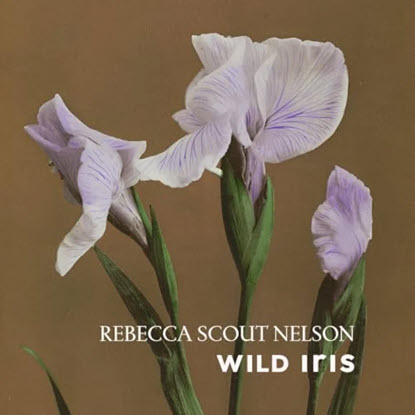
The music, with its comforting blend of folk, indie pop, and Baroque performance practice, makes every emotion feel poignant and immediate. Many of the recorded tracks were laid down with the ink still wet on the page. And even works by George Frideric Handel and Georg Philipp Telemann were rearranged to fit the widest possible stylistic lenses. Some songs recall the bluesy whimsy of Joni Mitchell. Others blaze with down-home swagger. Through it all, Nelson and a lively band of instrumentalists explore varying traditions without ever being tethered by any of them.
That approach makes the instrumental arrangements feel altogether wild and free. The period strings cover the range comfortably, easily settling into jam-band verve one moment to conjuring ethereal delicacies in another. That is most evident in “Shine,” where Nelson’s singing and the string lines stack up to form shimmering harmonies. (EMA published an admiring profile of Nelson in 2025.)
“Soft as the Moon” opens like a Baroque lament but quickly takes on rhythmic vitality. Nelson’s lyrics suggest a voice guiding a wayward spirit toward the light. Her subtle vocal tosses and flickering vibrato make the song into a soulful cry into the void.
In other pieces, Nelson’s breathy tone suggests folk-rock sentiment without resorting to sentimentality. Her arrangement of Handel’s “Eternal Source of Divine Light” yearns for resolution to the earthly pain of loss. The musicians likewise transform a Telemann fantasy — a deft display of fiddling and Appalachian zest — into a vivid dance of the spirit.
In Cullen Coty O’Neil’s “Home,” string phrases play off one another in a lyrical sweep that feels at once joyful and heart-warming. “Christabel,” a ballad composed by O’Neil, offers another scene of hushed but burning intensity.
Nelson and the musicians also tease out the bucolic charms of Gillian Welch and David Rawlings’s “Look at Miss Ohio,” the music free-spirited yet longing for abiding peace. O’Neil’s “Rooster,” put across with jug-band verve, suggests that things on the other side of death’s doorway might not be so bad.
That’s also the sense conveyed in “Sweet Persephone” (recently released as a single), which implores the goddess of the Underworld to let a spirit roam freely. The vocal line floats congenially, like a feather on a breeze. Lyrics and music bring to the light the passing spiritual uplift in simple things: the sweetness between grapes and wine, tears in one’s eyes, and the clouds before a rainstorm.
Three different tracks entitled “Wild Iris” complement these performances with searching intimacy. But here, too, solace yields to celebratory zeal as soft vocal phrases frame driving thumps from the strings that together set the air spinning. The music is at once a tearful farewell and a welcoming home for loved ones entering eternity. Maybe we shouldn’t fret, the music seems to say. Death may be hardest on those of us left behind.
Aaron Keebaugh’s writing has been featured in The Musical Times, The Classical Review, The Boston Musical Intelligencer, BBC Radio 3, Total Baroque Magazine, and The Arts Fuse, for which he serves as regular Boston critic. For EMA, he recently described how the stars have aligned in Houston.