by Karen M. Cook
Published April 10, 2023
Eros & Subtilitas: Capricci, Madrigali e Danze in Dialogo. Tasto Solo, directed by Guillermo Pérez. Alia Vox AV9952
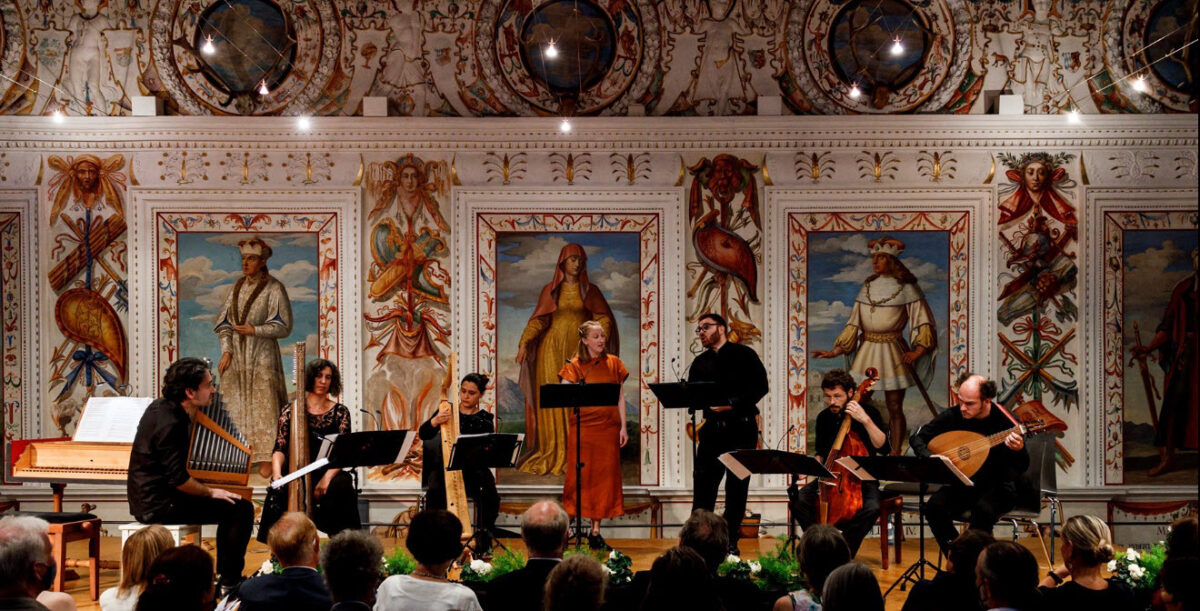
Over the last 15 years, Tasto Solo has created a substantial name for itself. Led by Spanish keyboardist Guillermo Pérez, the ensemble has participated in numerous prestigious festivals across Europe, toured internationally, and developed creative partnerships with notable musical establishments—and along the way, they’ve earned multiple accolades, including the Diapason d’Or. On each of their acclaimed albums, they plumb the depths of historical keyboard repertories, reimagining well-known works and bringing to life lesser-known pieces.
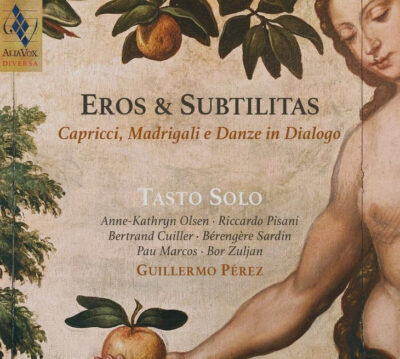
On this new release, their first for the Alia Vox label, the ensemble shifts its focus to Renaissance Italy. The album centers in large part around Vincenzo Ruffo (c.1510–1587), famed composer and chapelmaster of the Duomo of Milan. While primarily known for his vocal music, he published one collection of instrumental works in 1564: his Capricci in Musica a Tre Voci. The first to use the term ‘capriccio,’ the volume contains dances, newly composed pieces, and works borrowing from madrigals by composers such as Clément Janequin and Jacques Arcadelt.
Once again, Tasto Solo creatively resuscitates historical practices. Here it’s the interplay between vocal and instrumental composition.
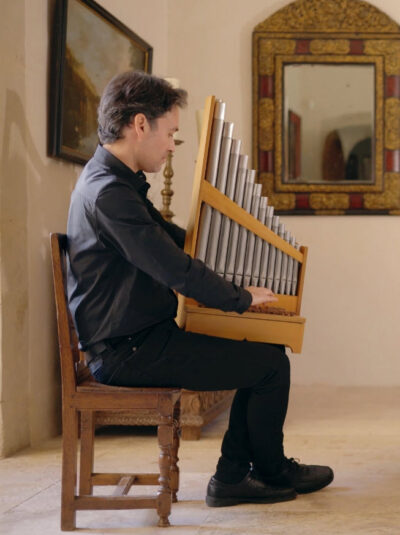
Using Ruffo’s collection both as fodder and as launching pad, they perform some of his capriccios alongside their madrigalian sources, but for the latter only the upper voice (and occasionally the bass) is sung. The other voices are performed by various combinations of instruments—harpsichord, harp, viola bastarda, lute, and at times the organetto. (Meet the Organetto, the Original Laptop)
The collection’s first set of madrigal settings is a triptych on Philippe Verdelot’s “Dormendo un giorno.” Beginning with Verdelot’s original, featuring soprano Anne-Kathryn Olsen, they then segue into Ruffo’s capriccio, then combine the two versions with Olsen and baritone Riccardo Pisani. This intriguing back-and-forth occurs again with Arcadelt’s “O felici occhi miei,” paired with Ruffo’s setting, and also in single tracks where the voices join in Ruffo’s capriccios. Listen, for example, to Janequin’s salacious “Martin menoit” and Arcadelt’s “Quand’io penso al martire,” in which the singers double the primary melody. Ruffo’s own “Lieti felici spirti,” with Olsen’s tasteful ornamentation, proves a real standout.
Interspersed between the madrigals are instrumental works from both Ruffo’s pen and the Manuscript of Castell’Arquato, a lesser-known source of pieces similar in style and scope to Ruffo’s collection. Ruffo’s lilting version of the popular “La Gamba” starts the album, introducing first the reverberant plucked strings, then the shimmering, silvery timbre of the harpsichord, followed by the voice-like whistle of the organetto. The harpsichord is showcased later in the first “Pavana in Sol,” while its accompanying Saltarello adds an animated lute, and the stately “Ricercare in La” is a gorgeous vehicle for the harp. The album concludes with Ruffo’s “El Cromato,” in which the organetto and harpsichord charmingly team up against the other strings, followed by Ruffo’s setting of Arcadelt’s pastoral “Da’ bei rami scendea.”
Some might find the timbre of the organetto whimsically out of place in this setting. But director Guillermo Pérez’s playing will certainly win over many, and as he points out in the liner notes, it is highly unlikely that such a popular instrument disappeared overnight. From the musicality of the ensemble to the novelty and appeal of the repertory, the album has plenty to offer its listeners. Highly recommended.
Karen M. Cook specializes in the music, theory, and notation of the late medieval and early Renaissance periods. She is associate professor of music history at the University of Hartford in Connecticut.