by Donald Rosenberg
Published November 24, 2026
Honoring early-music recordings that possess the highest levels of execution, scholarship, and imagination
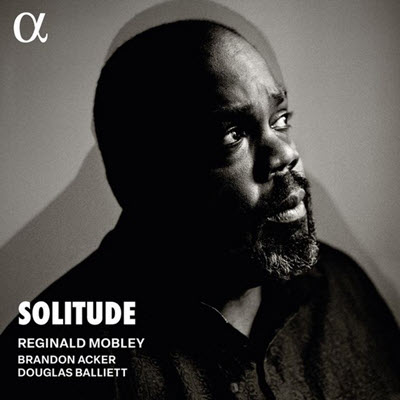
Move over, Oscars, Tonys, Emmys, and Grammys. Here come the EMAs, the working title (maybe) for the inaugural EMA Record of the Year, awarded to countertenor Reginald Mobley, lutenist Brandon Acker, and bassist-viol player Douglas Balliett for their album Solitude on the Alpha Classics label.
There’s so much to celebrate in the early-music world that EMA decided a good way to bring more attention to stellar artists and ensembles in the field would be the creation of an annual award — and, in the future, category awards — for early-music recordings that possess the highest levels of execution, scholarship, and imagination.
For this first year, a panel of judges opted to adhere closely to EMA’s mission “to develop, strengthen, and celebrate early music in the Americas” by considering recordings that were reviewed on the EMA website between October 1, 2025, and September 30, 2026. The recordings, on established labels as well as self-produced or streaming-only releases, encompass some six centuries of repertoire, from medieval song to Tchaikovsky — yes, his Fifth Symphony, resplendently refreshed on historical instruments by the Texas-based Philharmonie Austin (on the Navona label).
Among the noteworthy entries were the second album in Cut Circle’s mesmerizing survey of music by Josquin (Musique en Wallonie), a live recording of Leonardo Vinci’s 1730 Artaserse by Chicago’s Haymarket Opera Company (Cedille Records), and the world-premiere recording of the 1887 opera Morgiane by the Black American Edmond Dédé performed by Opera Lafayette and Opera Créole (Delos). This year’s embarrassment of riches included a disc devoted to forgotten wind quartets played by Quodlibet Winds (Bandcamp and streaming services), another reminder of soprano Amanda Forsythe’s luminous artistry on a Telemann program with the Boston Early Music Festival Orchestra (CPO), and Elinor Frey’s eloquent album devoted to C.P.E. Bach cello concertos (Channel Classics).
How, then, to choose a “winner” from among such diverse treasures? The skeptics in us knew that the concept of “best” can never fly, given the varied genres that receive so much loving attention and charismatic treatment. But we forged on, knowing that the existence of such an award would benefit the artists and the wider EMA community. Our guidelines, aside from qualities mentioned above (“execution, scholarship, and imagination”), also demanded pondering a certain Americanness — meaning what? American artists: check. American repertoire: not necessarily, though welcome. Certainly an American spirit, signaling an openness to taking risks and trying fresh approaches to very old music.
We found what could be deemed a model candidate in Solitude, the album on which countertenor Mobley again demonstrates his breathtaking command of vocal subtleties, grasp of styles, and repertorial curiosity. As Jacob Jahiel put it in his EMA review of the recording: Mobley’s “voice, an almost flute-like instrument, somehow surpasses the typical binaries one makes when speaking of singers: warmth and brightness, transparency and substance, sensitivity and strength. Moreover, his deep musicality complements his knack for storytelling.” And the American aspect of the album? Although the three artists were born in the U.S.A., a large portion of the program hasn’t a Yankee whiff, not with such names as Purcell, Blow, Pepys, and Dowland on tap. Yet their activity also embraces 19th-century American music by guitarist, composer, and civil rights activist Justin Holland (1819–1887), and new music by American composers Balliett and Jonathan Woody — works that are kindred spirits to the old European offerings.
Going forward, the more releases submitted for possible review from across the Americas, the greater the opportunity for the awards to expand in ways that impact the performers and satisfy anyone who cherishes music that gives paramount attention to historical performance practices.
Such impact may be built into the name that currently heralds the awards. By a quirk of fate, “ema” is the Hebrew word — pronounced ee-MAH — for mother. Whether the moniker sticks only time will tell, but it suggests just what the awards aim to achieve: nurturing the music, performers, and scholars that all-capital EMA champions with the care of a lower-cased ema.
Donald Rosenberg is chair of EMA’s Record of the Year jury and former editor of EMAg. He is national editor of Classical Voice North America, the web journal of the Music Critics Association of North America, and author of The Cleveland Orchestra Story: “Second to None.”
Read the EMA reviews and listen to the recordings:
Solitude from Reginald Mobley, Brandon Acker, Douglas Balliett
Tchaikovsky from Philharmonie Austin
Vinci’s Ataserse from Haymarket Opera Co.
Dédé’s Morgiane from Opera Lafayette
Trésors Oubliés from Quodlibet Winds
Telemann’s Ino from Amanda Forsythe